
Look slightly to your right, and you will spot the York Art Gallery, a grand sandstone building defined by its three deep ground-floor arches, overseen by a prominent white stone statue of a man holding a painter's palette. Just steps away from where we learned about the Archaeology Data Service preserving ancient fragments in digital vaults, this physical vault guards centuries of human creativity. It stands as a powerful testament to this city's remarkable habit of enduring devastating blows and stubbornly rebuilding what was lost.
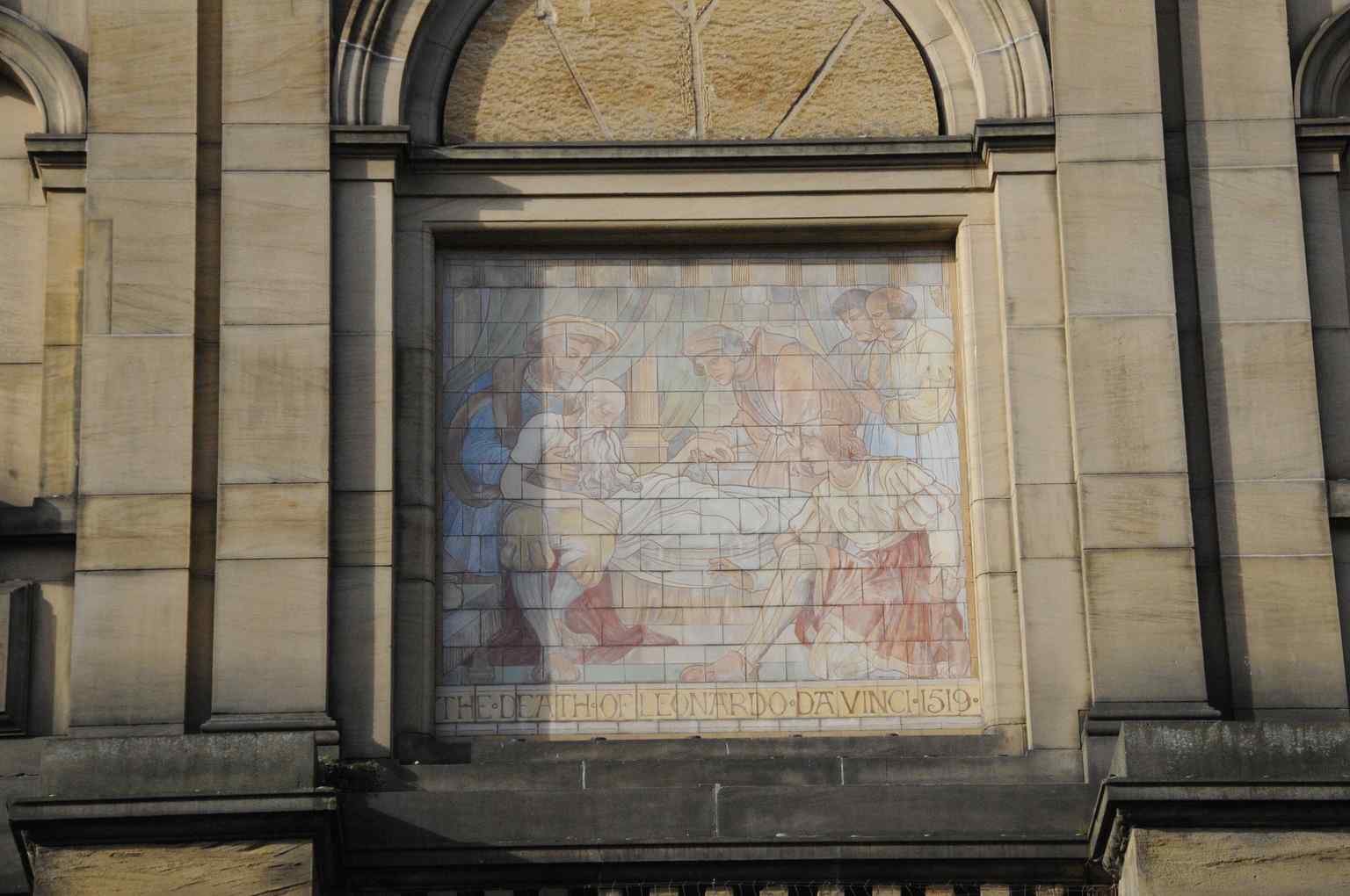
Long before this was an art gallery, this very plot of land was part of the medieval grounds of Saint Mary's Abbey, a lush area known as Bearparks Garden. But in eighteen seventy-nine, the people of York decided they needed something bolder. They envisioned a spectacular showcase for the second Yorkshire Fine Art and Industrial Exhibition. They hired a local architect who dreamed up a magnificent Italian-style palace, inspired by the grand, classical architecture of Rome and Florence. Of course, grand dreams often collide with tight budgets. The planned majestic facade, originally designed to hold eighteen stone statues and fourteen glittering mosaics, was quietly scrapped. But what they built behind those arches was spectacular. They constructed a sprawling, massive timber-framed Great Exhibition Hall. It was huge, about six times the size of the current main gallery space. It was only meant to stand for three years, but the locals loved it too much to tear it down. They kept it standing for decades, hosting everything from refined symphony concerts to raucous boxing matches under its vast wooden beams.
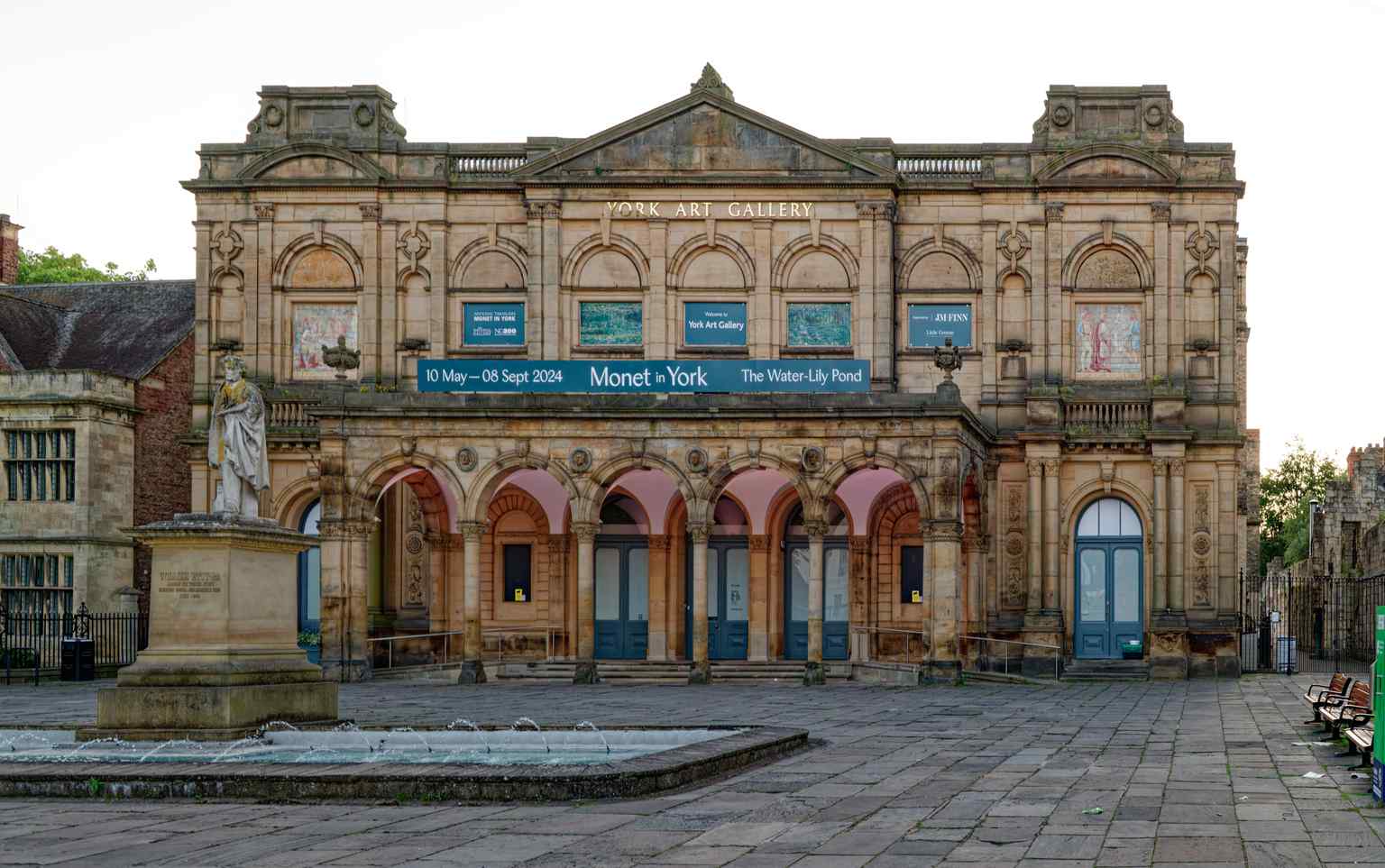
That great hall survived until the darkest nights of the Second World War. During the devastating Baedeker Blitz of nineteen forty-two, a series of German bombing raids specifically targeting Britain's most culturally significant cities, bombs obliterated the rear exhibition hall entirely. Yet, miraculously, the stone facade standing right in front of you held firm. The gallery could have been abandoned. Instead, the community slowly and painstakingly restored it, building up a staggering collection of ceramics, fine art, and thousands of historical works. The building has seen some wild modern reimagining, too. The app has a neat side-by-side showing what this place looked like back in two thousand and seven, compared to a dramatic twenty twenty-two art installation that sprouted giant, vibrant inflatable spikes right out of these historic arches.
If you want to explore the remarkable collections inside, the gallery is open Wednesday through Sunday from ten in the morning until five in the evening. Now, let us continue our journey from the preservation of visual art to the cutting edge of sound. We are heading a short four-minute walk away to the BBC Radio York studios, where we will uncover a story of modern broadcasting ingenuity.






