
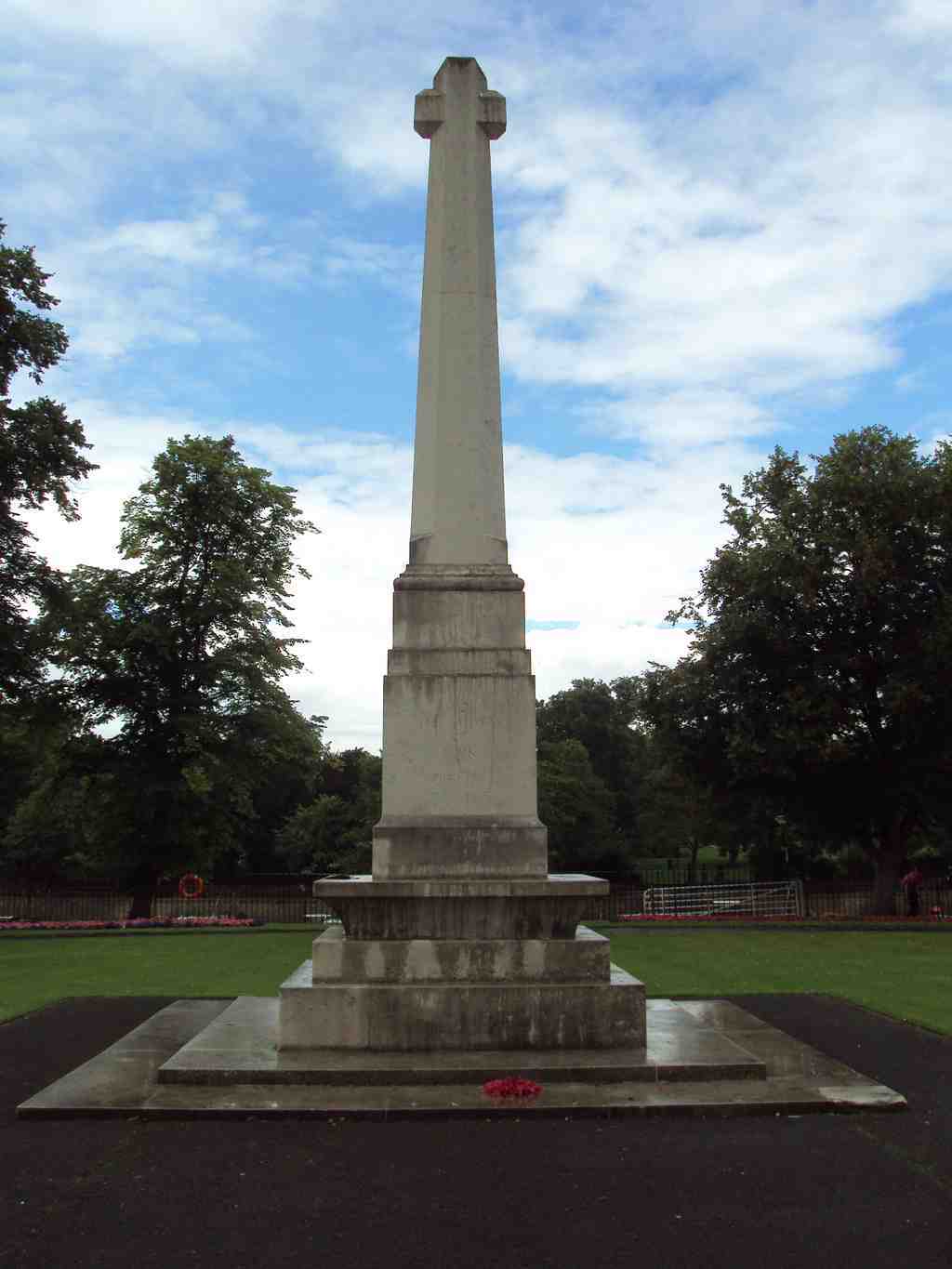
To spot the York City War Memorial, look straight ahead-it's the tall, light-coloured stone cross rising from a broad set of steps right at the centre of a quiet garden, framed by rows of trees and just across from the river.
Now, picture yourself back in the years after the First World War. York, like every city and village across Britain, was trying to cope with the pain of more than a million lives lost-a wave of grief so heavy you could almost feel it pressing on the stones beneath your feet. When the war ended, people all over town began to argue: Should the memory of those lost be carved in stone, or should it take the form of something useful-a new bridge, a hospital, maybe even homes for widows and orphans? Passions were high, and the debates went on for months. At one point, the city council was juggling ideas for schools, bridges, hospitals, and even a new city hall, with each idea hotly contested over countless cups of strong Yorkshire tea.
Finally, in a crowded town hall meeting in January 1920, crowded with folks of all ages, someone said, “Let’s just build a monument so we always have somewhere to remember.” The room grew quiet, and, with a sense of relief that you could almost scoop up in a bucket, everyone agreed: a monument it would be.
With that decision done, the committee hired a name that was already practically famous: Sir Edwin Lutyens, the very man behind London’s Cenotaph and the mighty Thiepval Memorial in France. He visited York (probably dodging the odd pigeon or two) and strolled through nine possible locations. Believe it or not, his first choice was a former cholera burial ground-just the place for contemplating life and death, I suppose-but the committee picked the old moat by Lendal Bridge instead.
Lutyens drew up a grand design: imagine a Stone of Remembrance perched high atop three steps, a bit like an altar you’d see in a vast cathedral, only outside and exposed to the Yorkshire wind. The Ancient Monuments Board gave its blessing. And yet, just as sausage and mash can’t always please everybody, the plan still didn’t sit well with everyone. Local history buffs thought it clashed with York’s ancient walls; others worried about the shadows cast by a separate railway memorial, whose budget was ten times larger-talk about “keeping up with the Joneses!” After more debates (and likely some grumpy letters in the newspaper), the committee scrapped the site, returning to Leeman Road, just outside the city walls, on land kindly donated by the railway company.
As the money ran short, Lutyens’ grand vision for both a cross and a stone was trimmed back to just the cross you see now, all 33 feet of Portland stone, chiselled with precision and standing proud as a lozenge-shaped shaft. Its only decorations are some simple, chamfered arms forming a cross-silent, stark, but full of meaning. Resting on four uneven blocks, atop broad, low steps, it bears few words: “TO THE CITIZENS OF YORK 1914 - 1918, 1939 - 1945” and on the other side: “THEIR NAME LIVETH FOR EVERMORE.” I sometimes imagine a soldier tracing those words with a finger, thinking of old friends.
The big day came in summer 1925, under a sky that couldn't quite decide if it wanted to drizzle or shine. Crowds gathered as Prince Albert, the Duke of York-who’d later become King George VI-unveiled the memorial, while his duchess unveiled a window in nearby York Minster dedicated to the women lost in war. The archbishop’s prayers drifted over the crowd, mingling with the scent of grass and stone.
As you stand here, imagine the sense of relief, pride, and sorrow-the memorial was finally finished, benches were added with the last of the funds, and in the shade of the cross, York’s people could finally sit, remember, and hope for peace. Today, this calming garden and its striking memorial aren’t just stone and grass. They’re a gathering place, a reminder, and-if you listen closely on a quiet morning, maybe a whisper of all those old debates, now settled into gentle respect.
So there it stands, not just a monument, but a piece of York’s heart, watching over the city just as faithfully as it has for nearly a hundred years. Not too shabby for a stone cross… and not a bad reason to take a quiet moment here before we head off to the next adventure.


