
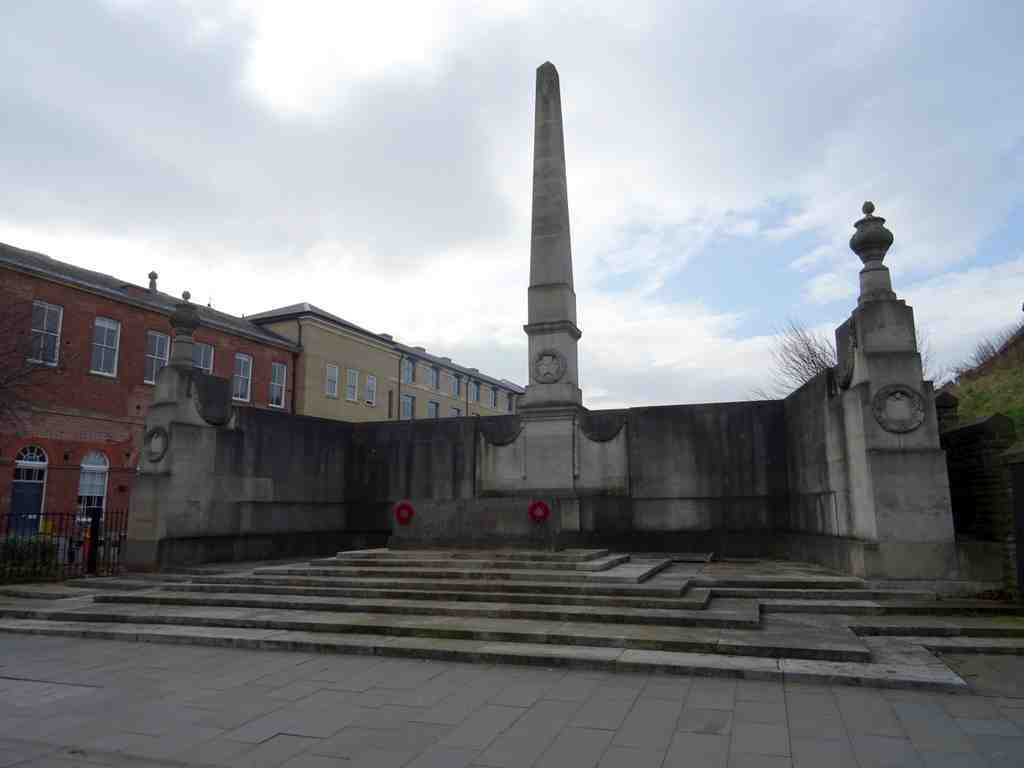
If you’re looking for the North Eastern Railway War Memorial, just keep your eyes peeled for a tall stone obelisk rising from a three-sided wall, flanked by decorative urns and a set of wide steps-it's tucked right next to York’s ancient city walls, almost like it’s guarding the entrance to another era.
Now, let’s take a step back in time together-imagine it’s the early 1920s, and York is bustling with change after the First World War. The railway whistles echo through the air, mixing with voices of thousands who work for the North Eastern Railway, one of the north’s proudest companies. Over 18,000 railway employees went off to fight as soldiers, and by the time the Great War ended, more than 2,200 of them never came home. The city was still echoing with loss from Zeppelin raids, bombardments at the coast, and the tragic sinking of the railway tug Stranton. York, in those years, bore scars-both on its skyline and in its hearts.
To honour its fallen, the North Eastern Railway board wanted a memorial-but not just any memorial! They picked the legendary architect Sir Edwin Lutyens, sort of a rock star of memorial design in his day. You might know his most famous work, The Cenotaph in London, where the whole country still gathers each Remembrance Sunday. Lutyens was tasked with creating something “ornamental, not utilitarian.” I suppose, if you’re spending £20,000-in 1920s money, mind!-you expect something more inspiring than a garden bench.
But, as with any good story, drama soon arrived. The city of York was also planning its own war memorial, just down the road. Both-believe it or not!-hired Lutyens. There they were, two would-be neighbours, with one memorial planned to be ten times the size and budget of the other. Some folks worried the railway memorial would look down its mighty obelisk nose at the city’s more modest tribute. They fussed over location, too: both plans would touch York’s ancient city walls. Enter protests-one city councillor fumed that visitors from the train station would see the railway’s memorial first. The local historical society turned up the heat, saying the project would be like “defacing a sacred emblem” if it damaged the old ramparts.
At one point, in a move right out of an engineer’s playbook, the railway built a full-sized wooden copy just so everyone could argue in person. After heated debates and even Lutyens refusing changes by cable from India-proving even famous architects are stubborn-the plans were tweaked. The railway’s memorial shuffled politely away from the wall, and the city’s memorial was moved just outside the gates. In a gesture of goodwill (and maybe a sigh of relief), the North Eastern Railway donated the patch of land for the city’s monument, keeping that historic relationship on the rails, so to speak.
And so, in 1924, the real stone memorial you see now was unveiled in front of a crowd thousands strong. Along came uniformed sentries, dignitaries, and families-all standing silent while Field Marshal Lord Plumer revealed the finished tribute. Edward Grey, the NER board member and former Foreign Secretary, moved hearts with stories of families shattered by war-of old friends who’d lost only sons. The moment was thick with both pride and grief, punctuated by the sounding of the “Last Post,” as if the city itself paused for breath.
If you look closely, you’ll spot intricate wreaths and the proud NER coat of arms carved in stone. The wall was once inscribed with every name of the lost-nearly 2,800 by the end of the Second World War. Although the wind and rain have faded some of those names, they live on both in memory and in a book held by the National Railway Museum.
The memorial is now Grade II* listed-English Heritage’s way of saying, “Hands off!” Only about five percent of listed buildings get this extra level of protection. In 2015, it was officially recognised as part of the national collection of Lutyens memorials, joining an exclusive club of the country’s greatest monuments.
And just recently, for its 100th birthday, the monument got a spa day: low-pressure, high-temperature steam to gently wash the years away-like giving it a warm bath after a century in the English weather!
So, as you stand here, listen for the echo of footsteps and train whistles, and maybe picture the sea of faces, proud and mourning, who once gathered before this very stone. It’s more than just rock and carving-it’s a tale of heroism, loss, and a city finding its way to remember, together. Now, ready to roll on to the next stop? I promise, no more architecture debates-probably!
If you're curious about the background, inception or the design, the chat section below is the perfect place to seek clarification.


