
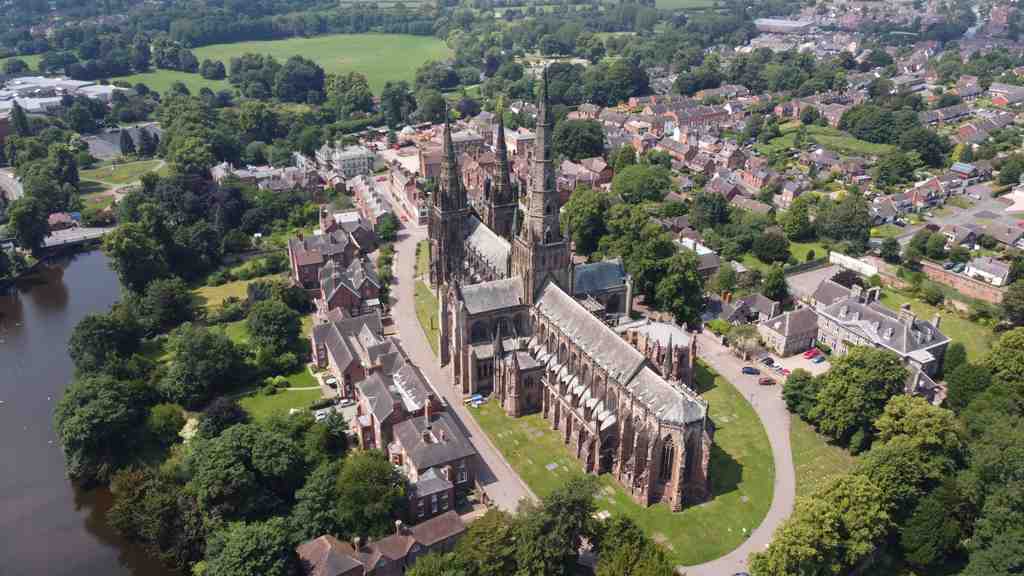
You can spot Lichfield ahead by looking out for its dramatic mix of soaring cathedral spires, bright Georgian facades, half-timbered historic houses, and a bustling townscape opening up beneath the wide Staffordshire sky.
Alright, time for Lichfield’s grand tale-and believe me, it’s one for the ages! Picture this: you’re standing at the heart of a place where echoes from over a thousand years swirl through the air. Lichfield isn’t just a city, it’s a living scrapbook of English history, with layers upon layers waiting for a curious explorer like yourself. If the streets seem a bit ladder-shaped, that’s on purpose-the town was planned that way nearly 900 years ago by a clever bishop named Roger de Clinton, who wanted everything lined up just so… Smart, unless you’re playing hide and seek.
Now, let’s travel back to the smoky past. The area’s very first residents were, well, a bit Flint-stonesque. Evidence of Mesolithic flint tools means that this very ground was worked thousands of years ago! Fast forward, and you’d hear the clanging of Roman swords at Letocetum, just south of here, where soldiers washed off the road dust in grand bathhouses, swapped gossip, and plotted the next leg of imperial conquests.
But Lichfield itself really started making a ruckus in 669 AD, thanks to a humble bishop named Chad of Mercia. He set up his bishopric here, turning Lichfield into the spiritual capital of the mighty Mercian kingdom. The faithful soon flocked in, seeking the relics of St Chad and hoping for miracles-or at least, a decent spot to pray. That sacred buzz never really left. The medieval cathedral still towers above you, its three spires sometimes called “the Ladies of the Vale”-watch out, sometimes they say you can hear a distant church bell ripple through the city on a windy day!
Oh, but don’t relax just yet! Life in Lichfield wasn’t all peaceful hymns and Sunday markets. This city’s been at the crossroads of some serious drama. In the 9th century, fierce Danish Vikings stormed the area, plundering and leaving the cathedral in tatters. Later, during the English Civil War, the city’s allegiance was split-cathedral folk rooting for the king, while many townsfolk secretly tucked Parliamentarian flags under their cloaks. The cathedral close became a battleground, echoing with musket fire. Picture it! The central spire was destroyed, but never fear-it was beautifully restored after the monarchy made a comeback. The cathedral stands proud to this day, scarred yet glorious, like a knight with a shiny new helmet.
The city flourished as a bustling market hub, especially in the Georgian era. Samuel Johnson, the chap who wrote the first proper English dictionary, was born here. There must be something in the Lichfield air, because the city attracted all sorts of brainy folks-famous actors, scientists, poets and even a few wild philosophers. Johnson himself called it a "city of philosophers"-and to be fair, it’s still a good spot for a deep thought, especially if you’re standing outside the birthplace museum of Samuel Johnson, or strolling past Erasmus Darwin’s house.
As you walk these cobbled streets, notice the 230-plus listed buildings. Lichfield is proud of its red-brick Georgian charm-built after a huge fire swept through town in 1291 (don’t worry, that’s long past). The Market Square has seen everything from wild celebrations and solemn markets to the, er, occasional heretic trial. The city even burned a fella at the stake in 1612 for claiming he was the Saviour of the world. Not recommended if you want to enjoy market day, by the way.
Today, the old city centre still feels like a hidden gem: you’ll find serene parks like Beacon Park, shimmering Minster Pool, and sweeping views from St Michael on Greenhill. Yet, listen closely, and the distant hum of buses and chatter from the market remind you-Lichfield is still a lively community, balancing centuries-old traditions with everyday life.
So, as you look around at these medieval spires, Georgian windows, and bustling town scenes, remember-Lichfield is both ancient and full of energy, a place where history walks with you whispering, "Do you hear the echoes too?" Now, on to our next landmark… Let’s see what secrets wait there!
Yearning to grasp further insights on the toponymy, governance or the geography? Dive into the chat section below and ask away.




