
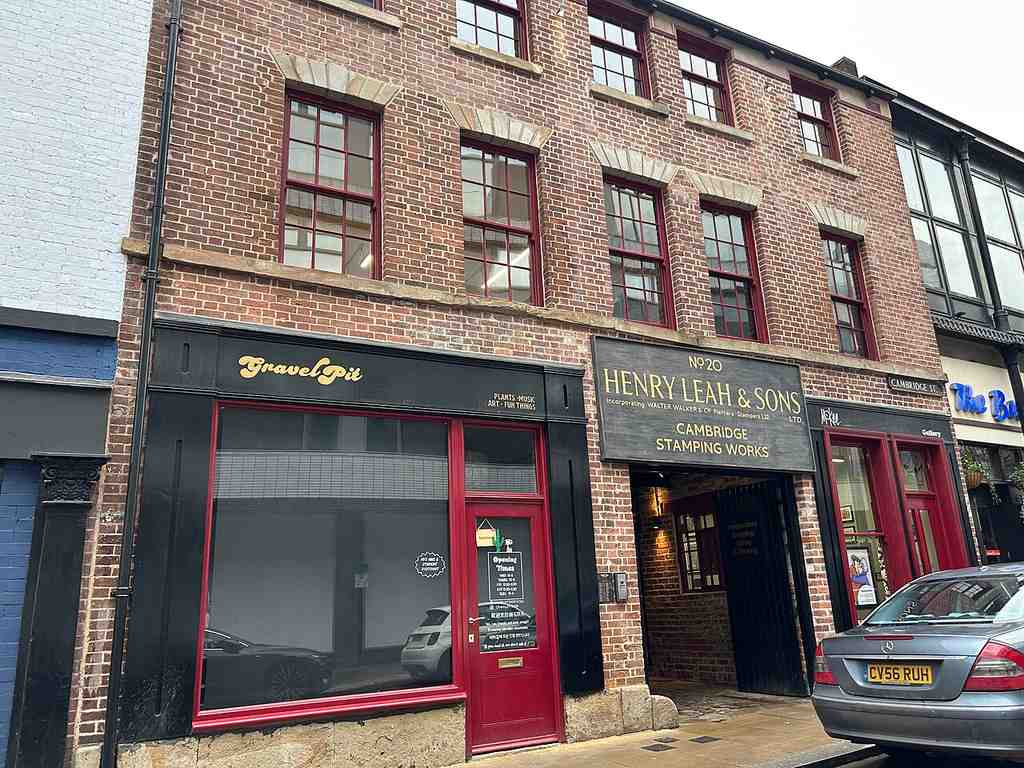
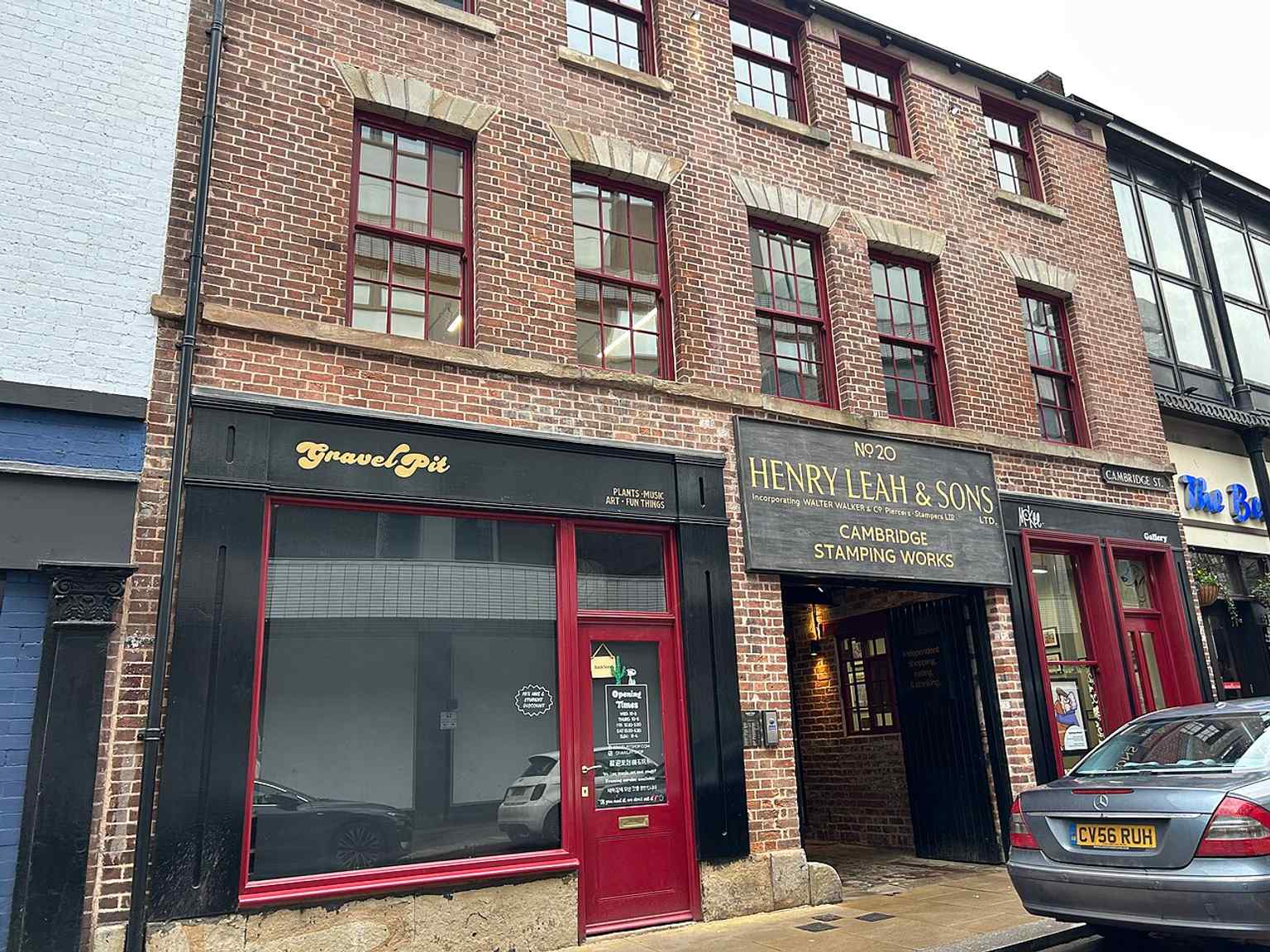
On your right, look for a narrow brick frontage with a tall arched carriage entrance and large-paned workshop windows above it: that gateway is Leah’s Yard.
And this, really, is the payoff. Behind that arch sits one of the last surviving Little Mesters' yards in central Sheffield, and one of the few city-centre workshops that still keeps the small, crowded spaces of that old system intact. Little Mesters were self-employed specialist makers... not captains of industry, more masters of one exact skill, renting a room, a floor, sometimes just a corner, and getting on with it.
Leah’s Yard began in the early nineteenth century making shears and hand tools. Then it adapted, and adapted again, because that was its genius. A horn dealer worked here, supplying material for cutlery handles. So did platers, knife makers, silver stampers. In the eighteen eighties, people knew it as the Cambridge Street Horn Works. Then, in eighteen ninety-two, Henry Leah took over as a maker of die stamps for silverware, and the yard picked up the name it still carries.
What matters is the scale packed into that small courtyard. By nineteen oh five, eighteen separate Little Mester businesses worked here. Listen to the roll call: a dram flask manufacturer, hollow ware and silver buffers, palette knife makers, a steel fork manufacturer, a silver ferrule maker, brass and nickel silver turners, an electroplate producer, and a cutler. Those are not just old trade names. Each one meant a separate pair of hands, a bench, a rented room, a living. Earlier records show six companies here, including four cutlers, a horn and bone merchant and a silver-plater. By nineteen twenty-two, there were eighteen companies again. The place kept filling up because it could.
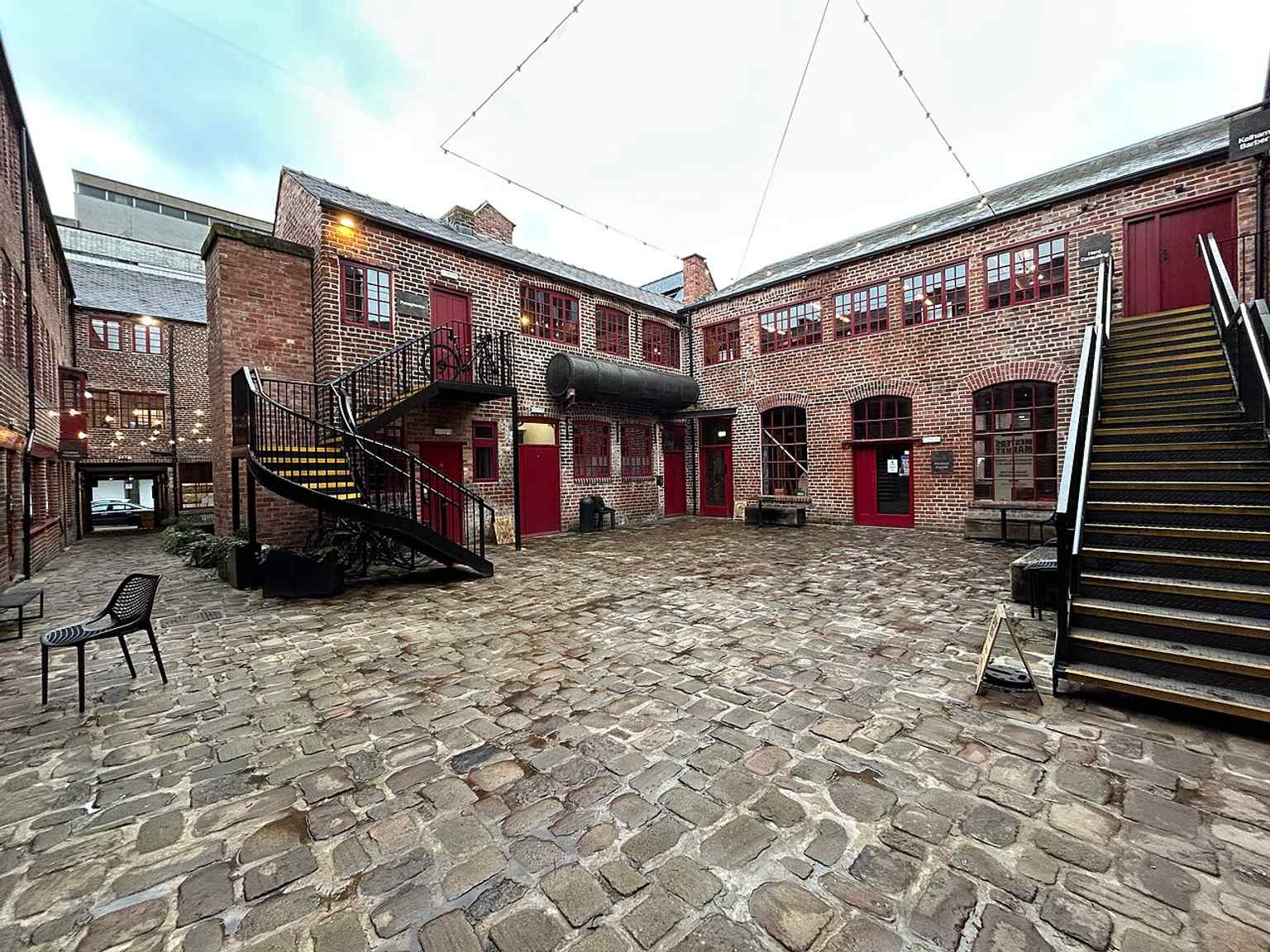
By the end of the nineteenth century, steam power arrived to run a grinding hull and drop hammers for silver die stamping. Even so, this was never a grand single-purpose factory. It was a dense ecosystem of brick workshops around a shared yard, with big casement windows for light and timber staircases climbing outside to the upper floors. If you want a peek into that courtyard, take a glance at image three on your screen.
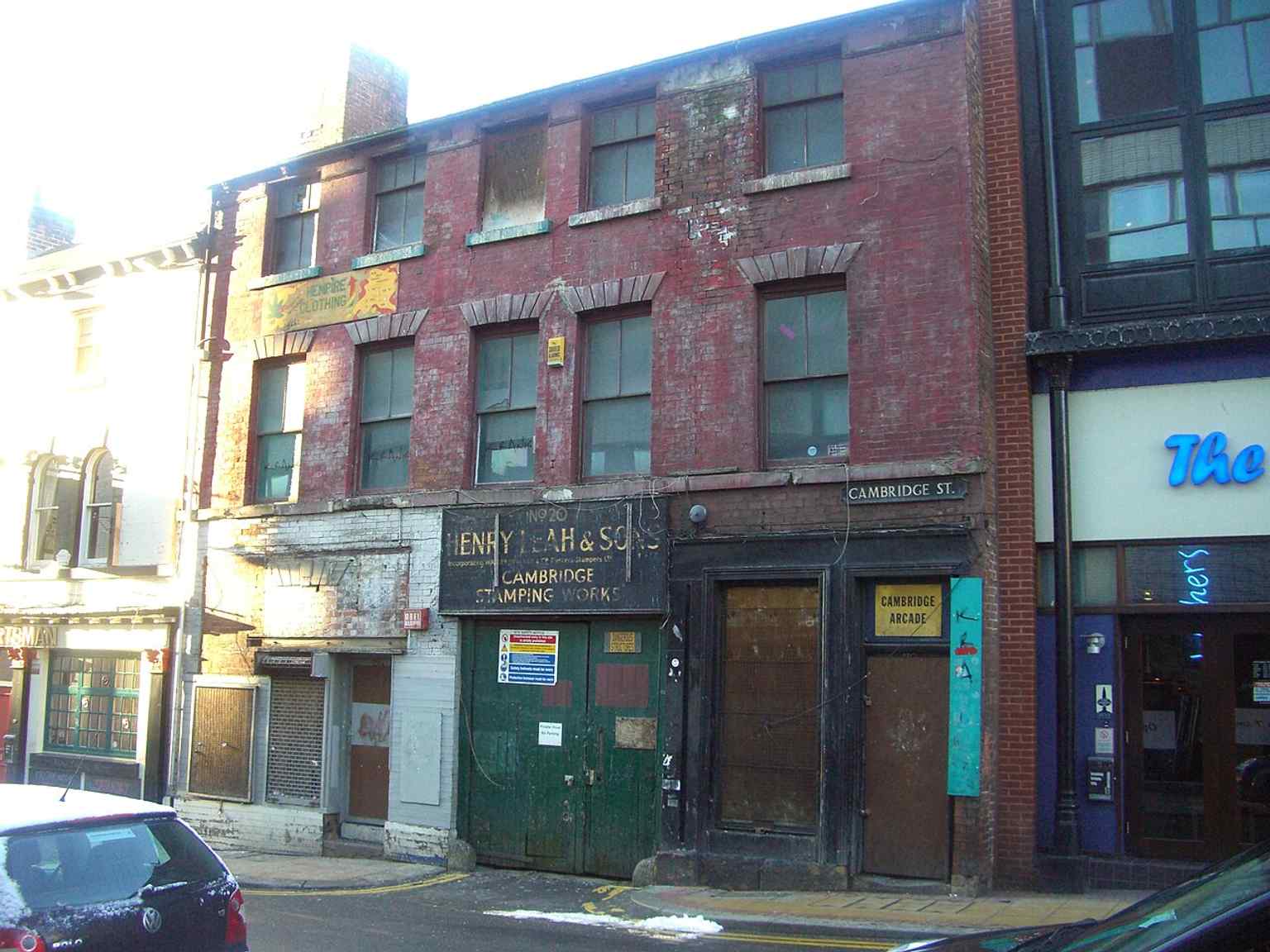
For more than twenty years, Leah’s Yard sat derelict, preserved mainly because it held Grade Two Star listed status and stubbornly refused to disappear. If you’re curious, have a quick look at the before-and-after image in the app; the change is striking. A six million pound restoration, part of the four hundred and seventy million pound Heart of the City project, reopened the yard in August twenty twenty-four. And they did it carefully: workers lifted the courtyard cobbles one by one, raised the ground, then laid every stone back again so the place could work for people now without pretending it had never grown old.
So here we are: around twenty independent studios above, small shops around the cobbled ground floor below, makers back in the building by design. Think of the chain of hands we’ve met across Sheffield... forger, grinder, hafter, buffer, cutler. Think of the Cutlers’ Company up the hill, the buffer girls, the grinders paying with their lungs, the chapels, the companies, the cobbles of Paradise Square. This yard gathers all of that into one tight frame.
This yard is the working day of Sheffield, distilled. The names on that trade list... dram flask, palette knife, silver ferrule, electroplate, cutler... are no longer abstractions. They are the room you are standing in.





.jpg)

%2001.jpg)