
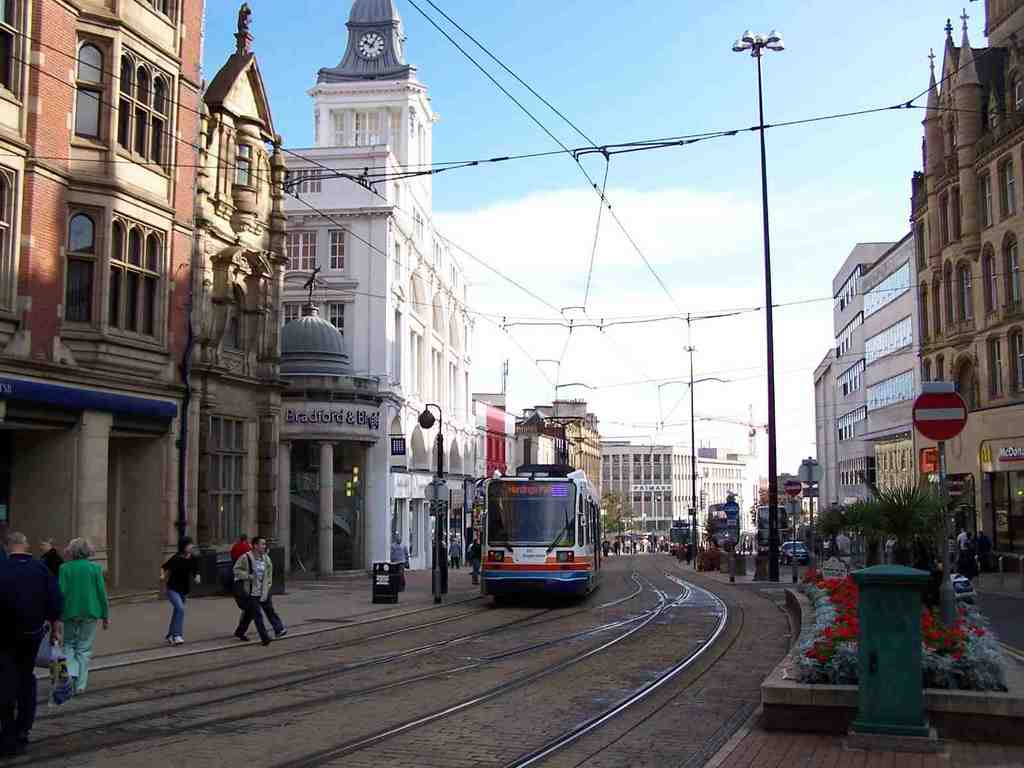
Alright, you’re standing at the start of High Street-look straight ahead and you’ll spot it right away! Trams glide down steel tracks in the middle of a broad street. On either side, tall stone and brick buildings loom, with big bay windows and quirky towers. Look to your left, you’ll see the striking clock tower of Kemsley House, with its white-brick sparkle and grand clock keeping watch over shoppers and wanderers. To your right and ahead, shops and a familiar fast-food sign nudge up beside banks, all hugging the curve of the street. The energy here? It’s a classic city buzz-people criss-crossing, the ding of a tram bell, and the old meeting the modern at every corner.
Now, imagine you’ve just stepped through a time portal. You might smell fresh bread wafting from a bakery centuries ago, or hear market traders shouting their wares right outside the church gates. In the 12th century, this was already the city’s beating heart, lively and busy, owned in part by monks from Worksop Priory-thanks to a lord named William de Lovetot, whose name sounds like he should’ve been running a medieval dating service.
Back in those days, High Street wasn’t just a road-it was a magnet for Sheffield’s movers and shakers. Fancy knowing where the city’s first Master Cutler settled down in 1611? Right on the south side! Picture bearded men with stern faces, busy at trade, their houses being grand enough to make their neighbours jealous. By the 17th century, this place had some of the best homes in town-stone-walled, slate-roofed, the kind of real estate you’d put in a prime-time estate agent’s window.
But it wasn’t all elegance-oh no! For hundreds of years, the street was actually quite a squeeze. So narrow, in fact, that horse trams could barely fit. There was a timber-framed bailiff’s house, squished up right to the street, stubbornly holding its spot till the 1890s, probably just for tradition’s sake.
When the grand plans finally cleared things out in the late 1800s, Sheffield waved goodbye to those old buildings and welcomed a grander High Street. The new Parade Chambers shot up in beautiful, spiky Tudor Gothic style. Give a glance to the building corners-you might spot stone carvings by Frank Tory, like hidden details waiting for sharp-eyed explorers. And over by York Street, the old bank buildings brought in a splash of Renaissance show-off with stones from all over, even Sweden!
If you feel your feet tingling, maybe it’s history tickling you: on this street ran the city’s very first American elevator (for posh gentlemen, no less), and the original John Walsh department store, later House of Fraser, where you could buy anything from a fine suit to a new hat, right up until World War II brought it to an end.
You can’t miss Kemsley House-the Star newspaper HQ. With its clock tower gleaming and a name that sounds fancier than a Hollywood hotel, it’s one of High Street’s best-known faces today.
So, whether you’re here for shopping, people-watching, or just wandering, know that you’re striding where monks, merchants, and a few grumpy bailiffs once made their mark on Sheffield. And keep an eye out-there’s more city magic just around the corner! Onward we go.




