
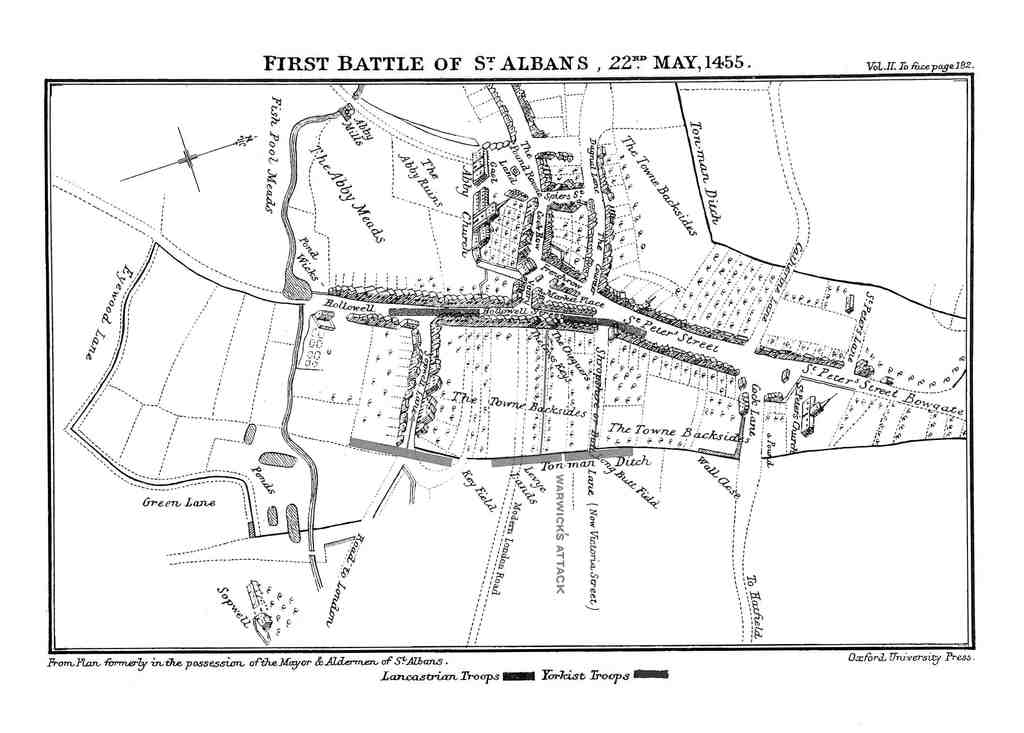
To spot the landmark commemorating the First Battle of St Albans, look ahead for a historical display or plaque near the street intersection, right where the old narrow streets converge-just like the ones marked on the map, often set where the bustling present meets the past.
Welcome, time traveler! You’re now standing on ground that once rumbled with the thunder of marching boots, clashing steel, and a bit of royal panic. Let’s step back to the morning of May 22, 1455-St Albans, twenty-two miles north of London, is no quiet market town today. Instead, it’s the opening chapter of the Wars of the Roses, a dynastic squabble so famous that people still squabble about who won at the local pubs.
The main characters couldn’t be more dramatic. Richard, Duke of York-a man who just wanted a little recognition, perhaps the crown-arrives with thousands of supporters, including the mighty Nevilles. On the other side, Edmund Beaufort, Duke of Somerset, is desperate to stay in the king’s favor after some rather embarrassing losses in France. King Henry VI, poor soul, battles his own mind as much as his enemies, having just recovered from a mysterious illness that left him unfit to rule. Rumor has it, the only thing more fragile than Henry’s health was his grip on his crown!
Knights and soldiers crowd the winding, medieval streets you see around you. Imagine the tension as heralds, dressed like rejected chess pieces, shuttle messages back and forth under the watchful eyes from St Peter’s Street and the Tonman Ditch. St Albans’ citizens peep from doorways and taverns-one of which, the Castle Inn, will become a very famous holdout in about half an hour.
Richard of York tries one last time to parley. He asks the king: “Hand over Somerset, please! He’s got some explaining to do.” King Henry’s reply is less than diplomatic. Picture a king, finally having a good day, shouting, “By the faith I owe to St. Edward and the crown, I’ll destroy every last one of you!” You can almost hear the medieval equivalent of a mic drop-except it’s a royal proclamation instead. Negotiations? Over.
Suddenly, chaos erupts! Arrows whistle through the air. Metal bangs against wooden barricades set up in these very lanes. The Yorkists surge down the alleys near St Peter’s Church and the barricades of Sopwell Lane, but they’re met with stubborn resistance. For a few nerve-wracking minutes, it looks like no one can break through.
But then, young Richard Neville, the future “Kingmaker” Warwick, sneaks through gardens and backstreets with his men. Imagine him darting behind hedges, mud on his boots, appearing suddenly in the marketplace-where the Lancastrian soldiers are relaxing, some with their helmets off, convinced it’s going to be a quiet lunch hour. Surprise! The Yorkists storm into their midst, and the rout begins.
Somerset, realizing his number’s up, tries to hold out in the Castle Inn. He charges out, sword whirling, but is cut down in the chaos. Northumberland tries for the same escape and falls too. Even poor Lord Clifford is hacked down in the lanes, and above it all, arrows from Warwick’s archers zip towards the king’s party, injuring both Henry and the Duke of Buckingham.
And just like that, within half an hour, the fighting is done. Less than sixty men killed, but the future of England is forever changed. York’s daring gamble has paid off-he’s captured King Henry, the ultimate bargaining chip. In the days after, York will ride back to London with the king in tow, eventually to be named Protector of England. Somerset, Northumberland, Clifford-all dead in these very streets.
The Wars of the Roses have started, and the world will never quite be the same. The drama here was so famous that even Shakespeare couldn’t resist making it the climax of his play “Henry VI, Part 2.” So next time someone tells you St Albans is just a sleepy little town, you can say, “Not on my watch!” And for tonight, maybe check if there’s a pint to be had in the local taverns-just make sure there aren’t any sword fights breaking out in the back!
Ready to delve deeper into the background, prelude or the battle? Join me in the chat section for an enriching discussion.


