
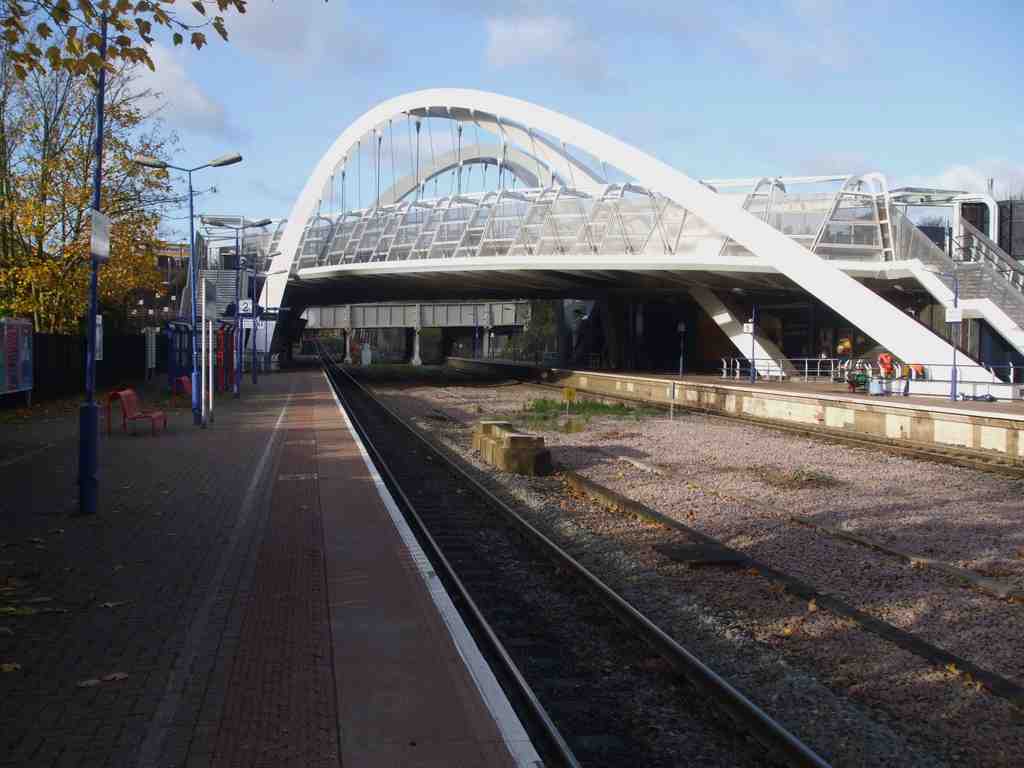
Just ahead of you, you’ll spot the Wembley Stadium railway station by its long, sweeping white footbridge arching high above the tracks, and the modern platforms sitting right beneath it-just look for the distinctive curved structure that almost looks like it’s flexing its muscles for a big event.
Welcome to a place where the clatter of train tracks has echoed through decades of history and excitement. Imagine the scene: chilled London air, the low rumble of trains in the distance, the scent of popcorn and anticipation swirling around you as thousands have flocked here for some of the UK’s greatest sporting and musical moments. Here at Wembley Stadium railway station, you’re standing on the railway’s front row for drama, celebration, and the occasional soggy football fan dashing for shelter when it rains.
But did you know this wasn’t the first Wembley Stadium station? The story begins back in 1923, when trains would wind their way to “The Exhibition Station,” the original stop about half a mile east from where you’re standing now. Picture roaring crowds in black and white, waving hats and handkerchiefs as they poured off the trains for the British Empire Exhibition. The air buzzed with the shouts of street vendors and the steady chug of steam engines. Only one platform back then, but what it lacked in size, it made up for in atmosphere, with lines snaking round to let trains run straight to London without anyone having to fuss with reversing.
This old station went through more name changes than a pop star reinventing themselves: eventually, it settled on “Wembley Stadium station” in 1928. Its last bow came in 1968, right after an FA Cup final between Everton and West Bromwich Albion-a match so grand it was like the stadium’s swan song. After that, the station closed, but if you study old maps or peek at aerial photos, you can still spot traces of those lost tracks, like ghostly footprints of Wembley’s railway past.
Meanwhile, the present station’s roots go back even further-to the age of coal and steam, when the Great Central Railway opened up a new line in 1905 for freight trains, with passenger services rolling in just a year later. Wembley Hill, as this spot was once known, opened its doors to crowds in 1906. By 1978, it was called “Wembley Complex,” a name meant to show off just how close you were to the action at both the stadium and the newly built conference centre. Finally, in 1987, it got its superstar name-Wembley Stadium station.
Over the years, it’s seen everything: slips of landslide in 1918 left the tracks closed for a whole week, while modern crowds today bustle between London Marylebone, Oxford, and points beyond, especially when the stadium's lights shine bright for a big game or concert. Buses zoom by on Harrow Road, while banners flap in the wind and tannoy announcements call out in cheerful chaos.
Whether you’re a football fanatic, a music lover, or just someone with a nose for history, this station is the beating pulse of Wembley’s comings and goings. So take a moment here on the platform, let your mind wander through the years, and imagine all the stories-old and new-zipping past with every train. Wembley’s spirit is always on the move-and for a moment, you are part of its journey.


