
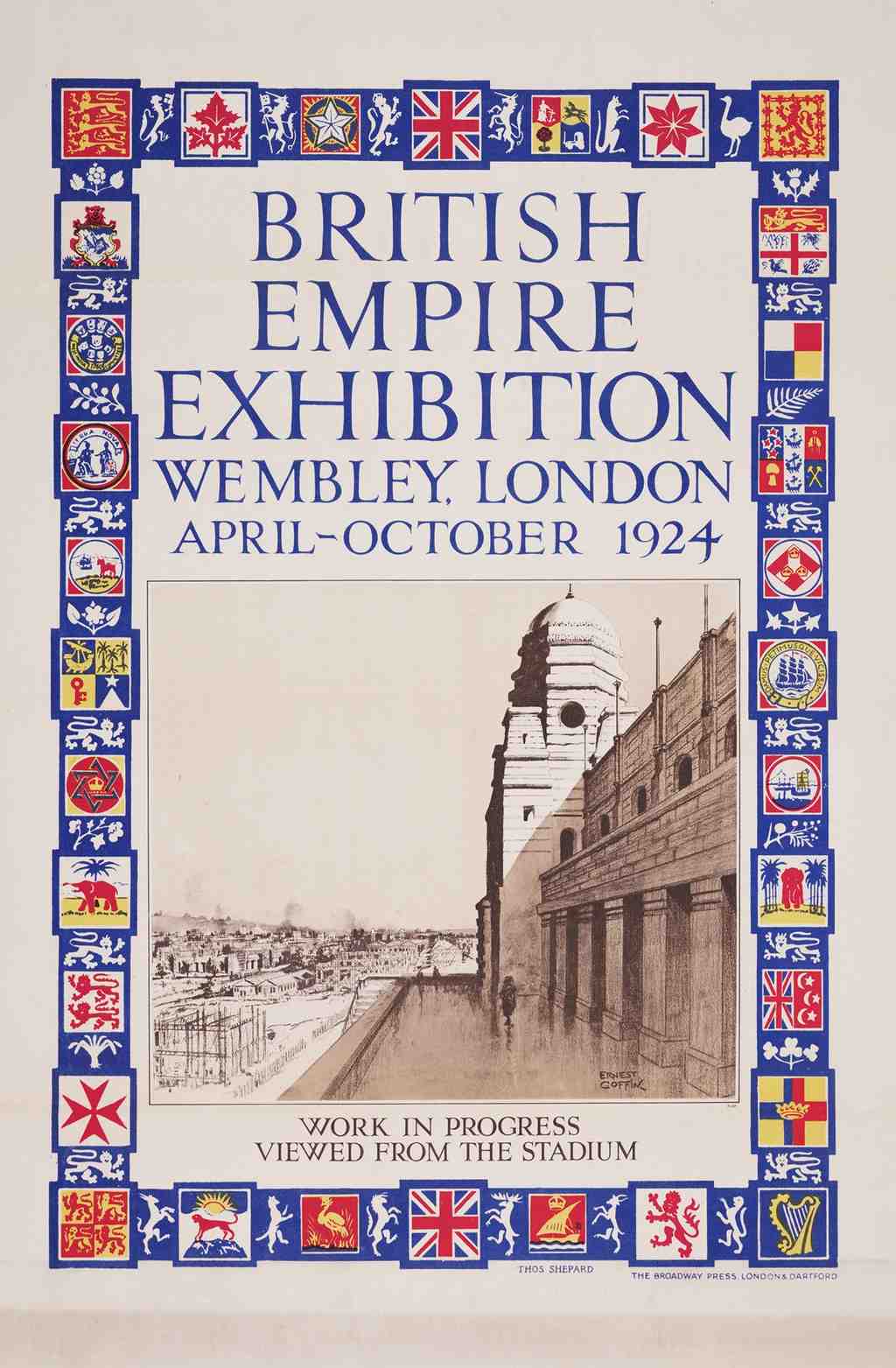
You’re looking for a grand, old-fashioned structure with striking white towers and domes, so shift your gaze slightly upward and to the front-the place that once buzzed louder than a cricket match on finals day.
Now, picture it: the year is 1924, and Wembley Park has been transformed from quiet pleasure gardens into a bustling wonderland, buzzing with the excited voices of visitors from every corner of the mighty British Empire. You’re surrounded by vast palaces built in reinforced concrete-the first “concrete city” in the world-with buildings that look like Roman temples, Mughal palaces, and even Burmese pagodas. Nearly 2,000 men are on site, hauling materials to raise this city almost overnight. This was no small garden fete; it was a magnificent, global show-and-tell meant to prove Britain still ruled the world-or at least, to convince the British audience that it did.
The dream was hatched after World War I, at a time when Britain was nursing its wounds and worried it couldn’t keep up with fast-rising powers like the USA and Japan. Wembley’s local council thought this idea sounded about as sensible as holding a beach party in winter, but the British Government pressed on. Why Wembley? Well, apparently Central London was too "ordinary" for something this ambitious!
The opening day, on Saint George’s Day, was attended by King George V himself, who sent a telegram all the way around the world-just to have it handed back to him after 80 seconds. Imagine that! It was also the first time the King’s voice was broadcast live over BBC Radio, reaching more than six million listeners. The Empire Stadium-known today as Wembley Stadium-was built right here, slicing out 250,000 tons of earth to make room for 125,000 spectators. Not just for football, but for everything from massed choirs to rodeos and air displays that made the pigeons nervous!
The Exhibition itself was a sensation, with 56 out of 58 Empire territories building their very own pavilions. Each was a mini-embassy, dripping with local flavor: the Indian pavilion had towers and domes, the West African block looked like an Arab fort, and Australia boasted a whopping 16-foot ball of wool-and, because the Empire loved a bit of competitive butter, a sculpture of Jack Hobbs, the cricket hero, made entirely out of butter. Canada came with a butter sculpture too-of the Prince of Wales, no less! You could stroll from a Maltese fortress to a South African Dutch-style manor, and then sneak off to the amusement park for dodgems or a peek at a replica of Tutankhamun’s tomb.
Here, nearly 27 million people wandered among the cutting-edge wonders of engineering-giant cranes and futuristic train carriages-plus palaces of industry, arts, and government. Roads were named by none other than Rudyard Kipling-no pressure there!-and the bus station could handle a tidal wave of 100,000 passengers daily. The “Never-Stop Railway” zipped visitors around the grounds, and there was even a coal mine where, for once, you could descend into the dark for fun.
Of course, there were snags. Historians chuckled at the spectacle, and author Virginia Woolf thought the whole thing was rather old hat. Edward Elgar, who composed the rousing “Empire March” for the pageant, said all the pomp was a bit over the top. Even P. G. Wodehouse’s Bertie Wooster would rather sneak away for a cocktail than gawk at jars of seeds or stuffed fish. But the crowds loved it, queuing for the Palace of Beauty to see famous beauties of history-well, actresses in glass boxes-or trying to spot themselves on the commemorative stamps and postcards that marked the occasion.
By the time it ended, the British Empire Exhibition had cost a fortune-about £6 million-and rumors flew that Variety magazine called it the world’s greatest outdoor “flop.” Yet Wembley was forever changed. The stadium survived, the crowds discovered the joys of suburban living, and thousands of houses soon popped up to welcome the new residents.
So as you stand here, imagine the electric excitement of that time: dances and fireworks, roaring planes overhead, railway whistles, and 18 million visitors in a single year. Wembley became a household name-thanks to an exhibition as fabulous, noisy, and full of dreams as you could ever imagine. And who knows? Maybe, if you listen closely, you can still hear the echo of marching bands, the laughter from the funfair, and the steady thump of footsteps that once filled these grounds.
Seeking more information about the background, empire stadium or the exhibition station? Ask away in the chat section and I'll fill you in.


