
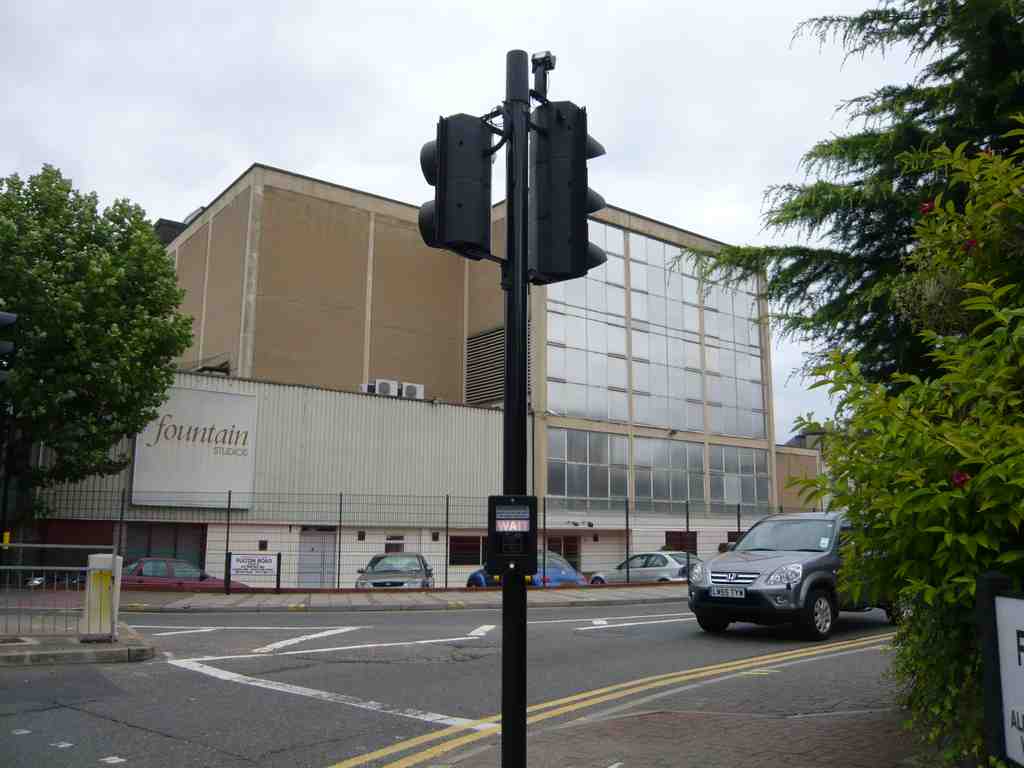
To spot Fountain Studios, look for a large, beige, boxy building with wide, square glass windows on its upper floors and a big sign on the wall that says “Fountain Studios”-it’s right across the road, just past the traffic lights.
Now, as you’re standing here, picture yourself just outside the front doors of what was once one of Britain’s great TV factories! This is Fountain Studios, and its story is far more dramatic than your average episode of The X Factor. Let’s walk back in time-no singing required, unless you really feel the urge.
Our tale begins in the late 1920s-imagine the air thick with the excitement of the movies’ golden age. It’s 1927: men in sharp suits and ladies in flapper dresses are dreaming up the most modern film studio Britain’s ever seen. There’s a lot of hustle and bustle, investors shaking hands, birds chirping outside. But all their grand plans nearly unravel when the money suddenly vanishes! Within months, their dreams are passed on to Victor Sheridan, who vows to pour half a million pounds-a king’s ransom back then-into making this place the most fabulous, high-tech studio Europe has ever seen.
The original Wembley Studios opened in 1929 and, believe it or not, it was Britain’s very first purpose-built sound studio. Think of it: the sweet hiss of new cameras, the first electric words echoing around these cavernous spaces. There were setbacks, plenty of high drama, and-because no Hollywood tale is complete without a bit of chaos-a fire that almost ruined everything. Even so, the studios managed to attract the big guns: American Fox Films came over looking for a slice of the action, converting the complex into their own hub for ‘quota quickies’-snappy productions meant to fill cinema schedules and keep British films alive.
When World War II stormed through Europe, this place swapped starlets and scripts for soldiers and film crews in uniform. For a time, it became an outpost of the Army Kinematograph Service and RAF Film Unit, churning out movies for the war effort-imagine smoky reels rolling late into the night, officers arguing about the best camera angle, and the tension of keeping morale high in tough times.
Up through the 1950s, those old careers kept rolling, through crime flicks and comedy shorts-right up until television started muscling in. At the dawn of the TV era in 1955, the studios switched gears and flickered to life as the home of Associated-Rediffusion, the first company to bring commercial TV to London. Think rubble and ruins outside from the war, but glowing studio lights inside and live broadcasts beaming out to homes across Britain. Studio 5, built in 1960, was the largest TV studio in Europe-big enough to swallow an entire quiz show audience, a full orchestra, and maybe a couple of quizmasters too (just don’t tell them I said that).
In the swinging sixties, this place was a wild hub-a parade of pop stars, groovy variety shows, and, oh yes, occasional Beatlemania when John, Paul, George, and Ringo dropped by for a bit of TV magic. The Beatles! Here, right where you stand, music history was literally echoing off the walls.
As the decades rolled on, Fountain Studios weathered its ups and downs. When ITV handed its keys over to other networks in the 1970s, the glamour faded, and the site went through a rough patch. It was nearly forgotten, battered by competition and the wrecking ball of history. But-a second act! In 1993, the Fountain group took over, renovated, and brought the grand old studios roaring back to life. Suddenly, this was where TV dreams were made: The X Factor, Britain’s Got Talent, and countless other hits. You could say it went from black-and-white echoes to full technicolour, complete with pop stars, judges’ glares, and more confetti than you could sweep in a weekend.
The lights finally went down in 2016, but not forever. Now, the building has been reborn as the Troubadour Wembley Park Theatre, still echoing with drama, laughs, and the applause of new audiences. So, while you’re here, listen hard-maybe you’ll catch the ghostly whisper of a Beatles harmony, or the distant roar of a talent show crowd. This plain-looking building is Wembley’s very own Hollywood, where the magic of showbiz never truly fades.


