
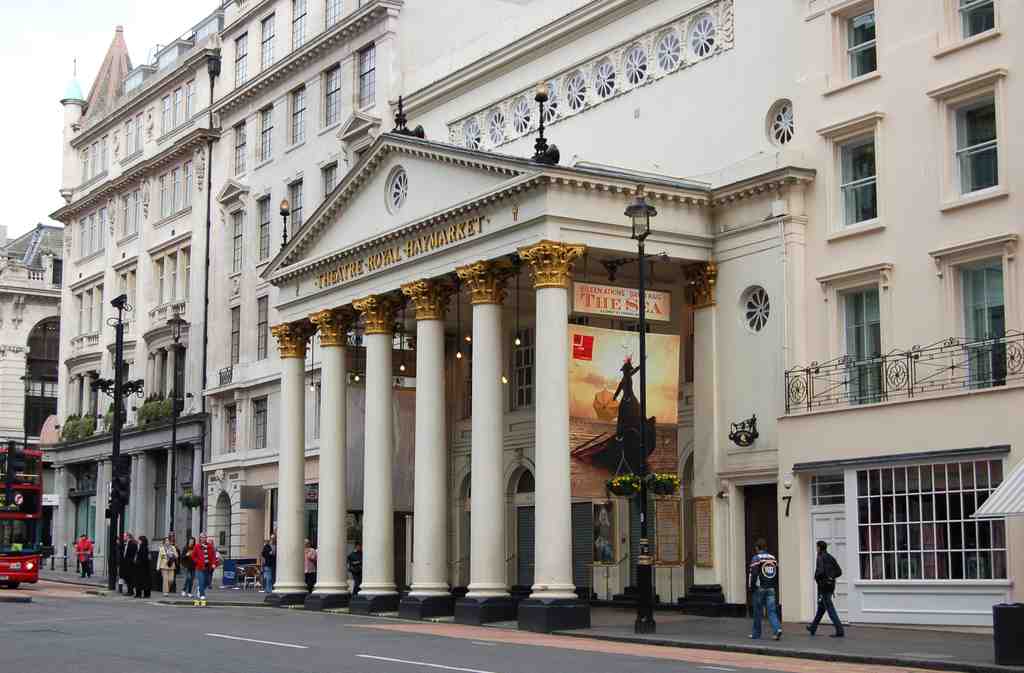
To spot Theatre Royal Haymarket, look for a grand white building with a dramatic six-column portico, its capitals painted gold, right on Haymarket street-like a classical Greek temple that suddenly decided theatre was more fun than housing gods!
Now, let’s step into the magic of the Haymarket! You’re standing before a theatre that’s been delighting, shocking, and occasionally confusing audiences for more than three hundred years. Picture London in 1720: muddy streets, flickering lanterns, and the scent of roasted chestnuts-and right here, where you’re standing, a brand-new playhouse springs up, built over a gunsmith’s shop charmingly called the Cannon and Musket. The locals called it the “New French Theatre,” clearly hoping Parisians would feel at home even as rain trickled down their backs.
This wasn’t just some ordinary playhouse, mind you. This theatre was a rebel, an alternative to stuffy opera and panto-packed rivals. It gave space to anyone daring enough to lampoon politicians or put on witty burlesques-think of it as the “Saturday Night Live” of Georgian London. Henry Fielding himself marched his clever, biting satires onto the Haymarket stage, much to the nervous twitching of Prime Minister Robert Walpole, who was so offended he brought in the notorious Licensing Act of 1737. Imagine a politician so thin-skinned, they pass a law just to stop you making fun of them on a Friday night!
The Haymarket flourished with success stories, notorious hoaxes (yes, a man once advertised he’d climb into a wine bottle on stage-spoiler: he didn’t, and the crowd rioted), and nightly dramas, both scripted and accidental. In the 18th century, audiences poured in, hoping to catch something new, subversive, or just wonderfully silly. The lease and license would bounce between flamboyant characters: at one point, the great Samuel Foote took control, producing plays where no one was safe from a sharp-tongued caricature-local politicians hid in the back rows just in case.
Now, leave the mud and candle smoke behind and imagine 1821, when architect John Nash rebuilt the theatre-he dressed it up in the grand attire you see now, those golden Corinthian columns glowing with pride, the perfect backdrop for a red carpet (or a misbehaving ghost). And yes, speaking of ghosts, keep your eyes peeled during comedies-rumor says John Baldwin Buckstone, a 19th-century manager, still pops by to giggle at the punchlines, even when no one else laughs. Patrick Stewart himself claims to have seen Buckstone hanging around in the wings!
This place has seen it all. Oscar Wilde premiered his cleverest comedies here; imagine the gasps and roaring laughter as Lady Bracknell issued her legendary lines right through that very door. Electric lighting was a novelty here, modernising the stage and wowing crowds who’d never before seen their favorite actors lit up as bright as day. Playwrights and actors-names like Sothern, Gilbert, Sullivan, Maude, and Tree-turned this spot into the toast of the West End. Even the decor received several facelifts: the Louis XVI style dates back to 1904, when opulence was all the rage.
Move forward in time and you’ll see this theatre in every era: jazz hands in the roaring twenties, wartime elegance and determination, the starpower of Alec Guinness, Ralph Richardson, and the wit of Noël Coward. Its boards have been walked by Dame Judi Dench and Sir Ian McKellen, while on wild nights in the 2000s, the ceiling joined in the drama by dropping a bit of itself onto the crowd (don’t worry, that was fixed before you arrived!).
Even today, the Haymarket is a hive of creative energy. It’s not just the shows-it’s the future too. The Masterclass charity runs spirited workshops and apprenticeships here, welcoming fresh talent and making sure young dreamers can still get their big break on this historic stage.
So, as you gaze up at those golden columns, take a breath. Imagine three centuries of drama: from riots over magical wine bottles to standing ovations for comic musicals. If you listen closely, you might just hear the echoes of laughter, applause, and the occasional shocked gasp drifting out from behind the doors of London’s third oldest, and perhaps most mischievous, playhouse. Now, on to our next stop-before a ghost tries to join the tour!


