
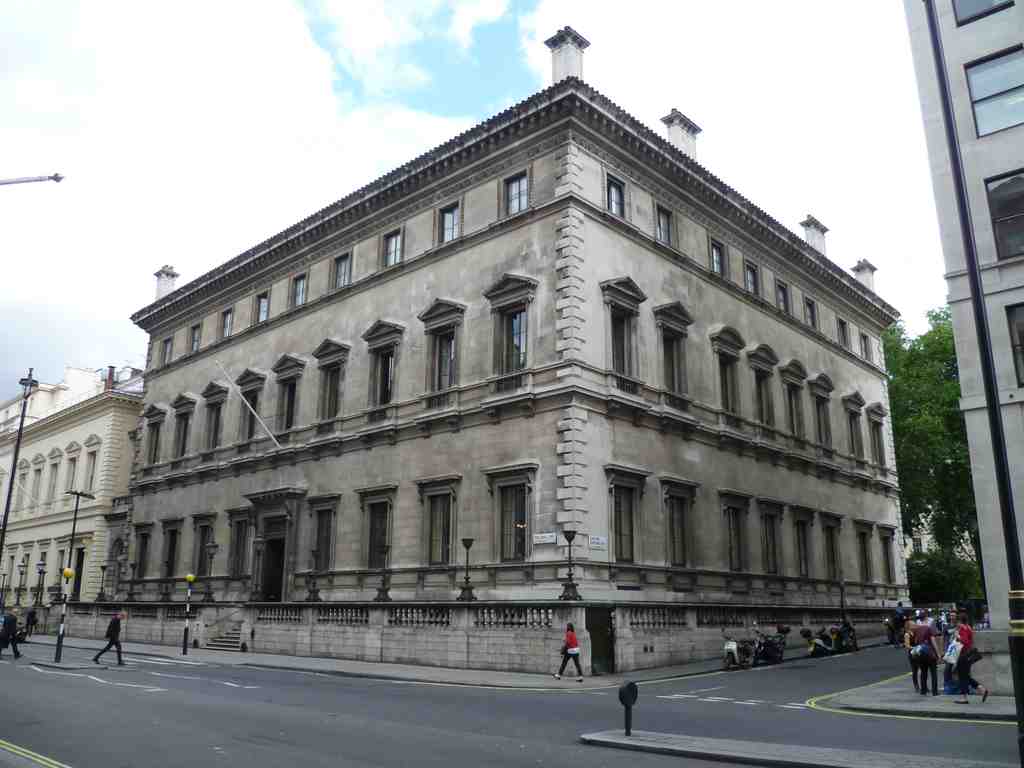
To spot the Reform Club, just look for the grand, palatial building on the south side of Pall Mall with beautifully symmetrical stone windows and a stately, Italian Renaissance-style exterior-think of a Roman palace dropped right into London!
Alright, now take a deep breath and step back with me in time! Imagine yourself in London, 1836. The city’s abuzz with political debates, top hats bobbing up and down, and radical ideas swirling like London fog. Suddenly, you hear a distant murmur of lively conversation just behind those imposing stone walls. This is the Reform Club, and-believe it or not-it was founded to be the ultimate hangout for progressive thinkers who wanted to turn the world upside down.
The brain behind the club was Edward Ellice-a wealthy Whig MP who, thanks to the Hudson’s Bay Company, had enough cash in his pocket to build something truly special. But what he really wanted was a headquarters where reformers-those who fought for the 1832 Reform Act-could gather to plot, scheme, and share ideas for a more equal Britain. The first meeting? At No. 104 Pall Mall, over a century and a half ago. But the vision grew fast, and soon, construction began on this very spot, led by the legendary Sir Charles Barry. If the name sounds familiar, it should-he also designed the Houses of Parliament. Not too shabby, huh?
Now, imagine walking up the steps for the first time in the 1840s, the immense stone façade towering overhead. Inside, the club was-and still is-no ordinary gentleman’s refuge. Barry’s design was inspired by the Palazzo Farnese in Rome. You can almost hear the soft rustle of silk gowns and the click of polished shoes on marble as members made their way to the Saloon, a room considered the finest among London’s exclusive clubs. This was where they gathered to exchange ideas, surrounded by rich wood, tall bookshelves, and high ceilings that seemed to echo with ambition.
For decades, the Reform Club’s halls were strictly off-limits to women-until, in 1981, history changed course and ladies were finally welcomed as equals. Imagine the first woman setting foot here, heels clicking defiantly, while club members-once the mighty Radicals and Whigs-exchanged nervous glances over their newspapers. Nowadays, the club is proudly diverse; of its nearly 2,700 members, some 500 are “overseas members,” and more than 400 are women, while diplomats and thinkers from all walks of life gather here from around the globe.
This building has stories hidden in every corner. The library grew so vast from member donations it boasted over 85,000 books, a treasure trove of history, ambition, and the odd tall tale. Over the years, the membership’s turned from fiery politicians to civil servants and even literary stars. William Makepeace Thackeray walked these halls, and so did Arnold Bennett. Wilfred Owen’s brother, Harold, once showed up looking for Siegfried Sassoon, who wrote “Lines Written at the Reform Club” just for the members-how’s that for poetic drama?
Oh, and if you’ve ever fancied yourself as Phileas Fogg, here’s a fun fact: it’s right here, in Jules Verne’s “Around the World in Eighty Days,” that the courageous-and perhaps slightly eccentric-Fogg accepted his famous bet, racing around the globe and returning to these very doors.
Didn’t pack your suitcase for international adventure? That’s fine! The Reform Club pops up on screen more often than some actors. James Bond fenced his way through here in “Die Another Day,” Michael Palin both began and ended his own round-the-world jaunt on those famous steps (though rumor has it, Palin was stopped at the door to avoid disturbing the club members-no tie, no entry!), and it even graced scenes in films from Paddington to Sherlock Holmes to Tenet.
As you pass by, picture the echo of heated debates, the suspense of spies slipping in for secret meetings, and maybe, if you listen closely, the ghost of a Victorian chef rolling out a grand feast in MJ Carter’s deliciously mysterious “The Devil’s Feast.” Behind those serious stone walls lies a world of secrets, scandal, and, yes, the occasional stubborn dress code.
So, hats off to the Reform Club-where history is always in the making, footsteps echo through marble halls, and you never quite know who (or what) you might bump into next!
Exploring the realm of the literary associations, appearances in popular culture and literature or the notable members? Feel free to consult the chat section for additional information.


