
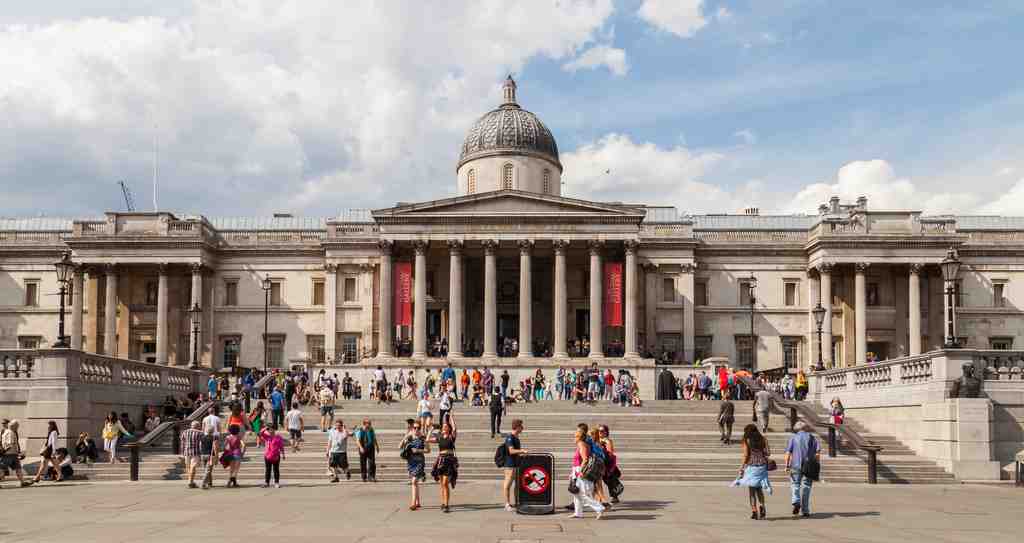
To spot the National Gallery, look straight ahead for a grand, cream-colored building with tall columns, big stone steps leading up to a prominent central dome, and large red banners on either side of its main entrance.
Welcome to the National Gallery, the sparkling heart of Trafalgar Square! Take a deep breath and imagine the bustle of carriages, horses, and Londoners from centuries past. All eyes are on this proud neoclassical building, its massive columns and majestic dome standing at attention like guards of honour. The Gallery has been watching over the square since 1838, but its story began in 1824, when the British government decided-finally!-to build a world-class art collection for everyone to enjoy, not just royal families and princes. In fact, unlike Europe’s grand museums, our National Gallery didn’t begin with a king’s private trove. Instead, it started with the humble purchase of 38 paintings from the heirs of a banker called John Julius Angerstein.
Picture the scene: Parliament buzzing with debate, newspapers reporting scandal. Should we really spend this much on art, they wondered? Thankfully, artists and art-loving aristocrats won the day. Soon, the gallery outgrew Angerstein’s poky house on Pall Mall-so small, one critic grumbled it was like squeezing an elephant into a suitcase! Here on Trafalgar Square, between Mayfair’s riches and the bustling East End, the new gallery became a gift to all Londoners, rich and poor.
If you think the building looks a little… eclectic, you're not alone! When architect William Wilkins was handed the job, he reused columns from King George IV’s old palace and even recycled statues from Marble Arch (talk about upcycling!). When it opened, even the king called it “a nasty little pokey hole.” Critics said its dome and corner turrets looked like a mantelpiece with teapots on top. But hey, tastes change-now it's part of London’s soul.
Step closer and listen carefully -the very ground you stand on once housed royal stables! As the years rolled on, the Gallery survived wars, dust, grumpy critics, overcrowded rooms, and even arguments about whether to show Impressionist masterpieces (some trustees were so appalled, they compared it to hosting a circus in a cathedral!). During World War II, with bombs falling, every single painting was whisked away to a slate quarry in Wales, safe from harm. Every day, the Gallery stood empty-except for a few brave musicians like Myra Hess, who played lunchtime concerts on the echoing marble just for Londoners seeking hope in dark times.
Over the years, incredible gifts and bequests expanded the collection, from priceless Raphaels to rowdy Titians and even Van Gogh’s Sunflowers. The director Charles Lock Eastlake became a kind of art detective, scouring Italy and the continent for hidden treasures to bring home. The Gallery grew sideways and upwards, sprouting new wings-though not always gracefully, if we're honest. At one point, so many British paintings arrived, there was literally nowhere to hang them, and a new museum, the Tate Gallery, had to be created!
There’s mystery and drama around every corner-artists squabbling with curators, critics worried that restorers might “over-clean” masterpieces, daring heists avoided, and decades-long battles over whether paintings should be here, in Dublin, or across the seas. Often, the gallery had to rally the entire nation for donations just to keep a masterpiece in public hands: “Will you chip in for a Titian?” Picture schoolchildren sending in their pennies.
Today, the National Gallery is owned by the people and free to visit-so you, yes you, are now a partner in this grand adventure. As you stand before its storied façade, think about what hangs inside: over 2,300 paintings mapping 700 years of ambition, grief, hope, and creative genius-all drawn together in a building once called “a pokey hole,” but now a beloved palace of pictures. So go on-step inside and meet everyone from Giotto to Cézanne. Just don’t try to take home any souvenirs, unless you fancy starting an international art scandal!
Wondering about the architecture, incidents or the list of directors? Feel free to discuss it further in the chat section below.


