
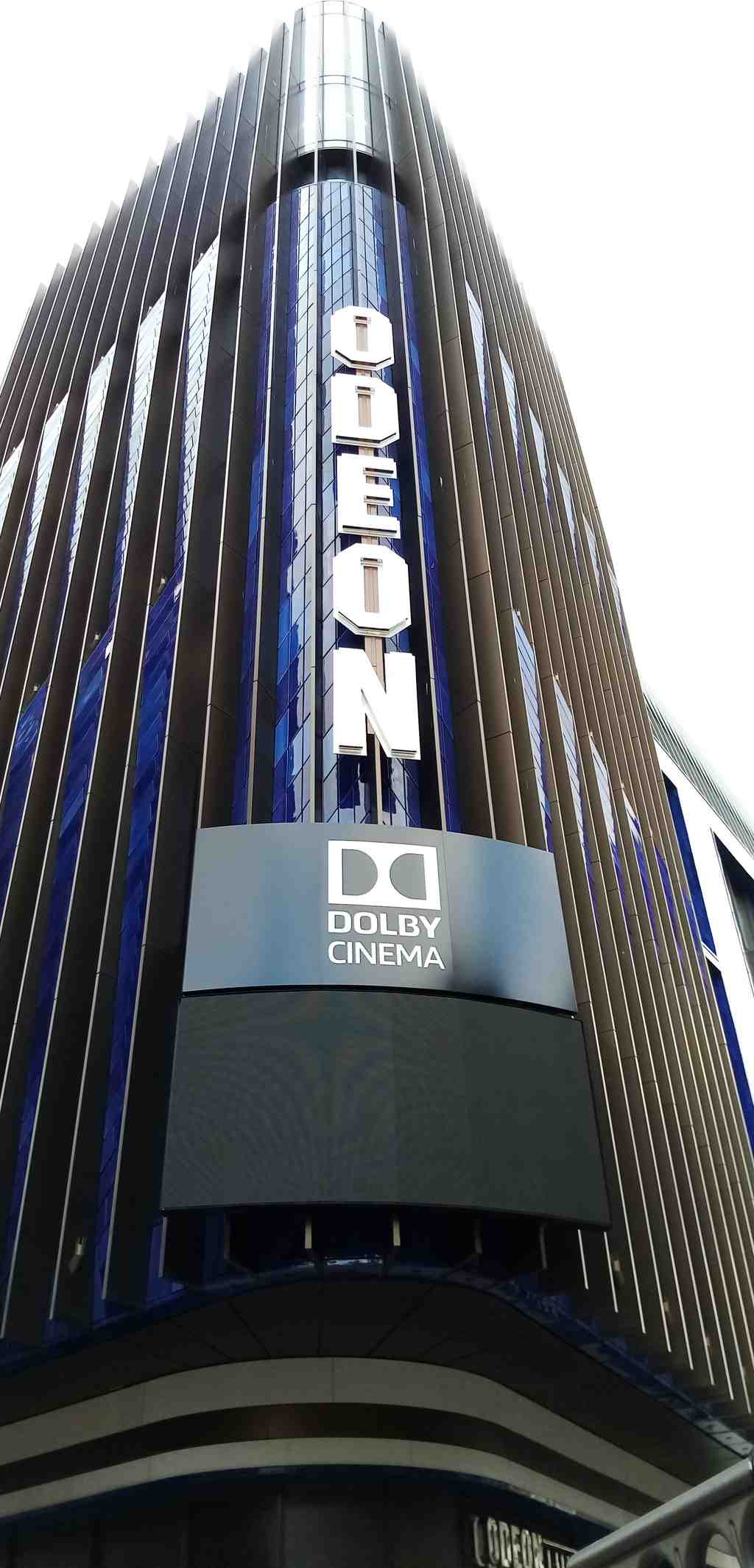
To spot the Odeon Luxe West End, just glance upward at the striking modern building in front of you-the sleek glass and metal façade is sliced with bold vertical fins, and a giant column spells out “ODEON” in gleaming white letters atop the unmistakable “Dolby Cinema” sign.
Now, let’s take a walk through time-and trust me, this building has more plot twists than an Oscar-winning movie! Imagine yourself standing here in the swirling night air of London, surrounded by the bright lights and endless bustle of Leicester Square. Today, you see a futuristic cinema gleaming in blue and steel, but rewind your mental projector to 1930, and you’d be standing before the brand-new Leicester Square Theatre. It was built with all the razzle-dazzle in mind by actor Jack Buchanan and theatre impresario Walter Gibbons-Buchanan himself had a swanky two-story apartment perched on the top! If walls could talk, these would gossip about movie stars and maybe sing a show tune or two.
That first incarnation was more theatre than cinema, with boxes ready for elegant guests and walls of black polished marble. The opening night was a real spectacle-a swirl of film, live stage performances, and the mighty Wurlitzer organ filling the air. For a while, the stage was live with variety shows and toe-tapping singers, with Marie Kendall crooning, “Just Like the Ivy” to the kind of crowd you’d imagine in a golden age movie. A revolving stage-a bit of special effects, 1930s style-added a sprinkle of magic. But the lure of film was too strong, and like a popcorn kernel in hot oil, the theatre popped back and forth between live shows and movies with names like Buchannan’s own film, “That’s a Good Girl.”
It quickly became a place where celluloid dreams came to life. The theatre changed hands faster than a Hollywood script, flipping between Warner Brothers, United Artists, RKO, and eventually the Rank Organisation. Famous names and dazzling premieres became the heart and soul of this spot-picture starlets in glamorous gowns and dapper gents under the flashes of old-fashioned cameras.
London has never been short of drama, and neither was this building. During World War II, late October 1940, a bomb blasted the place-Buchanan’s glamorous apartment included. But like all great cinemas, it was resilient, returning in 1941, restored and ready to whisk audiences away again. In the years that followed, it hosted the UK premieres of “Alice in Wonderland,” Laurence Olivier’s “Richard III,” and the much-loved “Mary Poppins”-that means somewhere in this very spot, magical nannies were practically perfect in every way!
Fashions changed, and so did the theatre. In 1968, it underwent a full Hollywood-style makeover-completely modern, echoing the mood of swinging London-with a Royal Charity Premiere of “Shalako” starring none other than Sean Connery and attended by actual royalty (that’s right, Princess Margaret herself!). Over nearly five decades, it welcomed blockbuster after blockbuster. “Crocodile Dundee” came swaggering in here, and if the walls had ears, they probably still remember every punchline of that premiere.
By 1988, the place had a new name: Odeon West End. Through the ‘90s and into the 2000s, it hosted London Film Festival screenings and big-ticket premieres, from “Toy Soldiers” to “Sex and the City.” In contrast to the packed stars-and-stripes showings, there were days with less than ten people in the audience. I guess not every film can be a box office smash-someone call the extras!
But change, like an untimely plot twist, hit in 2015. After years of movie magic, popcorn spills, and probably a few overdue library fines from all those scripts floating around, the cinema closed its curtains. The whole site was demolished, making way for a brand-new, £300 million scene: The Londoner hotel, topped off (or should I say, bottomed out?) with the reborn Odeon Luxe West End. When it reopened in 2021, it arrived as a digital dream-a state-of-the-art palace sunk deep underground, with plush seats and a Dolby Cinema that would make even the ghosts of old theatre managers jealous.
Now, it’s one of the sparkling jewels of London’s cinema world, hosting the stars of the BFI London Film Festival and the glitzy remaster premieres, like “Les Misérables.” So next time you’re walking by and catch the scent of fresh popcorn in the air, remember that this glimmering cinema has survived bombs, rebuilds, squatters, and even a global taste for digital projection-no spoilers, but that’s what I call a real cinema classic!


