
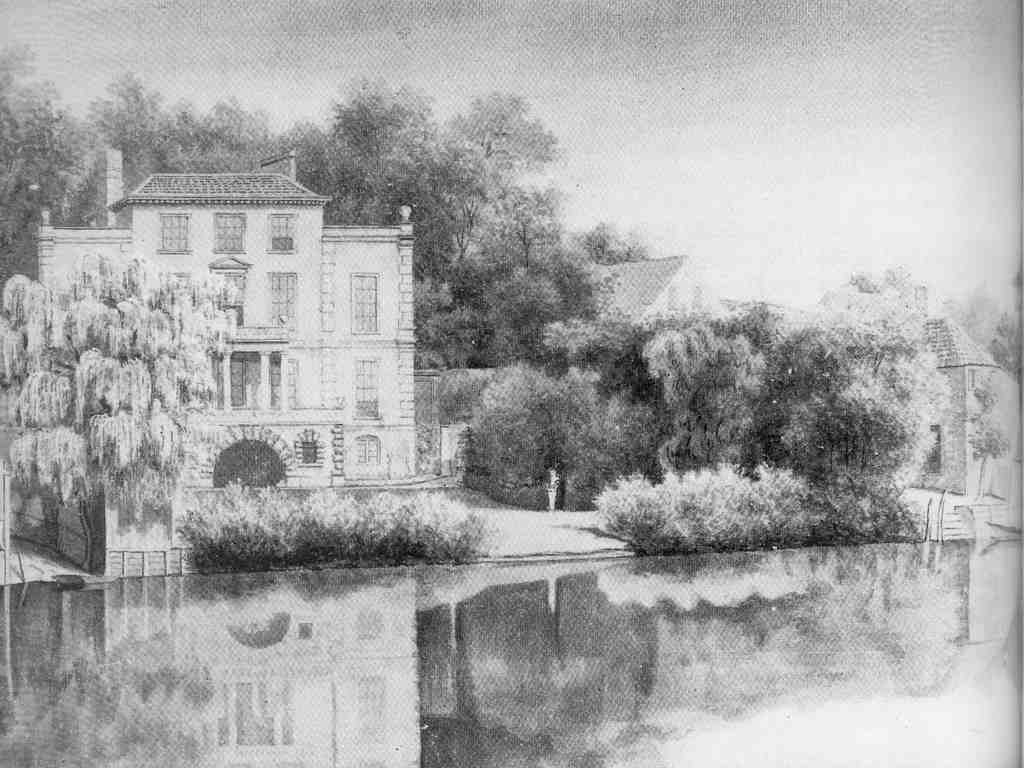
To spot Pope’s Villa, just look across the water for a grand three-storey house with a hipped roof, tall windows, and a huge arched entrance at its center-almost as if it’s inviting you in from the riverbanks.
Now, imagine yourself in the early 1700s, the gentle splash of the Thames just beside you, and the poet Alexander Pope arriving here, quill in hand, ready to transform Twickenham forever. When Pope first settled in this spot in 1719, the area was more countryside than city, with only the sound of birds and a few curious neighbours wondering what the famous poet might get up to. And get up to things he did! Pope leased this plot-a patch of land with a handful of cottages-from Thomas Vernon, and like any ambitious new homeowner, he wasted no time demolishing a couple of the old buildings. He then called in the celebrity architect James Gibbs to help him dream up a villa fit for poetry, with three splendid floors and wide windows looking out towards the river. The front was classic and grand-a bit of Palladian flair-while the most eye-catching part was the dramatic archway on the ground floor, perfect for arrivals by boat. In fact, the design hints at a Venetian palace, as if Venice had floated all the way to Twickenham!
But Pope wasn’t just about fancy houses. He had a soft spot for gardens-especially the kind that surprise you. He filled his land with a theatre, an arcade, a bowling green, even something he called a “What Not,” which, to this day, nobody seems quite sure about. The crowning touch was a winding, silvery tunnel, burrowed right beneath the villa and into his five-acre garden-his very own secret passage. And, oh, what awaited at the tunnel’s end: Pope’s Grotto, a mind-bending underground wonder.
Let’s step into the scene together. Imagine pulling open the door to the grotto and hearing your footsteps echo against the cold stone:. Pope described it as a place that transformed instantly with a swing of the doors. Shut them, and sunlight vanished-leaving only a magical camera obscura, where reflections from the river shimmered and danced across the walls in moving, watery pictures. Light a lamp, and the shells, mirrors, and crystals embedded in the walls would sparkle in a thousand directions-a disco before discos were cool!
But Pope wasn’t finished; he wanted his grotto to be famous, so he added treasures: marble and quartz, sparkling stones and actual chunks of the Giant’s Causeway (a gift from the renowned Sir Hans Sloane, no less). Every visit brought new marvels-a shiny mineral from Cornwall, or maybe a stalagmite from Wookey Hole. Local legend claims some caves were left a bit barer after locals helped themselves to stalactites… shot down from the roof for Pope’s collection! Now, that’s dedication to interior décor.
While Pope wrote poems-words carving into history-his home became a muse to many. Paintings and engravings show riverside views, soft willows drooping over the banks, and the house glowing as twilight settles in. Even the celebrated artist Turner tried to defend the place when demolition threatened-though, alas, with little luck. After Pope’s death in 1744, new owners arrived. Sir William Stanhope added wings and dug a second tunnel, while Baroness Howe swept in and had the villa demolished in 1808, building her own next door and even pilfering some of the grotto’s decorations. The original villa faded, but the stories-and the garden’s “what not”-refused to vanish.
Years later, in the 1840s, the site was reborn, this time as a Tudor Gothic house-still called Pope’s Villa-becoming a school and echoing with children’s laughter instead of philosophical debate. Today, Radnor House School stands here, and though the villa has changed, Pope’s Grotto survives, tucked below ground and opening a magical portal to the past for 30 weekends every year.
As you stand here, let your imagination wander back-water glimmering, the poetic air thick with curiosity. Who knows, with so much history bubbling beneath your feet, you might even hear a whisper from the grotto itself: -a nod from Pope, and the river, and a treasure trove of stories waiting to be discovered.
Yearning to grasp further insights on the alexander pope's villa, pope's grotto or the current use? Dive into the chat section below and ask away.


