
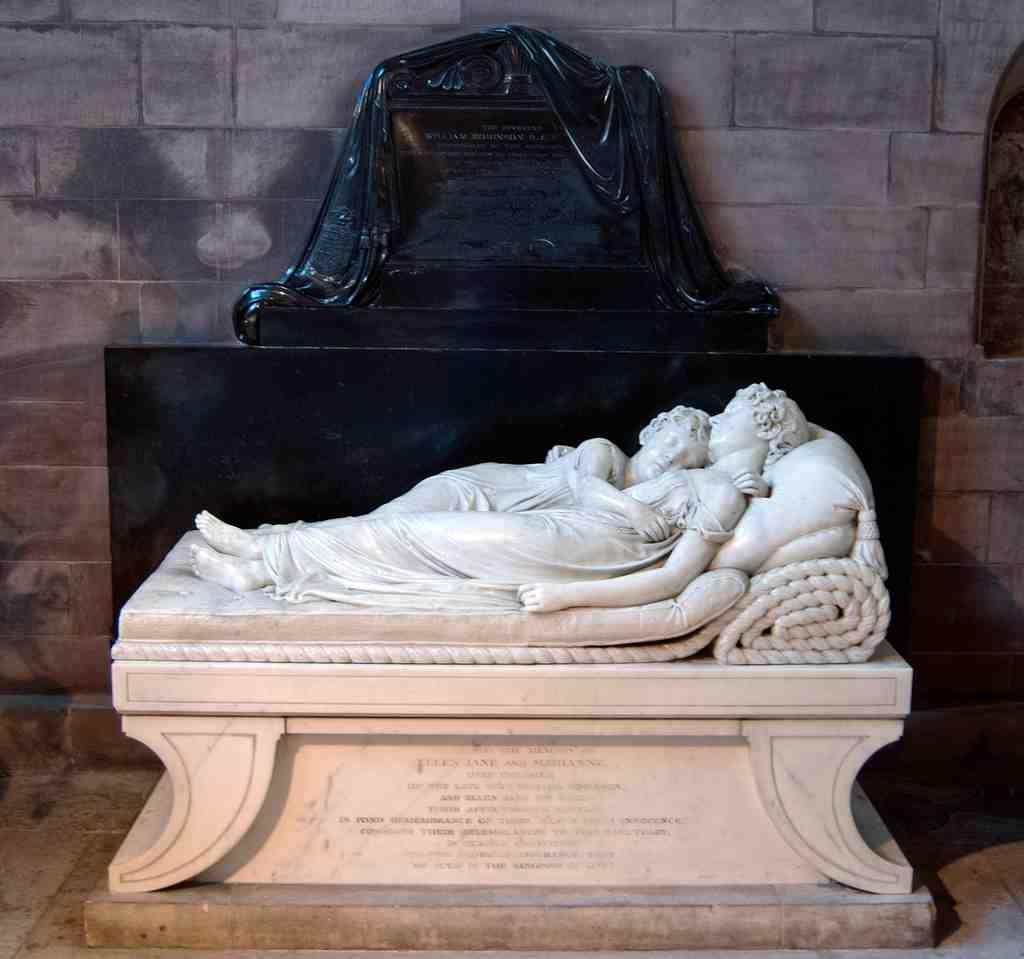
To spot The Sleeping Children, just look to the southeast corner of Lichfield Cathedral-you’ll see a white marble sculpture of two young girls resting together on a bed, nestled below a black marble plaque.
Now, let’s step quietly into this corner of the cathedral, as if we’re tiptoeing into a secret, moonlit bedroom from the early 1800s. In front of you lies the Sleeping Children-two sisters, Ellen-Jane and Marianne Robinson, forever frozen in slumber. Their faces are peaceful, leaning softly together, arms entwined in a brotherly hug, and if you look closely, you’ll spot delicate snowdrops clutched by the younger sister-a symbol of innocence and hope.
Why are they here? Their story might make you reach for a tissue, or at least give your heart a gentle squeeze. It all began over two hundred years ago. Picture a loving mother, Ellen-Jane Robinson, who, in just three short years, lost her husband and both her beloved daughters. Her husband, Reverend William Robinson, was a man of faith, a clergy member at this very cathedral, but heartbreak struck when he fell ill with tuberculosis and passed away in his prime.
No sooner had the widow tried to find new footing than fate played another cruel trick. On a trip to Bath in 1813, young Ellen-Jane, the older daughter, suffered a tragic accident. While getting ready for bed-close to the same age as children you might hear laughing in a schoolyard-her nightdress caught fire. Despite all her mother’s desperate efforts, she did not survive her wounds. If that wasn’t enough, soon after, little Marianne too grew frail and passed away far from home, in London.
What was a mother to do, with grief as her only company? Ellen-Jane found a way to keep her children close-not just in her heart, but for all to see. She visited Francis Chantrey, a renowned sculptor, and asked him to capture her daughters as she remembered them best: drifting into dreams together in each other’s arms. Chantrey, touched by her vision and determined to do justice to the memory, set to work.
The result is what you’re gazing at now-a masterwork so moving, it wowed crowds in London before taking its rightful place here in 1817. It’s not only a story of loss, but a mother’s fierce love, enduring through marble and memory. And above the sisters, if you raise your eyes, you’ll see another reminder of the family: the dark plaque for their father, who, perhaps, is still looking out for his girls.
So, as you stand here, let the silence settle and imagine a time when the cathedral’s shadows held this sorrow-but also a beauty so deep, poets and even the BBC couldn’t help but share the tale. Who knew history could make us both weep and wonder?


