
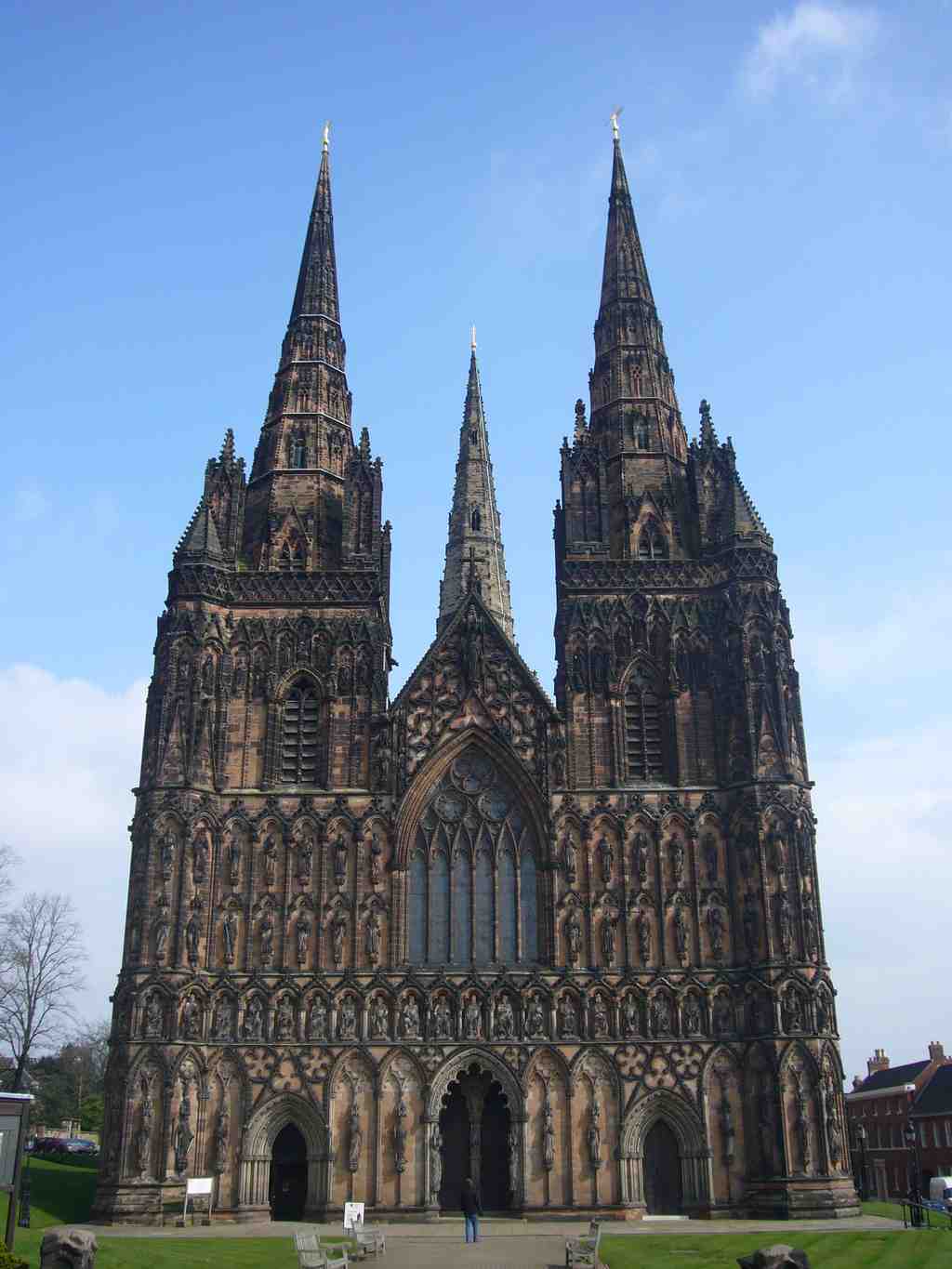
To spot Lichfield Cathedral, just look ahead for the dramatic trio of pointed, reddish stone spires soaring boldly from intricate, carved facades-the tallest one in the centre-towering over the green lawn in front.
Welcome to Lichfield Cathedral! Now, take a quiet moment and listen: through the centuries, this mighty red sandstone giant has seen enough drama to fill a season of a medieval soap opera. Picture yourself standing here over 1,300 years ago, when there was little more than a humble shrine to St Chad, a beloved bishop whose burial drew pilgrims from all around. The first echo of chanting monks would have drifted through the air, mingling with the murmur of hopeful visitors.
Fast-forward a few centuries-now you’re in the early 700s, and the diocese of Mercia is thriving. Imagine the building work, the clink of chisels on stone, as an early cathedral rises on these very foundations. Kings and queens-some friendlier than others-pass through, while whispers swirl that Offa, the mighty king, once finagled to raise his local bishop’s status above even Canterbury’s, just to show off a bit. It didn’t last long, but it made for some awkward tea parties.
By the 13th century, clouds of dust fill the air. The cathedral’s shape transforms spectacularly-choir first, then west through transepts, nave, and that dazzling Lady Chapel at the east. Those soaring spires (“The Ladies of the Vale,” as locals fondly call them) slowly stretch towards the sky. If you look upwards now, the 253-foot central spire might leave your neck feeling rather medieval, too.
Of course, Lichfield Cathedral couldn’t escape England’s wild centuries. In the 1640s, the English Civil War crashes in like a storm. Imagine cannon fire and the desperate clang of swords-the cathedral’s walls become a fortress, its windows a shimmer of fragile stained glass. Siege after siege rains down destruction, smashing glass, shattering statues, and even collapsing the central spire. Legend has it that a deaf mute, John Dyott, took out a nobleman with a remarkably lucky musket shot-talk about making some noise for history!
But even after chaos, Lichfield rises again, gaining new life under the careful hands of Bishop Hacket and later, the Victorian master-restorer George Gilbert Scott. Scott adores detail: just look at those intricate carvings on the west front! Statues of saints, kings, and even a Queen Victoria gaze down, thoroughly unimpressed by today’s passing traffic.
And while Lichfield’s stained glass was smashed to bits, ingenuity saved the day. See the Lady Chapel’s glowing windows? They feature some of the world’s finest medieval Flemish glass-rescued from a dissolved abbey in Belgium, shipped here in 1803 like sparkling treasure. Even now, colors spill across sacred stone, as if the cathedral itself has learned to store up every rainbow after every storm.
The story doesn’t stop with bricks and glass. Hidden treasures abound, from the Lichfield Gospels-ancient manuscripts, complete with Old Welsh notes in the margins-to the recently discovered Lichfield Angel, a carved stone from the 700s once painted in bright, heavenly hues. It survived burial, breakage, and the march of centuries, keeping a silent eye on whichever bishop or prankster walked by.
And in recent years, Lichfield Cathedral made history again: during the COVID-19 pandemic, it transformed from house of prayer to vaccination centre, echoing with the gentle conversations and little hopeful sighs of people coming in for their jabs. It’s hard to imagine the original monks would have guessed “public health hub” when they founded it, but perhaps they would’ve been proud.
So, whether you’re drawn by spire, stone, story, or sheer stubborn survival, Lichfield Cathedral stands as a remarkable reminder-of the deep, sometimes wild, always surprising heart of English history. Now, take a deep breath and let the centuries roll over you. Don’t worry, none of the kings or monks bite… anymore!
For a more comprehensive understanding of the overview, dean and chapter or the music, engage with me in the chat section below.


