
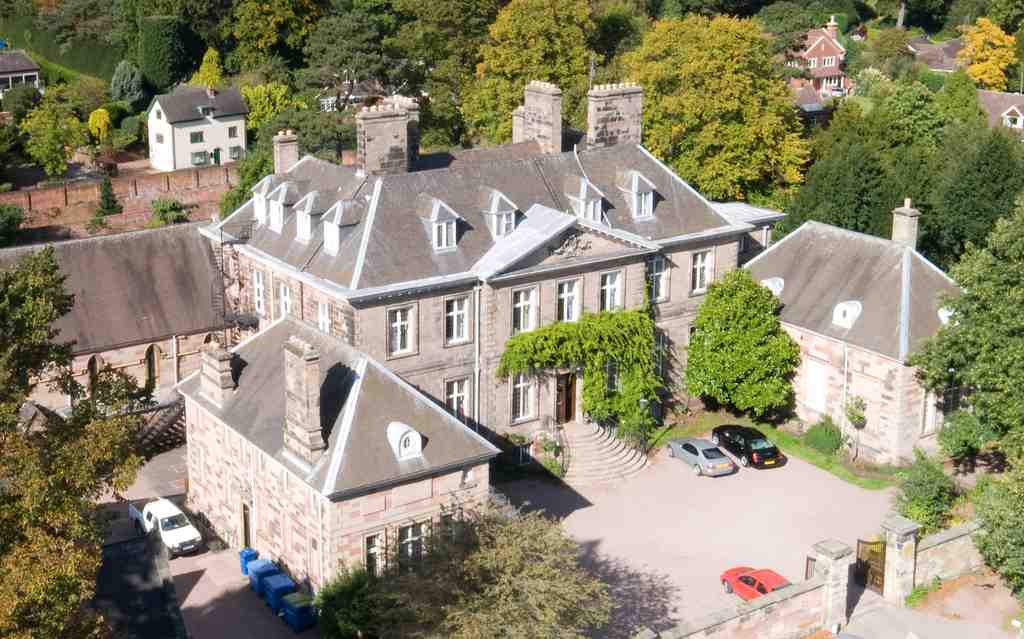
To spot the Bishop's Palace, just look ahead for an impressive, symmetrical stone mansion with a grand entrance, tall chimneys, a classical triangular pediment above the doorway, and a sweep of arching steps surrounded by leafy greenery-it’s tucked in the north-east corner of the Cathedral Close, easy to spot with its stately windows and charming ivy.
Now, take a deep breath-you’re standing in front of over 300 years of shifting fortunes, grand designs, and a few ghost stories, too. The Bishop’s Palace before you is a real survivor, and if its walls could talk, well, they’d probably start with a sigh of relief at still being here. Let’s go back in time-imagine it’s the early 1300s, and Bishop Langton is walking these grounds in flowing robes, planning a palace that would be envied all across England. The original building had a great hall so vast-100 feet by 56 feet-it ranked among the biggest in the land, with a carved wooden roof gleaming in gold and murals that captured the dramatic highs and lows of King Edward I: coronations, marriages, battles, and even his funeral. What a setting for a banquet, with flickering candlelight bouncing off gilt carvings as medieval guests swapped stories and perhaps a few cheeky jokes.
In those days, the palace was like its own fortress, stretching along the east wall of Cathedral Close and wrapped in a sturdy wall. There were private quarters for the bishop, a Lady’s Chamber that probably saw more intrigue than the pages of any history book, and a two-storey chapel. The upstairs was reserved for the bishop himself, while his staff (and I’m sure a few nosy onlookers) had to sneak in from below. They even had their own gateway into a courtyard-a posh address if ever there was one.
But not all stories here are glitter and gold. Fast forward to the stormy decades of the English Civil War in the 1640s. The thunder of cannon fire echoed off these stones as the cathedral close endured not one, not two, but three deadly sieges in just three years. The palace itself was ravaged; its magnificent halls burned out, timber roof collapsed, and what was left was just a haunting shell-where the wind, and maybe a ghost or two, could slip quietly through empty corridors. Bishop Hacket, ever resourceful, repurposed bits of the ruined structure to patch up another house nearby. You have to admire that “waste not, want not” attitude, right?
When peace returned, the palace lay in ruins for decades, a solemn reminder of the chaos. But in 1684, new life was ordered for the old site-a fresh start, a dash of architectural flair, and a sprinkle of stubbornness. Dean Addison led the charge, and within just 18 months (which, let’s be honest, is less time than it sometimes takes to sort out British roadworks), the Bishop’s Palace was standing proud again, gleaming in grey ashlar stone. Designed by Edward Pierce, a man who had worked with none other than Christopher Wren, the building you see now is pure Queen Anne style elegance, with its seven-window front, dormer windows peeking from the low roof, and a classical pediment keeping everything in perfect symmetry.
But the saga doesn’t end there. For years, bishops rather stubbornly refused to live here-perhaps still haunted by tales of smashed windows and stormy nights. Instead, lucky tenants moved in, including the literary Anna Seward. In the late 1860s, Bishop Selwyn fell in love with the place, adding a gothic chapel and two wings. For nearly a century, bishops lived here, until 1953, when the palace became part of Lichfield Cathedral School.
As you stand here, notice the north and east, where the remains of the old defensive ditch still linger-silent witnesses to centuries of drama. The rear garden hides the base of a medieval column, rescued from the past and set out like a mysterious artifact. Layers upon layers of history sit quietly underfoot: laughter from grand feasts, the distant boom of cannons, the hum of schoolchildren today.
So, next time someone asks if these ancient buildings have stories to tell, you can say: “Oh, you have no idea!”


