
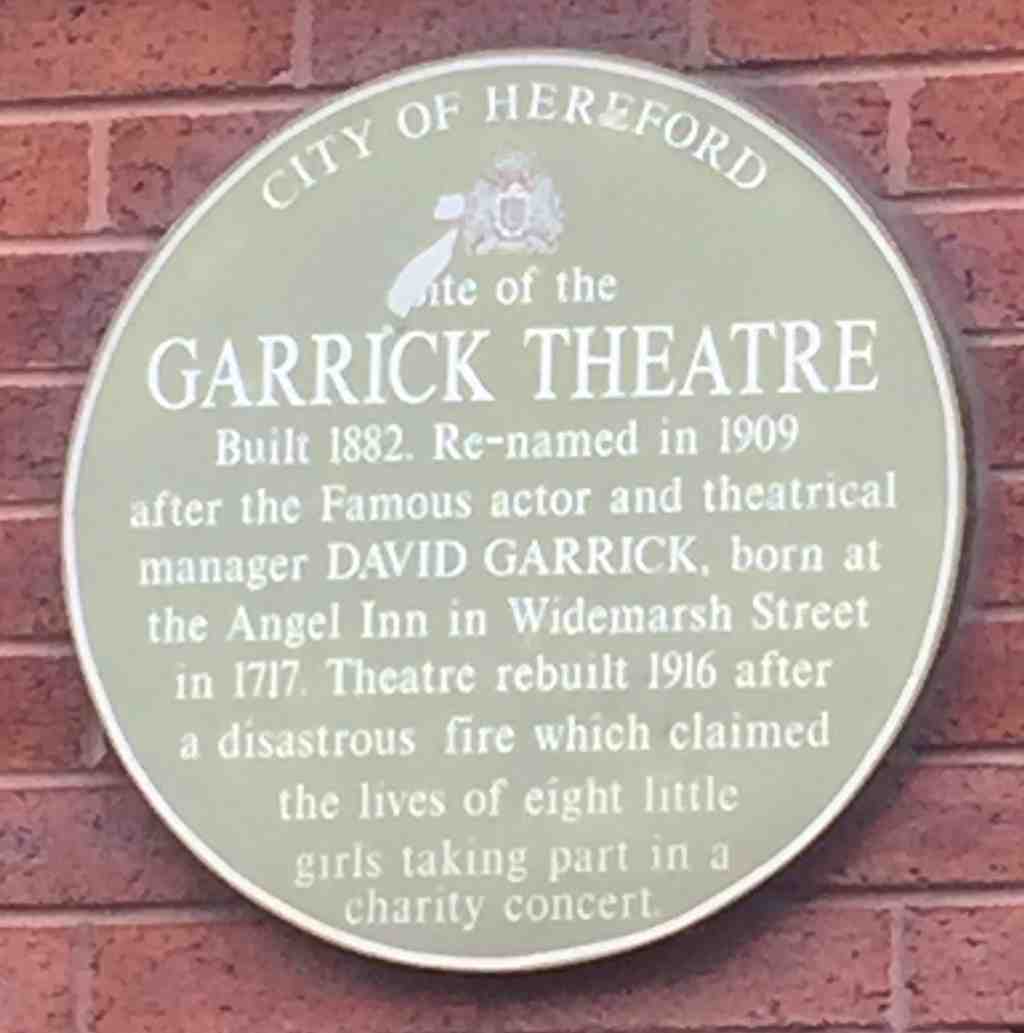
Look for a round, pale green plaque with white writing mounted on a reddish brick wall-this plaque marks the site of the former Garrick Theatre, so keep your eyes at about head height as you walk along Widemarsh Street.
Alright, time for a step back in time-cue the dramatic music and imagine the buzz of Hereford in 1916! Picture yourself surrounded by townsfolk dressed in their finest, soldiers standing tall, and a city alive with the hope of an evening out at the Garrick Theatre. The theatre was a local treasure-built in 1882, later named after Hereford’s own David Garrick, the famous actor-manager born just down the road. The air inside would have been tinged with excitement and a bit of nerves, especially with the world at war outside.
On this particular night, the stage was set for a fund-raising concert to support local soldiers from Hereford and Shropshire. Imagine the backstage: dozens of schoolchildren in costumes sparkling with cotton wool, transformed into snow maidens and Eskimos for the big finale. The air must have been thick with anticipation, mixed with whispers and giggles as they waited for their cue.
But then, tragedy struck. As a group of children finished their performance and began to shuffle offstage-perhaps giggling, maybe shyly waving to parents-a horrible accident happened. One of the costumes caught fire. With cotton wool being about as flammable as a magician’s flash paper (and definitely not theatre-approved!), flames spread in seconds. The sudden chaos, the cries for help, the rush of parents, performers, and even brave audience members-it’s heart-stopping just to imagine. Despite desperate efforts, six children died that night, and two more followed days later.
In the days after, the city was gripped by shock and grief. There was even a touch of mystery and debate-a claim about a carelessly discarded match was raised, but denied by others. The inquest ended with a verdict of accidental death, and the joint funeral was one of the largest Hereford had ever seen. Imagine Broad Street, lined ten deep with mourners, as soldiers carried the tiny coffins.
In the aftermath, the people of Hereford raised money for a memorial cot at the local hospital, and though the theatre was rebuilt and then demolished, the memory remained. Today, this plaque-and another inside the cathedral-stand as silent storytellers, reminding us of a night where laughter turned to tears, and how a community came together in the face of heartbreak.
So next time you pass here, let the story flicker in your mind-after all, history is best remembered with a spark of imagination.




