
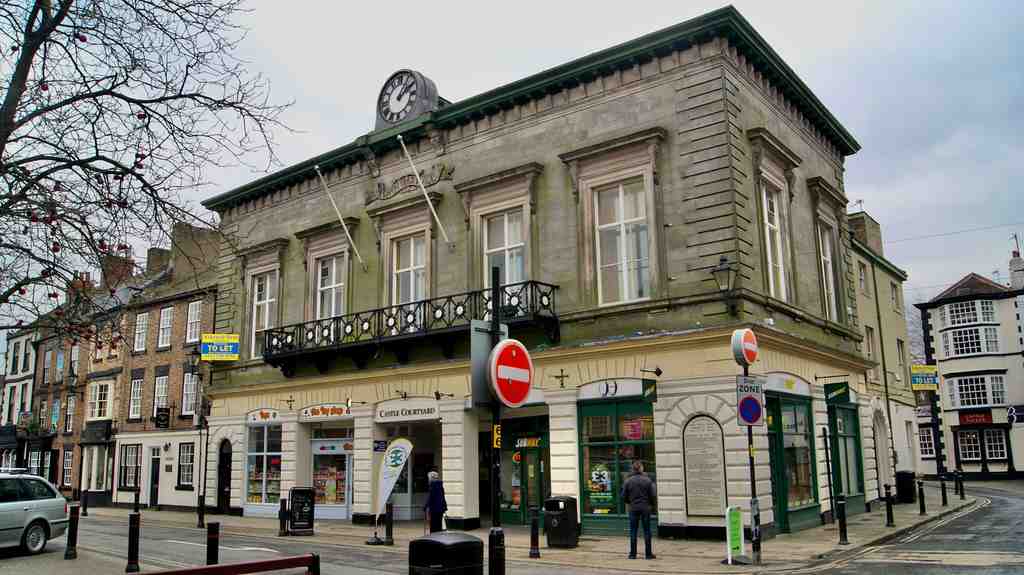
To spot the Old Town Hall, look for the grand, pale stone building right in front of you on the corner, with five tall windows on the upper floor, a black wrought-iron balcony, and a big clock perched at the top-if you see a Subway sandwich shop below, you’re in the right place!
Alright, time to step into the busy heart of Knaresborough’s history! Imagine standing here centuries ago, with the Market Place alive with horses clip-clopping, traders shouting out their wares, and townsfolk dodging the puddles left behind by the rain.
This spot was once home to a simple toll booth, guarding the gateway to town business back in the early 1600s. By 1768, it grew into a sessions house, complete with gloomy prison cells in the basement-let’s hope they had better room service than modern hotels! Townsfolk would gather here every other week to watch debtors’ hearings, and once a year, you could find the all-important county court in session. Can you imagine the tension in the air as people waited their fate while the judge peered down from above?
Fast forward to the mid-1800s, and the old building was out of fashion-a bit like wearing woolly socks to a summer garden party. Sir Charles Slingsby, whose name sounds rather splendid, laid the first stone for the new Town Hall. Built in neoclassical style, it was a prize of ashlar stone and fancy design by John Child, with five grand bays and dramatic pillars. On market days, the ground floor was open, a kind of weatherproof market where you could haggle and gossip under cover. The upper floor became the prime assembly room-ideal for grand meetings, local drama, and, if you listen closely, you might almost hear politicians practicing their speeches on that iron balcony out front.
Up above, the striking clock was made by J. Bailey and Co. of Manchester. Candidates for Parliament would rally the crowds from the balcony, their voices ringing out above the Market Place-if someone got egged, well, that’s politics for you!
As the town grew, the Old Town Hall saw dances and celebrations, but also responded to serious business. During the Second World War, soldiers from the 41st Royal Tank Regiment attended concerts here before heading off to North Africa, carrying memories and melodies with them.
Come the 20th century, the town hall decided to try on a new hat-first a mall called Castle Courtyard, then a nightclub, and even a tourist office. Who says a historic building can’t reinvent itself? So as you stand here, picture all the laughter, worry, and change that these stone walls have witnessed over centuries. And if you feel a sudden urge to give an election speech from the balcony, just remember: it’s not allowed anymore, but you’ll certainly have my vote for enthusiasm!


