
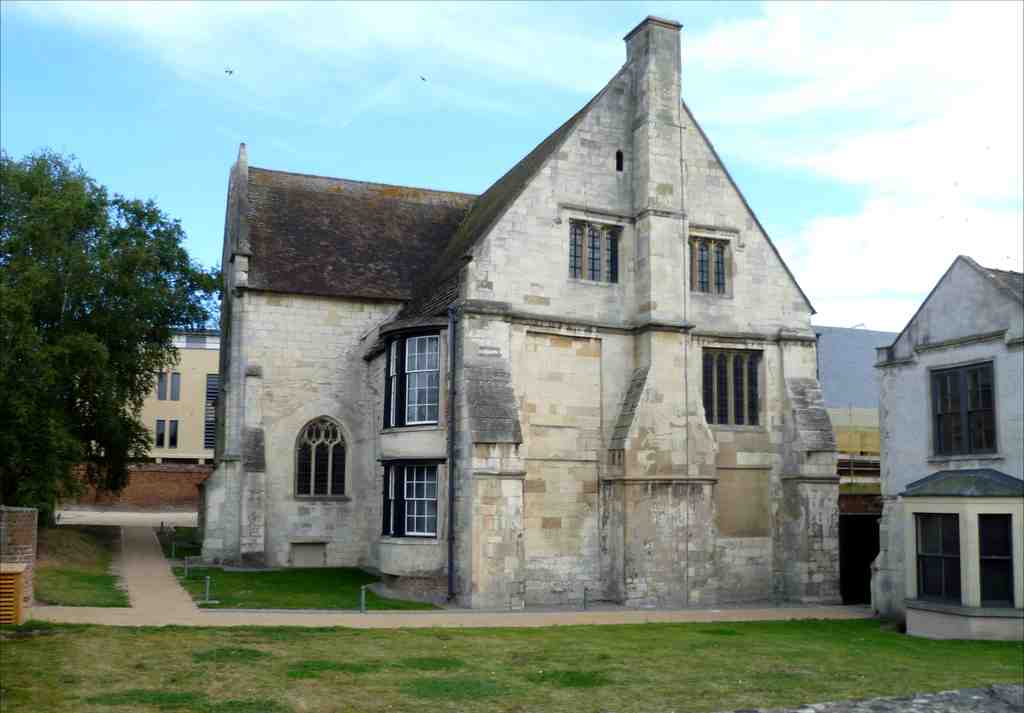
To spot Blackfriars, just look for the sturdy pale-stone building right in front of you with pointed gothic windows and a distinctive semi-circular bay window sticking out-it's a real architectural time capsule.
Welcome to Blackfriars, a site packed so full of stories, you’d think the walls could gossip! Imagine you’re standing here nearly eight centuries ago. Monks in flowing black cloaks, the original “men in black,” shuffle about the grounds. Built around 1239, this was home to Dominican friars, a place alive with chants, quiet study, and the gentle scratching of quills in the scriptorium. The friars lived in a bustling labyrinth of stone-a church, cloisters to your left and right, cozy dormitories overhead, and Britain’s oldest purpose-built library echoing with whispered secrets.
But history was not always peaceful here. In 1539, along came a trend rather less holy: shutting down monasteries! A local businessman, Thomas Bell, bought Blackfriars for a tidy sum. He didn’t just move in-he transformed the old church into a swanky house, chopped the building down to half its length, and even added a stylish bay window you see before you. Those dormitories? They got a dramatic scissor-braced roof, still famous today. The cloisters turned industrial, filled not with prayers but with the sounds of cap-making!
It wasn’t all business and banter. Picture 1555-Bishop John Hooper, a man of conviction, is burned at the stake not far from here for his beliefs. His family, including his wife Anne, faced plague and heartbreak in exile. And through centuries, the buildings morphed again: grand mansion, divided homes, colorful tenants, even periods of disrepair.
The gateways that once guarded the friars’ quiet contemplation are gone-one collapsed and the other vanished before 1724. But the memory survives in Ladybellegate, the street right behind, named for Bell’s gifted niece. The buildings you stand before were rescued, revived, and finally opened to the public in 1984. Today, they echo with joy: wedding bells, laughter from concerts, and maybe, if you listen closely, the rustle of medieval robes.
So, whether for monks, merchants, or modern celebrations, Blackfriars has always had a story waiting in its stones… and I promise it’s never a “friar drill!”




