
Edinburgh Audio Tour: Enchanting Edinburgh's Landmarks Journey
A Parliament vanished by royal decree. A church where rebels once crowded the pews. A crooked old house where goldsmiths plotted and legends tangled with fact. Edinburgh’s Royal Mile has secrets layered in every stone. Unravel the city’s dramatic past at your own pace with this self-guided audio tour. Trace hidden trails behind modern politics, royal scandals, religious wars, and stories the guidebooks leave out. What really happened when Scotland lost its Parliament overnight? Who paced Canongate Kirk as Jacobite soldiers held their prisoners under watchful eyes? And which glittering treasures sealed one resident’s gruesome fate in the John Knox House? Follow twisting closes and shadowed alleyways from debate halls to haunted homes. Hear echoes of rebellion, whispered schemes, and fierce pride in every step as the centuries come alive around you. Ready to open Edinburgh’s doors of history and see what waits within? Start exploring now—the secrets are closer than you think.
Tour preview
About this tour
- scheduleDuration 100–120 minsGo at your own pace
- straighten3.7 km walking routeFollow the guided path
- location_onLocationEdinburgh, United Kingdom
- wifi_offWorks offlineDownload once, use anywhere
- all_inclusiveLifetime accessReplay anytime, forever
- location_onStarts at Scottish Parliament
Stops on this tour
lock_open 3 free previews · 12 unlock with purchase
Take a look at those bold, modern shapes rising up in front of you - no, it’s not an alien landing, it’s the Scottish Parliament! Right here by the foot of the Royal Mile, in the…Read moreShow less
Take a look at those bold, modern shapes rising up in front of you - no, it’s not an alien landing, it’s the Scottish Parliament! Right here by the foot of the Royal Mile, in the Holyrood area of Edinburgh, the Parliament is the heart of Scottish democracy. If you listen closely on a busy day, you might even catch the chatter of politicians, passionate debates, and perhaps the odd sound of a gavel striking. There you go! The Parliament might look cutting-edge today, but Scotland’s been sorting out its own affairs for hundreds of years. Before 1707, the old Kingdom of Scotland had its own Parliament, and you can almost imagine voices echoing from long ago, filling the streets with heated discussions. All that changed with the Treaty of Union, when Scotland and England became one kingdom, and the Scottish Parliament vanished like a magician’s rabbit. I promise, no politicians were actually turned into rabbits - although that might’ve made things more entertaining! Skip forward through the centuries - picture dark days, rain tapping on Edinburgh cobbles, and locals whispering about their old Parliament, now gone. But the Scottish spirit is built of thistle and steel! Through two World Wars, and with cries for home rule growing louder every decade, Scotland kept wishing for its own voice again. And then, in 1999, the Parliament returned! Imagine the first meeting: excited MSPs in colorful tartan, shuffling papers, clearing throats, and just a faint whiff of bagpipes on the breeze. It was a day of pride, energy, and a touch of nerves-after all, it’s not every day you reopen something after 290 years. Since then, the Scottish Parliament’s had more powers given…and sometimes taken back, in a political tug-of-war with Westminster. So as you stand here, remember: this building holds the hopes of a nation that never stopped wanting a say in its future. If you hear the ghosts of debates past, don’t worry-it’s just the sound of Scotland, still speaking up after all these centuries. Seeking more information about the officials, parliamentary chamber or the proceedings? Ask away in the chat section and I'll fill you in.
Open dedicated page →As you walk along the Canongate, keep an eye out just ahead for a striking church with a soft, sandy face of stone and a roof that curves in gentle waves-almost like it’s trying…Read moreShow less
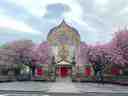
As you walk along the Canongate, keep an eye out just ahead for a striking church with a soft, sandy face of stone and a roof that curves in gentle waves-almost like it’s trying to outdo Edinburgh’s famous hills. You can’t miss the iron railings, the grand archway, and those eye-catching bright red doors to either side, as if the church can’t decide which entrance is best for dramatic arrivals. In the center, above the main door, you’ll spot a gleaming coat of arms and the arms of Thomas Moodie too, surrounded by two bare trees that look a bit like giant candlesticks in wintertime. Now, standing right in front of this historic place, imagine it’s the late 1600s, and Old Town is buzzing with old Scottish drama. This is the Canongate Kirk, sometimes called the Kirk of the Canongate-serving everyone from the Parliament just down the hill to even the mighty Edinburgh Castle way up the street. Believe it or not, this small parish covers big ground. If you think the red doors look a bit royal, you’re not far off-the Queen herself used to come here for a Sunday service, and even her granddaughter, Zara Phillips, got married inside. But this place almost didn’t exist! After the Reformation, the good folks of Canongate were shuffled around like a lost choir, kicked out of Holyrood Abbey so the King could have a fancier chapel. The congregation ended up in Lady Yester’s Church while the Privy Council sorted out who got the keys-if you’ve ever fought over who gets to use the last teabag, you’ll know the feeling. Then along came Thomas Moodie, whose money was meant for everything from new church bells to a snazzy tolbooth, but after much royal letter-writing (and a few headaches, I’d bet), the funds built this kirk right here. Canongate Kirk has seen its fair share of chaos. In 1745, imagine the church packed with anxious soldiers-Jacobites using these pews to imprison folk after the Battle of Prestonpans. In less dramatic times, it’s witnessed fiery preachers, grand royal parades, and more than a few disagreements about who got the best seat. So as you look at its quiet façade today, try to picture all the commotion, the whispered prayers, royal footsteps, and maybe-just maybe-a hapless parishioner getting lost between these bright red doors. Now, shall we follow the echoes of history to our next stop? Exploring the realm of the building and kirkyard, current work or the ministry? Feel free to consult the chat section for additional information.
Open dedicated page →Take a look straight ahead-can you spot the house that looks like it’s straight out of a storybook? You’ll know you’re looking at John Knox House when you see a jumble of gables…Read moreShow less
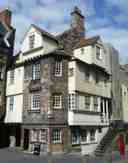
Take a look straight ahead-can you spot the house that looks like it’s straight out of a storybook? You’ll know you’re looking at John Knox House when you see a jumble of gables and overhangs, with a patchwork of old stone and creamy, uneven walls. Notice the odd angles, the wooden beams, the white-framed windows all crammed in together, and that grand stone stairway climbing up the side. If you squint just right, you might even imagine yourself in a scene from centuries ago, with the sounds of horses on the cobbles and the shouts of market traders ringing in your ears. Now, here’s a tale with as many twists and turns as the house itself! This is John Knox House-at least, that’s what most folks will tell you. This curious old building, built around 1470, is famous for being linked to John Knox, the fiery Protestant reformer, though truthfully he might have just passed by and waved now and then! Historians reckon he lived further up the street in Warriston Close, but let’s not let a minor detail get in the way of a good legend, eh? But who did live here? A whole cast fit for a drama! Goldsmiths by trade and loyalists to kings and queens-imagine, inside these walls, James Mosman once worked on the sparkling jewels of Mary, Queen of Scots herself. Now there’s a job with pressure! Poor Mosman ended up at the wrong end of loyalty to his Queen. When Edinburgh Castle fell after a long, noisy siege, Mosman was caught minting coins for Mary’s supporters. The reward? A gruesome end. He was hanged, quartered, and beheaded-a dark twist for a man who once dealt in gold and gems. As you stand here, it’s easy to imagine the secrets tucked under those painted ceilings and behind that timber gallery. Not to mention the 19th-century writers who adored a good story themselves-they made sure John Knox’s name stuck to this place, whether or not history agreed! The house’s bumpy road to survival didn’t end there-at one point, it nearly got knocked down. But thanks to the efforts of passionate locals, it was saved and restored, bit by bit, like patching up a beloved old coat. Today, it’s a museum preserving tales from all around Scotland as part of the Scottish Storytelling Centre right next door. Stand right here, and you’re not just looking at windows-you’re peering into the past. Listen carefully: maybe, just maybe, the ghosts of goldsmiths and reformers are whispering about who really lived here, and who just enjoyed the reputation. Alright, onward to our next stop-there’s always another story waiting just around the corner!
Open dedicated page →

Show 12 more stopsShow fewer stopsexpand_moreexpand_less
Ahead of you is the Tron Kirk, standing out proudly with its tall, pointed spire that stretches into the sky like it’s trying to tickle the clouds. Look for the large, old clock…Read moreShow less
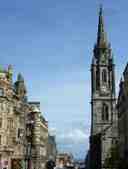
Ahead of you is the Tron Kirk, standing out proudly with its tall, pointed spire that stretches into the sky like it’s trying to tickle the clouds. Look for the large, old clock on the tower just above the Royal Mile-believe me, if you miss it, you might need your eyes checked! The stonework is deep, grey, and full of stories, squeezed between the bustling Royal Mile and the neighboring historic buildings. Now, as you’re standing here, the chatter of the street mixing with the distant ringing of the clock, imagine you’re back in the 17th century. The Tron Kirk was the place to be! Nobles, professors, and regular townsfolk all squeezed in for their special reserved seats. Back then, this wasn’t just a church; it was the social heart of the Royal Mile. And the name? "Tron" comes from an old Scots word for the huge weighing beam outside, where people weighed their goods-because every good church needs a little extra weight. In fact, under your feet are layers of history-this church was built right on top of old tenement buildings and winding alleys called wynds and closes. When they dug it up in the 1970s, archaeologists found ancient cobbles and cellars, like a Scottish version of Pompeii, but with fewer volcanoes and more tartan. The Tron Kirk saw battles, royal visits, and even had its own aristocratic drama. In the gallery, the Lord High Commissioner sat on his throne, flanked by the Lord Chancellor and Lord Provost. I bet there was a fierce competition about who had the softest cushion! In 1650 and again in 1745, during stormy times like the Battle of Dunbar and when Bonnie Prince Charlie came to town, the church filled with people hoping for a miracle-or at least a slightly warmer pew. So while it’s not a working church anymore, the Kirk might just be the best storyteller on the Royal Mile. If only these stones could talk… but luckily, you’ve got me! Time to resist the urge to check the clock for a time-travel portal, and onward to the next adventure! Want to explore the archaeology and pre-church history, religious history or the ministers in more depth? Join me in the chat section for a detailed discussion.
Open dedicated page →You’re standing just in front of St Giles’ Cathedral, and, trust me, it’s hard to miss! Look ahead for a grand, stony church with jagged edges along the roof, almost like a crown…Read moreShow less
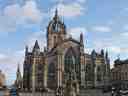
You’re standing just in front of St Giles’ Cathedral, and, trust me, it’s hard to miss! Look ahead for a grand, stony church with jagged edges along the roof, almost like a crown made of stone fingers reaching for the sky. Just above the entrance, you’ll see a statue, and right at the top of the church, an extraordinary crown-shaped spire sits on the roof-Edinburgh’s own version of a medieval giant’s tiara. The big, arched stained glass windows add a splash of color and mystery, especially when the sunlight peeks through them. Now, picture this place hundreds of years ago-old stone, cold winds sweeping along the Royal Mile, and the sound of footsteps echoing inside the huge halls. Here stands St Giles’ Cathedral, known in Scottish Gaelic as Cathair-eaglais Naomh Giles, or as locals sometimes call it, simply “the High Kirk.” It all started way back in the 12th century, probably thanks to King David I or Alexander I-nobody’s quite sure, which adds a bit of mystery. It was dedicated to Saint Giles, the protector of lepers and outcasts. Imagine medieval monks from the Order of St Lazarus here, tending to people society shunned. By the 14th century, this church had outgrown its first small Romanesque look, so they built bigger, added bits, and tinkered with it up until the early 1500s. This place has seen it all: riots, parliaments, even prisoners in the back rooms. It became a cathedral, a meeting house, a prison-at one point, it was the multitool of Edinburgh buildings. But here’s the drama: On a July day in 1637, King Charles I tried to introduce a fancy new prayer book. The congregation wasn’t having it-in fact, someone threw a stool at the minister! This single clatter helped spark the Scottish Reformation. St Giles’ became the beating heart of Presbyterianism worldwide, the “Mother Church of World Presbyterianism." John Knox, fierce leader of the Scottish Reformation, preached here-imagine his booming voice echoing inside these stone walls, thundering about freedom, faith, and maybe a little bit of trouble. The building’s changed with the times-big makeovers in the 1800s, memorials added by hopeful Victorians, and the magnificent Thistle Chapel tucked in just over a century ago. Today, it’s not just a working church, but a magnet for more than a million curious visitors a year. So go on, lean in closer to those ancient walls. Who knows? You might just hear the whispers of passionate reformers, the sturdy tramp of lepers’ feet, or the faint echo of a flying stool. Welcome to St Giles’, the grand old storyteller of the Royal Mile! To expand your understanding of the name and dedication, location or the architecture, feel free to engage with me in the chat section below.
Open dedicated page →As you’re walking up, look ahead for a grand, stone building with a row of chunky columns holding up a triangular roof-almost like a Scottish version of a Roman temple. Below…Read moreShow less
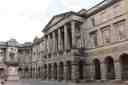
As you’re walking up, look ahead for a grand, stone building with a row of chunky columns holding up a triangular roof-almost like a Scottish version of a Roman temple. Below those columns are wide, arching doorways, and just out front, a statue of a rider on horseback stands guard. That’s Parliament House. If you see this impressive, slightly weathered fortress of a place rising up before you, you’ve made it! Now, picture this: Back in the 1600s, this place would have been bustling with folks in capes and wigs hurrying across the cobblestones, with the mutter of serious discussions and the clinking of boots echoing off the stone walls. Parliament House isn’t just any old building. In fact, it’s the world’s first purpose-built parliament house, finished way back in 1640 when most people here would have still thought “Wi-Fi” was a kind of mystical Scottish weather. It’s nestled just beside St Giles’ Cathedral, and for decades hosted the Parliament of Scotland itself-imagine bold debates, urgent whispers, and maybe the odd snore through a boring speech! This mighty hall behind those columns became the seat of law and decision-making: packed with tapestries, the sweet smell of old wood beams, and the glint of sunlight streaming through stained glass. If you listen closely, you might almost hear voices from the 1600s arguing about royal taxes or, perhaps, who was next for a cup of hot ale. Of course, before all this, the Scottish Parliament was a bit like your favourite pop band-constantly on tour, never with a decent home. By the 1630s, it simply outgrew its space in St Giles’, and King Charles I suggested it was time for new digs. Once Parliament House was commissioned, the city council even chipped in money-and after a bit (okay, a lot) of construction dust and a few demolished manses, the building was finally ready. Inside, the Parliament Hall was the place to be-a giant oak roof stretches overhead even now, and the walls were once covered with fancy tapestries and portraits that watched everyone like stern, well-dressed owls. King Charles I himself was the first monarch to sit in a session here... though whether he enjoyed the drafty Scottish air is anyone’s guess.
Open dedicated page →All right, take a look ahead of you. The Cowgate stretches out below, like a secret vein running under Edinburgh’s more famous streets. To spot it, just follow the road as it dips…Read moreShow less
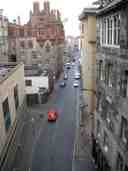
All right, take a look ahead of you. The Cowgate stretches out below, like a secret vein running under Edinburgh’s more famous streets. To spot it, just follow the road as it dips beneath the stone arches and look for the narrow, busy street wedged between towering grey and brown buildings. That bold reddish-brick building to your left with the pointed gables? That's a great clue you’re in the right place! If you listen closely, you might even hear the whisper of hooves-don’t worry, that’s just your imagination running wild. So, you’re standing on The Cowgate, one of the oldest and most storied lanes in Edinburgh. Picture this street almost 700 years ago: instead of cars, you’d see cattle being herded to market, mooing and clopping their way down what was then a muddy lane at the city's edge. The name even comes from that herding tradition-“gate” means “way,” so this was literally the "Cow Way." Makes you wonder how many cows have been confused by the roundabouts over the years, eh? The air here has always been thick with life. In the 1400s, aristocrats and city leaders built their grand homes nearby-imagine elegant carriages and lords in finery parading past, quite a sight before it turned into what locals called "Little Ireland" in the 1800s. Back then, this area buzzed with immigrant families, often poor but always full of stories, music, and hope. And, yes, maybe a stubborn cow or two who didn’t want to go to market! But the street holds secrets too-Mary, Queen of Scots herself once stayed right here, the odd royal feast held with bread and wine, and more than a hint of drama in the air. She was even the subject of some sneaky night-time visits, if you believe the old tales. It’s not all ancient history, though. In 2002, fire swept through these twisting alleys-a real-life drama. You can still imagine firefighters dashing about, trying to save what they could from the “rabbit warren” of buildings. It took days to stop the flames, but miraculously, everyone escaped. And just a few years ago, the area’s new beginnings started, with modern buildings rising where ashes cooled, like a fresh chapter for the Cowgate. So as you stand here, surrounded by the echoes of a thousand years, remember: every footstep on this street adds another line to its long, unpredictable story. And hey, if you smell something strange, don't blame the ghost cows lingering around-blame it on Edinburgh's “atmosphere” instead! Ready for the next adventure?
Open dedicated page →If you look ahead, you’ll spot Greyfriars Kirk right in front of you! It’s got a simple but striking presence: a pointed stone façade with tall, narrow windows peering out like…Read moreShow less
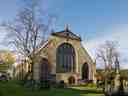
If you look ahead, you’ll spot Greyfriars Kirk right in front of you! It’s got a simple but striking presence: a pointed stone façade with tall, narrow windows peering out like curious onlookers. The building is weathered, soft yellow-grey stone, and it's flanked by old gravestones and bare-branched trees arching over the grass. Take in the sharp spires at each corner and the big arched window in the middle - you can’t miss it. Alright, let’s set the scene! Imagine the scent of damp grass and the distant caw of crows echoing off the headstones. Welcome to Greyfriars Kirk, a church that’s seen its share of drama and even a few explosions. Behind these walls, history crackles and whispers. Back in the 1400s, a bunch of friars in grey robes-nicknamed the “Grey Friars”-sauntered in from the Netherlands. They settled right here, under royal protection from King James IV. Picture the place bustling with fifty or sixty friars, their soft footsteps on stone, and sometimes a royal visitor or two. If these old gravestones could talk, I imagine some would ask why you didn’t bring them a snack! But things haven’t always been peaceful. After the Scottish Reformation, the old friary was converted into a cemetery and, eventually, this very church took shape-bit by bit-between 1602 and 1620. Greyfriars Kirk was right in the thick of the action when the National Covenant was signed here in 1638, as the city buzzed with tension and hope. Over the years, the Kirk faced fire, an explosion that took out its tower, and at one point it had to house Cromwell’s troops-not the ideal bed & breakfast, I promise you. But they rebuilt, split the church in two, then joined it back together, always keeping its spirit alive. Look around at the beautiful stained glass windows, the sunlight dancing through them-a touch of drama in every corner. Even now, you can hear Gaelic services rung out every week, echoing traditions that go back more than 300 years. The Kirk isn’t just a piece of history-it’s alive and kicking, working with the community and still welcoming new stories every day. So take a breath, soak in the atmosphere, and if you feel a chill, it’s probably just the wind-or maybe one of those old friars checking to see if you brought enough shortbread for everyone. Onward to the next stop! Fascinated by the setting and kirkyard, architecture or the features? Let's chat about it
Open dedicated page →As you come up to the Grassmarket, look out for a wide, cobbled open space framed by tall historic buildings, many now bustling with cafes, pubs, and little shops. If you look up…Read moreShow less
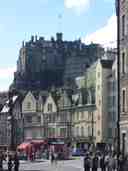
As you come up to the Grassmarket, look out for a wide, cobbled open space framed by tall historic buildings, many now bustling with cafes, pubs, and little shops. If you look up and to your right, you'll see Edinburgh Castle perched dramatically on the rocky cliff above, almost like it's keeping an eye on the square below. The atmosphere is lively, with people scattered at the outdoor tables and maybe even a piper playing in the distance. The Grassmarket sits much lower than the roads around it, so you might feel almost tucked into a secret part of Edinburgh's heart. Now, let your imagination take over for a moment: centuries ago, this would have looked very different. Try to picture the clatter of hooves and the lowing of cattle as animals were herded through for sale. Traders from all over Scotland would crowd in, their stalls overflowing with fresh produce, iron goods, fragrant tar, and bright pots of painter’s colours. This place was alive with the sound of barter and the smell of hay and livestock-a proper sensory overload! In fact, the Grassmarket earned its name thanks to the grassy pens for animals and the marketplace buzz. If you couldn’t find it then, you probably weren’t listening hard enough. But it wasn’t all business. At the southwest corner, take a peek at the Vennel, and if you squint, imagine the Flodden and Telfer town walls still standing guard. Back in the day, this spot wasn’t just about trade; it was also a crossroads for restless spirits-and not just because of the nearby pubs. The Grassmarket has seen everything from fairs to public hangings, with crowds gathering to watch, gasp, or, if the day was right, run for cover. Picture real history here: Daniel Defoe walked these cobbles and wrote about the Bow being packed with traders in every heavy good you could imagine. Horse markets, cattle fairs, and, for a bit of 18th-century celebrity gossip, the poets Wordsworth and Robert Burns spent nights at the local White Hart Inn. If you slept here back in the 1840s, don’t expect much space or privacy: more than ten people might be crammed into a single room, and good luck finding a toilet! The Grassmarket’s not just about the past-it’s still a meeting spot for stories and a perfect perch for castle views. In fact, as you’re standing here, you’re standing in the very place where markets changed hands, history happened, and the odd ghost story was born. Well, I suppose in Edinburgh, you never know who-or what-you might bump into after dark! Keep your eyes open, enjoy the view, and soak up the buzz. This is Edinburgh at its best and liveliest. Fascinated by the location, archaeology or the as a place of execution? Let's chat about it
Open dedicated page →Look up to your left! The castle you see rising dramatically above the city, perched on top of a dark, rocky hill, that’s Edinburgh Castle. It looks a bit like a giant stone ship…Read moreShow less
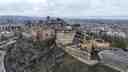
Look up to your left! The castle you see rising dramatically above the city, perched on top of a dark, rocky hill, that’s Edinburgh Castle. It looks a bit like a giant stone ship anchored on a steep cliff, overlooking the city like a watchful guardian. The thick old walls curve around the edge of the rock and the highest point bristles with towers and battlements. Honestly, if you squint, you might imagine a flag fluttering and a medieval knight peeking out, checking for invaders or just looking for his next snack. Now, imagine yourself here back in time. Edinburgh Castle has watched over this city for well over a thousand years. It’s built right on top of a volcano-don’t worry, the castle’s fire comes from history, not lava these days! Just picture the warriors, queens, kings, and everyday folk who all lived and fought between these walls. The first royal castle appeared here during the reign of Malcolm III in the 11th century. After that, it was part-royal palace, part-fortress, sort of like a Scottish version of a Swiss Army Knife-fit for just about anything. Life here hasn’t always been peaceful. Over its 1,100-year history, this place has been attacked 26 times! It’s often called the most besieged place in Great Britain. During some sieges, defenders ran out of water and had to lower buckets down that steep cliff you see-imagine that on a rainy Scottish evening. Today, only a few ancient survivors remain from the earliest days: St Margaret’s Chapel, Edinburgh’s oldest structure, stands quietly inside the castle, the Royal Palace, and the grand Great Hall from the 1500s. Over time, the castle became many things. It was a military fortress, an arsenal, a treasure vault, even a prison. Oh, and a home for the Honours of Scotland-the oldest Crown Jewels in Britain. These days, you’re more likely to hear a ceremonial cannon than the sound of a real battle. Over 2 million people visit the castle each year. It’s the proud backdrop for the Royal Edinburgh Military Tattoo and the national symbol for all of Scotland. Soak up the view-see if you can feel the echoes of bagpipes, marching soldiers, and the clatter of history under your feet. If these stone walls could talk, imagine the secrets they’d tell! Ready to keep marching on? Let’s leave this mighty fortress behind-on to the next adventure!
Open dedicated page →Look ahead-you really can't miss it! New College stands proudly on The Mound, towering over the street with its dramatic, gothic towers reaching for the sky. The stonework has a…Read moreShow less
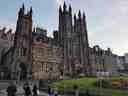
Look ahead-you really can't miss it! New College stands proudly on The Mound, towering over the street with its dramatic, gothic towers reaching for the sky. The stonework has a warm sandy color, almost golden in the sun, with sharply pointed spires and a grand, arched entrance right in the center. There’s an old iron fence running along the edge of the green in front. To spot it, simply look for the building that looks like it might have leapt straight out of a Harry Potter film-a castle made for scholars, not dragons! Here we are, standing in front of New College, a place so spectacular that even the crows pause to admire its towers. Imagine it’s the mid-1800s-horse-drawn carriages clatter by, and there’s a real buzz in the air. Young men and women hurry up these very steps, clutching books and dreams of wisdom. This building opened its grand, oak doors in 1846, just after the great “Disruption” that shook the Church of Scotland. Back then, it was new not just in name-but in spirit! People broke away from tradition, determined to learn about religion in new ways, free from the heavy hand of government. New College became their beacon-if Hogwarts had a rival, you might say it started right here. Today, students from over 30 countries-future ministers, scholars, and perhaps the next great philosopher-fill these old halls with their laughter (and maybe a little nervous muttering before exams). Over 40 wise professors teach here, and the oldest Chair of Divinity in Edinburgh’s history is found right inside. In fact, it’s so old, it makes even the ancient stones under your feet feel like teenagers. Feel the weight of history? That’s more than just the thick Scottish stone. This place saw fierce debates, thunderous sermons, and plenty of friendly arguments about the nature of the universe-sometimes louder than the bagpipes outside! So, whether you’re interested in religion or just love a good story, New College stands strong, full of mystery, memory, and the echo of footsteps-like yours-pausing to wonder at all that’s happened within these spires. Ready to continue? Our next chapter awaits just around the corner!
Open dedicated page →If you look straight ahead, you’ll notice a grand building that looks like it’s been plucked straight out of ancient Greece. Wide stone steps lead up to a facade lined with…Read moreShow less
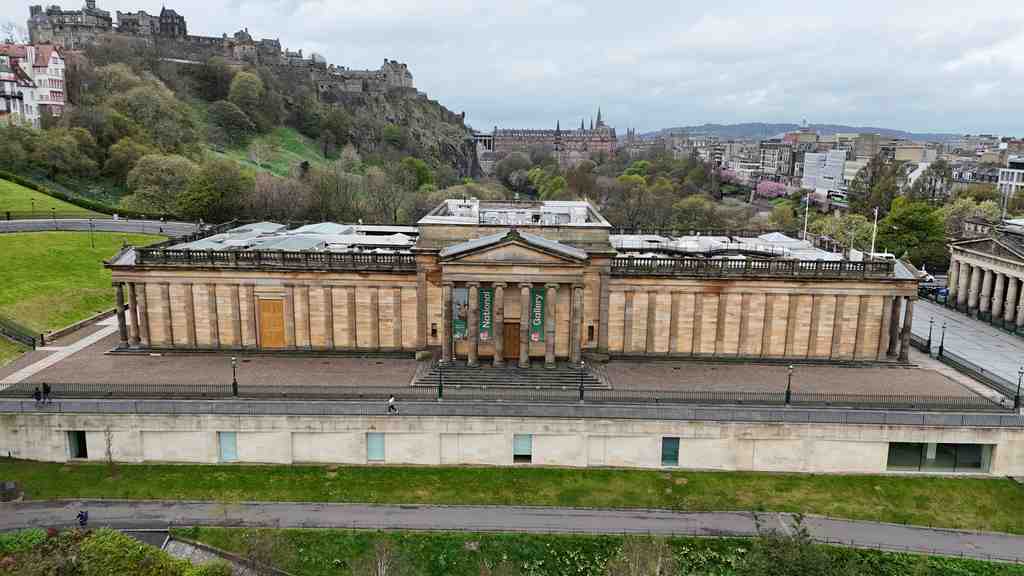
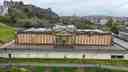
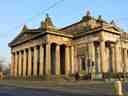
If you look straight ahead, you’ll notice a grand building that looks like it’s been plucked straight out of ancient Greece. Wide stone steps lead up to a facade lined with beautiful slender columns. These columns are topped with graceful curls-we call these “Ionic”-and the whole building has a classical, temple-like feel. If you see lots of visitors with cameras, gazing up proudly, you’re in the right place. The Scottish National Gallery sits on The Mound, right between Princes Street and Princes Street Gardens. And if you’re ever not sure which grand building is the Gallery, here’s a hint: it’s the one that isn’t the Royal Scottish Academy, which looks so similar it might just try to swap places when you’re not looking. Now, take a deep breath-imagine the air filled with the scents of wet stone and greenery from the gardens behind you, and let’s step back to the year 1859. Edinburgh was buzzing with excitement: a brand new home for Scotland’s art collection was about to open, thanks to the vision of architect William Henry Playfair. If Playfair were here, he’d probably look at his building, brush the dust from his jacket, and say, “Well, at least it’s bigger than my last one.” The gallery’s journey started with artists who were a bit miffed about not getting their way-they founded the Scottish Academy out of sheer determination, and maybe a pinch of stubbornness! Their dream? To give Scotland a collection worthy of the nation. The result was a building sliced down the middle, half for the Academy, half for the Gallery. Imagine it: one side bustling with artists and their easels, the other side filling up with masterpieces from across Europe. You might even picture the sound of hammering as Prince Albert himself laid the foundation stone in 1850, the city gathered to watch. The art inside stretches from the Renaissance to the early 20th century, a true time-travel ticket through colors and stories. Of course, being neighbors, the Gallery and the Academy occasionally get mixed up even today-tourists have been known to argue about which is which, only to realize they both just wanted directions to the nearest coffee shop. Fast forward to today, and you’ll spot a modern twist: after several upgrades, the Gallery now boasts an underground entrance linking it to the Academy, which means art lovers can sneak between the two-even when it’s raining. With its classical lines and ever-growing collection, the Scottish National Gallery isn’t just for art insiders-it’s for anyone who’s ever wanted to see what happens when passionate artists dream big, and a city decides to keep their dream alive. As you look up at those iconic columns, think of the centuries of stories and creativity swirling behind those walls. Ready to head inside and step into history? For a more comprehensive understanding of the building, research or the collection, engage with me in the chat section below.
Open dedicated page →Look straight ahead-no, you haven’t just wandered into ancient Greece, but if you’re looking forward on Princes Street at the wide junction with The Mound, you’ll spot a grand…Read moreShow less
Look straight ahead-no, you haven’t just wandered into ancient Greece, but if you’re looking forward on Princes Street at the wide junction with The Mound, you’ll spot a grand rectangular building, all dressed up in imposing, fluted columns. It’s like a Greek temple landed in Edinburgh after a very long flight-minus the in-flight snacks. This is the Royal Scottish Academy building, and it really stands out: rows of thick stone columns march all around and, look up, because right atop the main portico sits a statue of Queen Victoria, posing regally as Britannia. She’s got the best seat in the house and, if you peek at each corner, you’ll see pairs of sphinxes keeping her company. Yes, sphinxes-apparently even statues in Edinburgh are into mysteries. Now, back in the early 1800s, the city was keen on showing off, wanting people to call it “the Athens of the North.” They asked architect William Henry Playfair to create something magical-and what a job he did! Builders even hammered 2,000 wooden piles into the soggy ground here, which, if you ask me, must have sounded like an army of woodpeckers-just so the heavy sandstone wouldn’t sink right back into the Nor Loch, the smelly old lake that used to fill this valley. At first, three different learned societies shared this space: science, art, and history all under one gloriously decorated, frieze-covered roof. But you know how artists are-they wanted their own gallery, so they broke away, formed the Scottish Academy, and just kept expanding until their art collection grew too big for their britches... or rather, their gallery. This place was a busy hub, swapping societies like they were playing musical chairs-science moved out, antiquaries left, and the artists finally took full charge. Imagine the echoing footsteps, the rising excitement as new paintings arrived, the occasional disagreement over where to hang a canvas, and the steady thump-thump of progress as new galleries were added upstairs a hundred years later. Even now, the Academy buzzes with exhibitions. As you stand here, surrounded by the columns and the smell of centuries-old sandstone, you can almost feel the creative tension and dramatic flair that’s passed through the doors. Maybe if you listen closely, you’ll hear Victoria whispering pointers to the sphinxes about which exhibit to check out first. Just watch out-they’re very tight-lipped. Welcome to Edinburgh’s temple of art-let your imagination roam as wildly as those ancient Greek statues above!
Open dedicated page →Look ahead across the wide paths and green lawns of Princes Street Gardens. Search for the huge, dark, spiky tower rising high above everything else-it looks almost like a…Read moreShow less
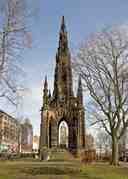
Look ahead across the wide paths and green lawns of Princes Street Gardens. Search for the huge, dark, spiky tower rising high above everything else-it looks almost like a gigantic Gothic rocket ready to launch! Its stone arches are tall enough to walk beneath, and the entire monument seems to reach for the clouds. If you spot something that seems a little out of a fairy tale-and, let’s be honest, wouldn’t look out of place in a vampire movie-you’ve found it. Now, standing in front of the Scott Monument, take a deep breath and listen. Imagine the sounds of the city around you-carriages clattering over cobblestones in the 1800s, and now the rumble of buses and distant bagpipes. This incredible monument was built to honor Sir Walter Scott, one of Scotland’s most beloved writers and a true king of the imagination. It’s the second-tallest monument to a writer anywhere on Earth! So tall, in fact, you could climb 287 spiral steps if your legs fancy a challenge, but don't say I didn’t warn you-there are amazing views at the top, and jelly legs at the bottom. The stone for this monument came from near Edinburgh itself. Legend has it, the masons working under shelter carved beautiful details in the hard sandstone, while the building masons braved the Scottish weather outside. Sadly, the fine dust from all that carving caused many workers serious illness, turning the monument, for some, into a place of both beauty and heartbreak. Here’s a twist worthy of a Scott novel: the architect, George Meikle Kemp, feared he’d never win the contest to design it because he had no fancy credentials. He even entered under a secret code name! His dazzling design won the judges over, but fate was cruel-he died in a canal accident just before the monument was finished, never seeing his work rise above the Edinburgh skyline. Take a look under the arches. There’s a marble statue of Walter Scott himself, sitting calmly as if he's just paused in his writing, quill in hand and his loyal dog Maida keeping him company. All around, 64 characters from his novels are frozen in stone, peering down at you-heroes, villains, and everything in between. If monuments could talk, this one would probably tell you a ghost story or two! And on windy nights, they say the monument makes a sound all its own. So, if you hear a strange whisper, don’t worry-it’s probably just Walter Scott dreaming up his next adventure. That’s the Scott Monument. Imposing, mysterious, and packed full of stories-just like Edinburgh itself. Want to explore the design and concept, the stone masons and the scott monument or the foundation stone in more depth? Join me in the chat section for a detailed discussion.
Open dedicated page →
Reviews
Frequently asked questions
How do I start the tour?
After purchase, download the AudaTours app and enter your redemption code. The tour will be ready to start immediately - just tap play and follow the GPS-guided route.
Do I need internet during the tour?
No! Download the tour before you start and enjoy it fully offline. Only the chat feature requires internet. We recommend downloading on WiFi to save mobile data.
Is this a guided group tour?
No - this is a self-guided audio tour. You explore independently at your own pace, with audio narration playing through your phone. No tour guide, no group, no schedule.
How long does the tour take?
Most tours take 60–90 minutes to complete, but you control the pace entirely. Pause, skip stops, or take breaks whenever you want.
What if I can't finish the tour today?
No problem! Tours have lifetime access. Pause and resume whenever you like - tomorrow, next week, or next year. Your progress is saved.
What languages are available?
All tours are available in 50+ languages. Select your preferred language when redeeming your code. Note: language cannot be changed after tour generation.
Where do I access the tour after purchase?
Download the free AudaTours app from the App Store or Google Play. Enter your redemption code (sent via email) and the tour will appear in your library, ready to download and start.
If you don't enjoy the tour, we'll refund your purchase. Contact us at [email protected]
Checkout securely with 




