
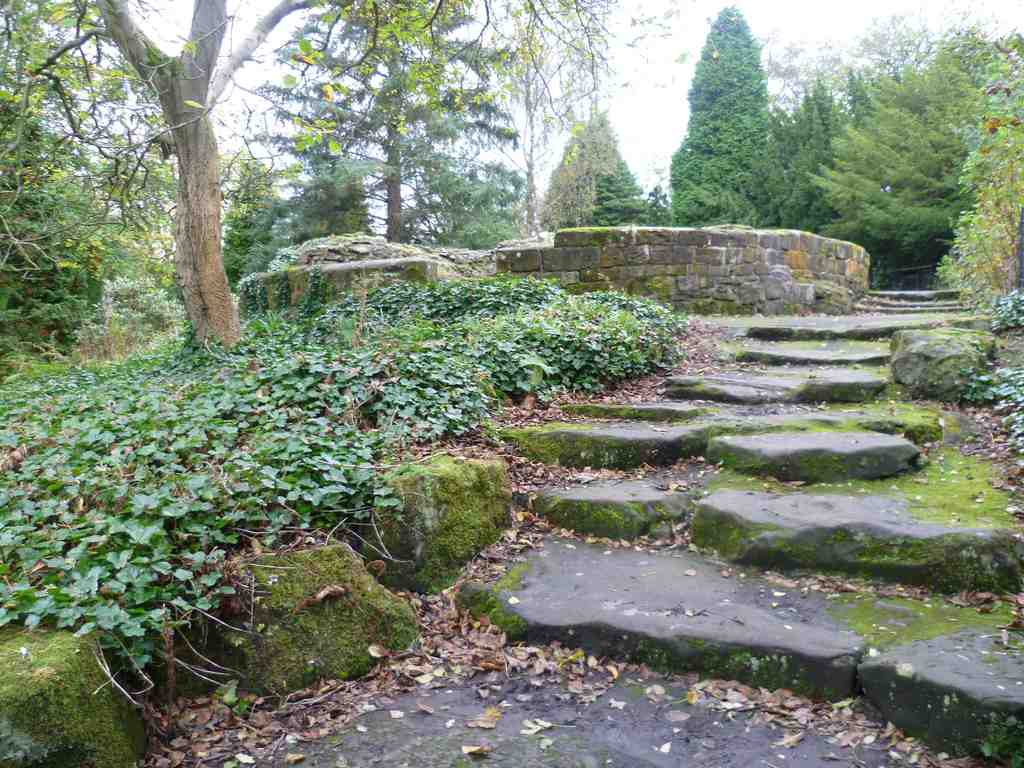
As you approach Malcolm's Tower in Pittencrieff Park, keep an eye out for a series of stone steps that lead you up towards a stone platform. This area is surrounded by lush greenery and ivy, with trees providing a peaceful canopy overhead. The stones might be a little mossy, adding to that ancient, mystical feel. The remains of the tower itself are enclosed by an oval-shaped modern wall, built to protect the historic foundations of this impressive fortress.
Now, let's dive into the history of this fascinating landmark!
Malcolm's Tower, also known as Malcolm Canmore's Tower, marks the site of significant historical importance. Imagine this: back in the mid-11th century, Malcolm III of Scotland decided to move the center of royal power from Forteviot to Dunfermline. He settled on this defensible rocky outcrop, making it the seat of Scottish royal power.
Picture this scene of strong stone walls perched high above a ravine, making it almost impregnable-an ideal fortress. In fact, this fortified position is where Dunfermline gets its motto: "Esto rupes inaccessa," which translates to "Be an inaccessible rock." Now that's a motto fit for a fortress!
But our story doesn’t end there. The tower also played witness to the union of Malcolm III and his queen, Princess Margaret, in 1070. Margaret brought about innovations that transformed the Scottish Church and left a lasting legacy. Though today, all that remains of the tower are foundational fragments, it once boasted around twenty small apartments spread across two stories and an attic. Quite the medieval royal residence!
Enjoy soaking in the echoes of the past here at Malcolm’s Tower, a place rich with tales of kings, queens, and ancient defenses!


