Look for a pale plastered frontage with a simple pitched roof, rectangular sash windows, and a blue plaque fixed beside the door.
From out here, The Eagle can seem almost modest... which is very Cambridge, really. But this pub’s big claim hides behind the street front, in the courtyard. That yard is the only surviving galleried coaching-inn yard in Cambridge: a coaching inn being the kind of place where horses, mail, passengers, luggage, gossip, and general human impatience all arrived in a heap. The front you’re facing dates from around sixteen hundred, and the timber gallery behind it dates from around eighteen hundred, rebuilt on the line of an older seventeenth-century gallery. The whole place earned Grade Two listed status in nineteen fifty.
At its busiest, this was not a picturesque old pub. It was a machine. In eighteen thirty-eight, The Times coach left daily at six in the morning for Holborn and came back at three in the afternoon. Another coach left here every morning at seven for Birmingham by way of Bedford, Northampton, and Leamington. Others ran to Wisbech, Norfolk, Fakenham, and Oxford. The rear courtyard led to stables, so behind the beer and conversation there was hay, mud, harness leather, and the hard routine of transport. Then the railway reached Cambridge in eighteen forty-five... and the coaching trade collapsed, because steam tends to end that argument rather decisively.
Corpus Christi College has owned this site for centuries, and it still does. The beer supply changed hands instead. By the early twentieth century, The Eagle belonged to Bailey and Tebbutt, the Panton Brewery in Cambridge. Then, in nineteen twenty-five, Greene King bought Bailey and Tebbutt along with forty-eight tied houses - that means pubs contractually bound to one brewer - and when the Panton brewery closed in nineteen fifty-seven, The Eagle stayed in the Greene King family. So the pint in your hand here, if you had one, comes with a paper trail.
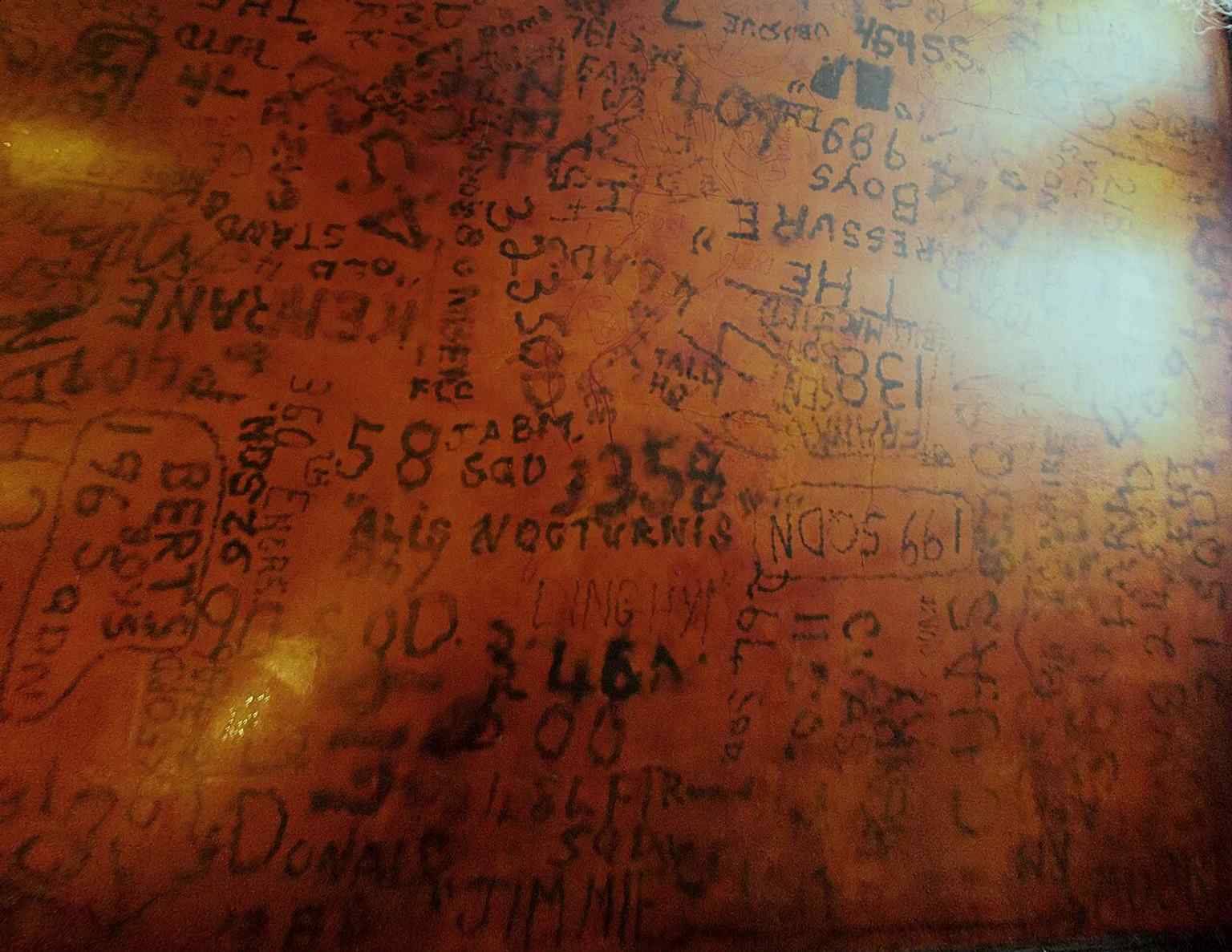
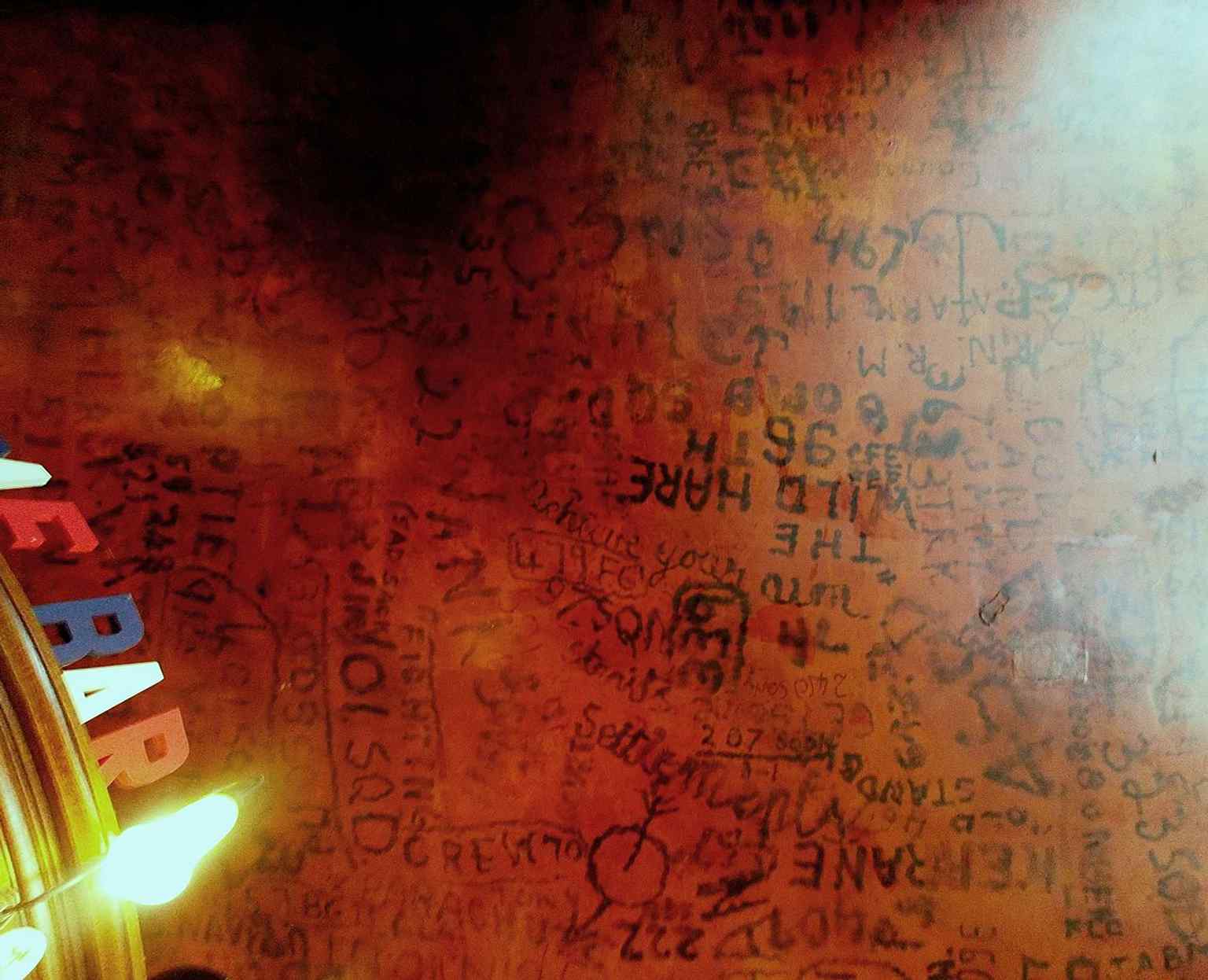
The wartime story lives inside, on a ceiling. During the Second World War, Allied airmen crowded into the back room, now called the R-A-F Bar, and marked the plaster with names, squadron numbers, and doodles using candles, petrol lighters, and, in one case, a girlfriend’s lipstick. Flight Sergeant P. E. Turner seems to have started it by climbing onto a table and burning his squadron number overhead. If you check the image on your screen, you can see that dense canopy of markings still preserved there. In the early nineteen nineties, local veteran James Chainey deciphered references to more than sixty R-A-F squadrons and thirty-seven units of the United States Army Air Forces. One inscription, “The Wild Hare,” records a B-seventeen from R-A-F Bassingbourn lost on the twenty-sixth of November, nineteen forty-four, on a mission to Bremen. That ceiling is part guestbook, part memorial.
And yes, by the time two university regulars lunched here on the twenty-eighth of February, nineteen fifty-three, this pub was already nearing three centuries old, so Francis Crick’s announcement that he and James Watson had found “the secret of life” joined a very long ledger; the plaque outside went up in two thousand and three, and the revised version in twenty twenty-three finally added Rosalind Franklin and Maurice Wilkins too.
Step out onto Bene’t Street and turn left. The street opens toward Market Hill, and almost at once you’ll reach St Bene’t’s Church, our next stop. If you want to return later, check the current opening hours.