
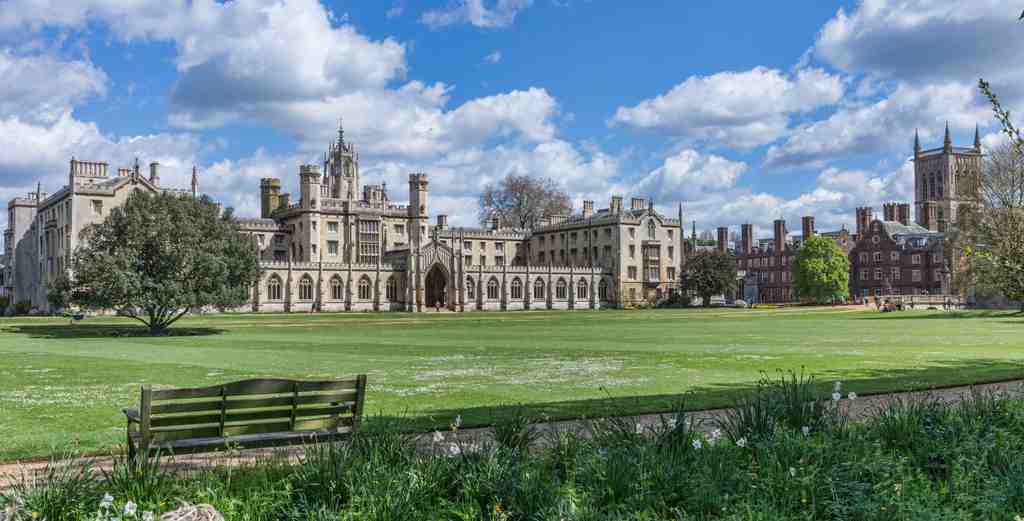
Look for a grand, castle-like building stretching across a wide green lawn, with tall towers and pointed arches-just imagine Hogwarts if it hired a rather serious British architect!
Welcome to St John’s College, where you aren’t just walking into a building, you’re stepping into over 500 years of adventure, rivalry, and more stories than you can shake a scholar’s cap at. Close your eyes and imagine the year is 1511. Outside, a chilly breeze is sweeping through Cambridge, carrying the clang of builders’ hammers. Lady Margaret Beaufort, the mighty Tudor matriarch-and mother to King Henry VII-dreamed this place into being, hoping to create a world where knowledge and kindness go hand in hand.
Once, it was just a hospital serving weary travelers. But by the 16th century, the old hospital was falling to pieces-not the best conditions for studying Aristotle, unless you like leaky roofs with your Latin. With Lady Margaret’s death, it looked like the dream would die, until the determined Bishop John Fisher wrangled with everyone from King Henry VIII to the Pope for permission and money. At last, in 1511, St John’s College was born.
Just inside those gates behind you, picture the scene five centuries ago: the doors would slam shut at dusk, sealing the monks-and later, scholars-inside away from the wild world of Cambridge. They lived, studied, and sometimes squabbled right where you’re standing now.
Speaking of rivalry, you might hear whispers about “Trinity,” the college next door, and their endless one-upmanship. The two have out-pranked, out-studied, and possibly out-eaten each other for centuries. There’s even a legend that says only St John’s fellows and the royal family are allowed to feast on unmarked swans-how’s that for an exclusive club? Another tale claims Trinity has a cannon pointed at St John’s, but don’t worry, no cannonballs have flown for at least a hundred years.
Now look around you-these courts and lawns have seen everything from Queen Elizabeth I herself grandly riding her horse into the dining hall (who needs valet parking?) to ingenious undergrads planning the D-Day landings in the shadowy windows of the Long Gallery during World War II. The buildings are a patchwork of centuries: Tudor elegance, Georgian facades, Victorian flourishes, and even a modern 20th-century splash.
The Great Gate where you entered, topped by heraldic beasts called “yales” and the symbols of Lady Margaret, isn’t just decoration-her family’s rose and portcullis are a bold message: this was a place for learning, for courage, and for a bit of mystery. If you peek inside the chapel, you’ll find stained glass, ancient wood, and statues remembering the minds that have wandered these corridors-everyone from the poet Wordsworth to abolitionists who helped end British slavery, to two Nobel Prize winners who cracked open the atom to see what secrets hid inside.
If you start to hear angelic voices drifting on the wind, that’s no accident. The college choir is nearly as old as the college itself, singing six days a week since the 1670s. And just to keep things interesting, St John’s recently welcomed girls and women into the choir, breaking a tradition as old as some of these towers.
You might wonder, with all these tales of rivalry and rules, does anything spooky happen here? Well, some say the second court is haunted by a former master named James Wood, who studied by stairway light because he couldn’t afford a candle. Maybe if you listen closely at night, you’ll hear the creak of ghostly footsteps or the distant chime of a bell that never was-the famous New Court’s clock tower remains clockless, wrapped in mystery and legend.
Whether you believe in ghosts or just good stories, remember: these lawns have seen everything from secret exams to midnight duels of wit. Take a deep breath and soak in the centuries-at St John’s, you’re not just a visitor. You’re part of the story now!
Interested in knowing more about the buildings and grounds, college choirs or the traditions and legends




