
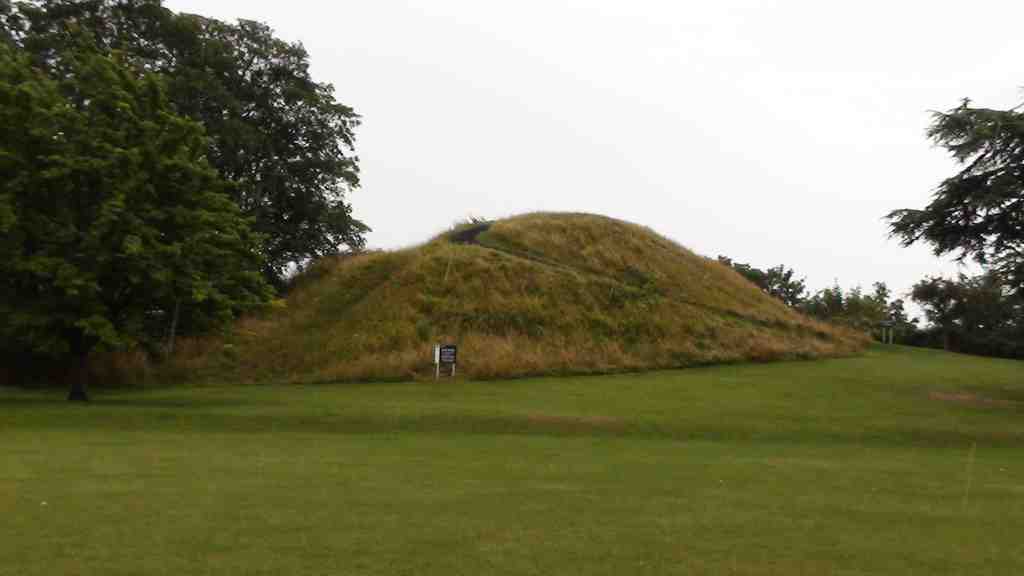
To spot Cambridge Castle, look ahead for a large, grassy mound rising from the earth, like a giant green cake plopped onto the landscape-this is Castle Mound, the last major remnant of the once-mighty fortress.
So here you are, standing at the foot of a mound where over 950 years of drama, danger, and-let’s be honest-quite a lot of stone recycling have unfolded! If you close your eyes for a moment, you might almost hear the clang and clatter of Norman soldiers hammering in the chilly Cambridge air. Back in 1068, William the Conqueror was fresh from his takeover, and he needed to keep a tight grip on the road north to York. “Grantabridge”-as Cambridge was called back then-was the perfect strategic spot, so he sent his sheriff, Picot, to build a motte and bailey castle. Of course, this didn’t exactly make him popular-27 houses were flattened just to make space for this new outpost!
Imagine the wooden walls quickly rising, smoke swirling from the fires of nervous townsfolk, and then centuries of barons, soldiers, and even invading French armies storming this very hill. In the 1140s, during a chaotic time called the Anarchy, Geoffrey de Mandeville-one of those timeless baddies with a name to match-attacked the castle, seized it for the Empress Matilda, and then staged midnight raids down the lanes of Cambridge. But King Stephen fought back, and after much tussle and a bit of sneaky castle building of his own in nearby Burwell, the attackers were pushed out. Those were restless times, a bit like medieval capture-the-flag, but with a lot more mud.
The castle enjoyed a bit of sprucing up whenever England seemed on the verge of falling apart. King John spent a small fortune adding a fancy new hall and chambers-let’s be honest, every castle could benefit from a stylish upgrade, even with barons outside waving swords around. During the First Barons' War, rebel barons and even the French managed to capture the castle-what a party! Eventually, though, it returned to royal hands, and under Henry III, Cambridge got a grand “King’s Ditch” for extra protection, like a medieval moat with a royal seal of approval.
But it was under Edward I, the castle received its most regal glow-up: huge walls, round towers at every corner, a circular stone keep-an imposing fortress where even the boldest invader might find themselves second-guessing. Edward spent more than a thousand golden pounds on the project, and even slept here a couple of nights-imagine a king sighing on those drafty stone pillows, probably longing for a nice Tudor inn!
Alas, stone has a funny way of wandering off in Cambridge. As the centuries passed, the castle began to crumble, and bits of it appeared everywhere: some became foundations for King's College, some tucked into the chapel at Trinity, and plenty of other fragments ended up in local mansions and college halls. By the 1600s, the castle itself was mostly rubble, and much of what remained was turned into a jail, rattling with the sounds of keys and the laments of prisoners dreaming of a better life.
Come the English Civil War, the old castle had a brief encore. Parliamentary soldiers, loyal to Oliver Cromwell, scrambled to patch up its lost defenses. They built brick barracks and new earth ramparts, and for a few tense years, you’d have seen soldiers peeking nervously over wooden walls, muskets in hand. And then-just like that-peace returned, and the castle was ordered to be “slighted,” which in layman’s terms means “properly smashed up.”
By the late 1700s, almost everything above ground was gone except for this remarkable earthwork. The last leftovers-a grim old jail-came down in the 1930s, and the modern Shire Hall sprouted up instead. What you’re standing on is the original Norman motte, rising ten meters high and offering the very best views in Cambridge. The echoes of history, though, still linger in the grass beneath your feet. And the next time you wander into a grand college, take a close look at the walls-the stones might just be from this very spot, carrying with them stories of battles, kings, prisoners, and more than a few ambitious builders.
Take a moment to climb the mound, if you fancy-the city stretches all around you, and it’s the perfect place to imagine everything that’s happened right here. Don’t worry, there aren’t any angry Norman knights left, but keep an eye out for students charging around; they move quickly too!


