
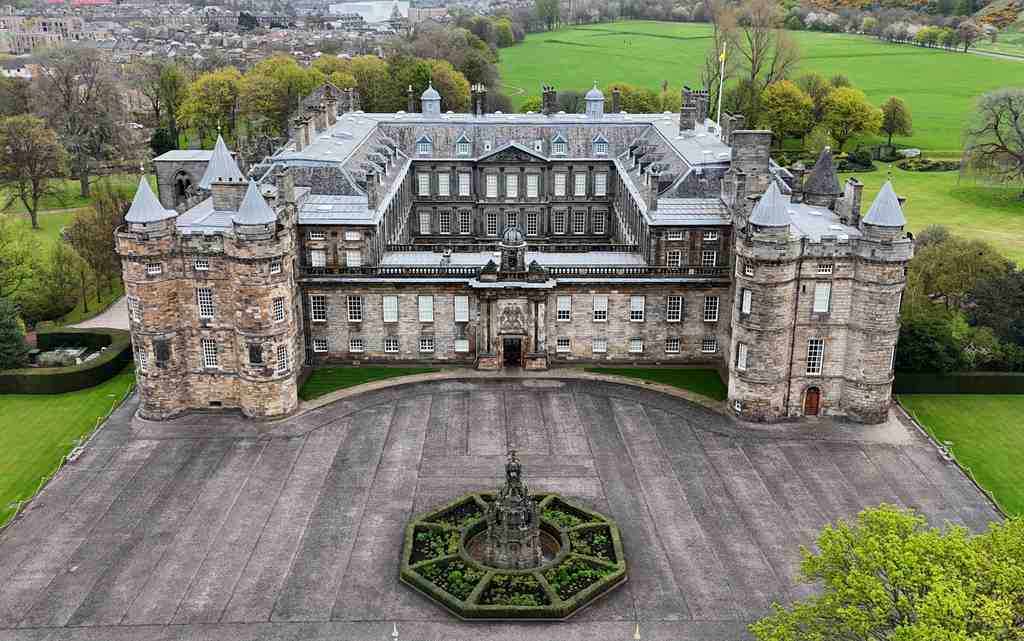
Look up ahead for a grand palace with two round towers topped by silver-gray pointed roofs and a stately fountain in front, right at the bottom of the Royal Mile-it’s hard to miss the impressive and symmetrical entrance of Holyrood Palace spread out before you.
Now, as you stand here with the grand palace stretching out on either side, imagine you’re stepping right into the pages of a living storybook-because Holyrood Palace isn’t just a royal home; it’s the stage for centuries of intrigue, celebration, and even a few royal animal antics! Picture the magnificent stone towers standing strong since the days when kings and queens roamed these grounds. The palace itself was mostly built in the late 1600s, but there’s a special tower on your left that dates back even further to the 16th century; it’s seen more royal drama than an entire season of Netflix.
Let’s rewind the clock to 1128. Just next door, the sound of chanting monks echoed through Holyrood Abbey, founded by King David I after a supposed vision of a holy cross. Back then, a relic known as the Black Rood was said to work miracles, and the abbey would host kings, councils, and even some of Scotland’s very first parliaments. Can you imagine hearing the voices of nobles plotting and kings brooding within these ancient stones?
Fast forward to the 16th century-Holyrood transforms from medieval abbey guesthouse into a stunning Gothic palace, perfect for royal weddings, banquets, and state business. James IV added a glittering new palace when he married Margaret Tudor here (you could say their union built actual walls!). His successor, James V, boosted security-installing a massive tower, even a moat and a drawbridge. All the while, the palace gardens grew wild, complete with a royal menagerie-imagine lions and tigers prowling behind the palace, just to keep the butlers on their toes.
And who could forget Mary, Queen of Scots? She called Holyrood home, practicing her archery out in the gardens and hosting fancy dinners-until a real-life murder mystery bloodied the palace. Imagine Mary at supper, when suddenly, her secretary David Rizzio was dragged out and stabbed right before her eyes-allegedly with over fifty daggers! That’s the sort of dinner drama you don’t see every day.
In later centuries, the palace took on new lives. Charles Edward Stuart, better known as Bonnie Prince Charlie, danced the night away in Holyrood’s Great Gallery as he tried to win back the throne (with a waltz, no less). The palace’s ballroom saw parties, while the gardens outside became a safe haven for folks who owed a bit too much money-you could hide from your creditors here and sneak out for a stroll on Sundays (debt relief, the royal way!).
Holyrood also played host to a trio of royal exiles from France sheltering from revolution, and when Queen Victoria came calling in the 1800s, she ordered the place spruced up-careful not to disturb Mary, Queen of Scots’ haunted rooms, of course. The palace will always be a living home to royalty: Every summer, you can spot the Royal Standard waving overhead for “Royal Week,” when the King is in town and the whole place twinkles with ceremony, garden parties and official business.
Today, you can feel the presence of history in every crack and arch. Imagine investitures and banquets sparkling in the Great Gallery, or the solemn moment in 2022 when Queen Elizabeth II's coffin rested here before Scotland paid its final respects.
So, whether it’s grand ceremonies, wild parties, or dramatic intrigues, Holyrood Palace is more than just a royal home-it’s a tapestry woven from centuries of Scottish legend and royal adventure. And remember: if these walls could talk, they’d have a lot more gossip than your average palace guard!
Interested in a deeper dive into the architecture, interior or the gardens and grounds? Join me in the chat section for an insightful conversation.




