
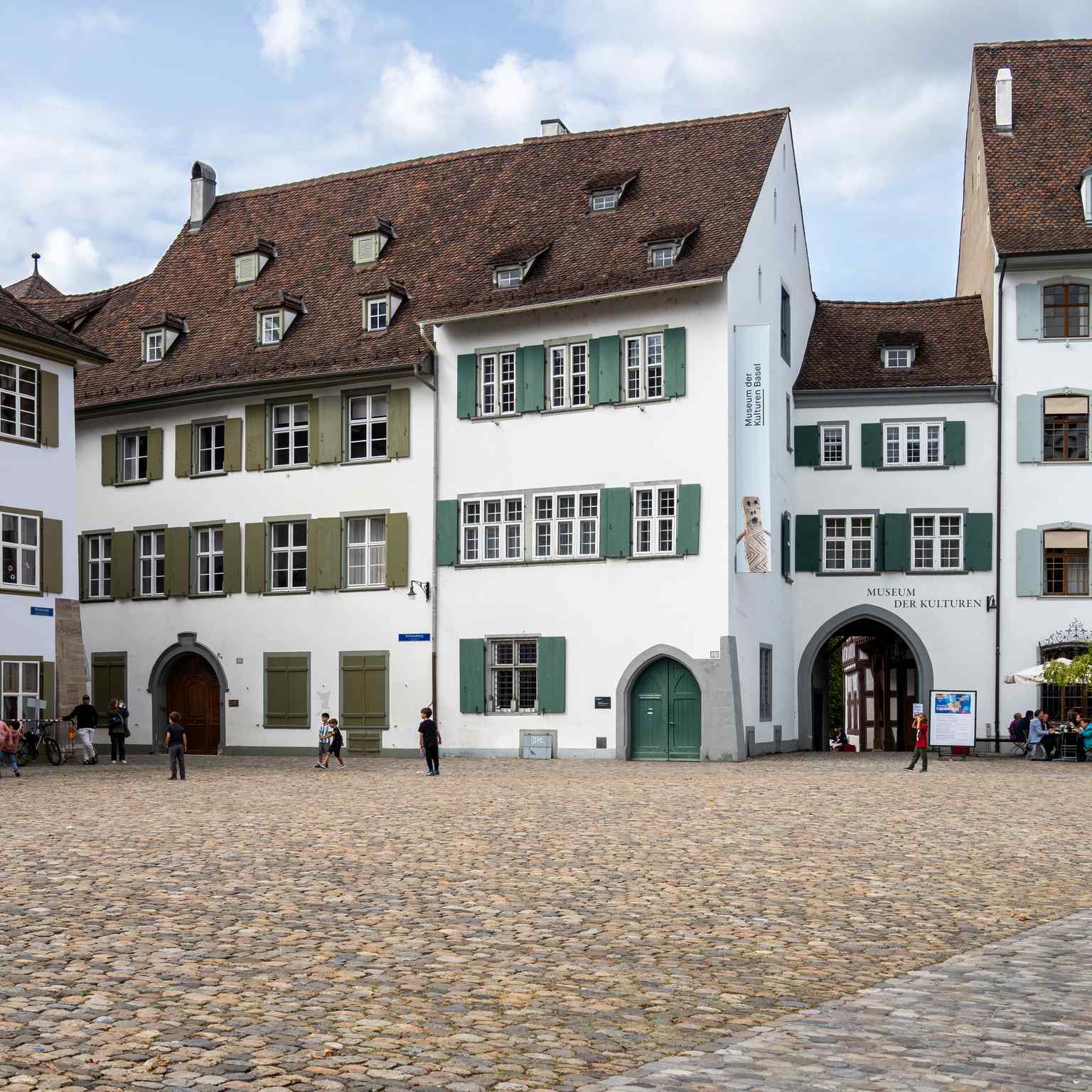
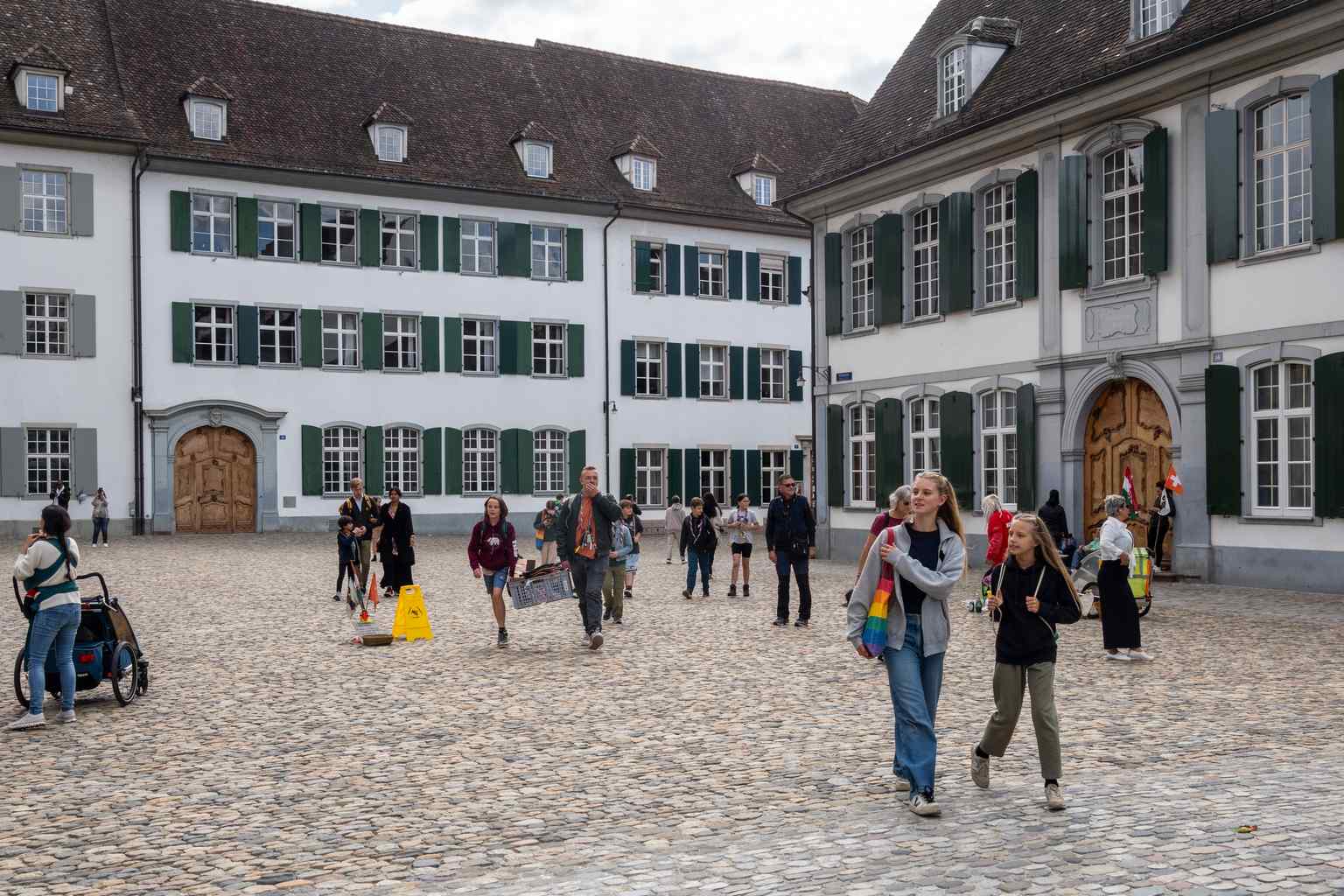
Look to your right to spot Münsterplatz, a vast open square paved with tightly packed, multi colored river stones, framed by stately white buildings and a dense canopy of green trees sheltering the far corner. This is the ancient center of Basel. People have been gathering on this exact patch of elevated earth for over two thousand years. Long before these noble houses stood here, a Celtic tribe called the Raurici built an oppidum, a heavily fortified settlement, right on this very hill.
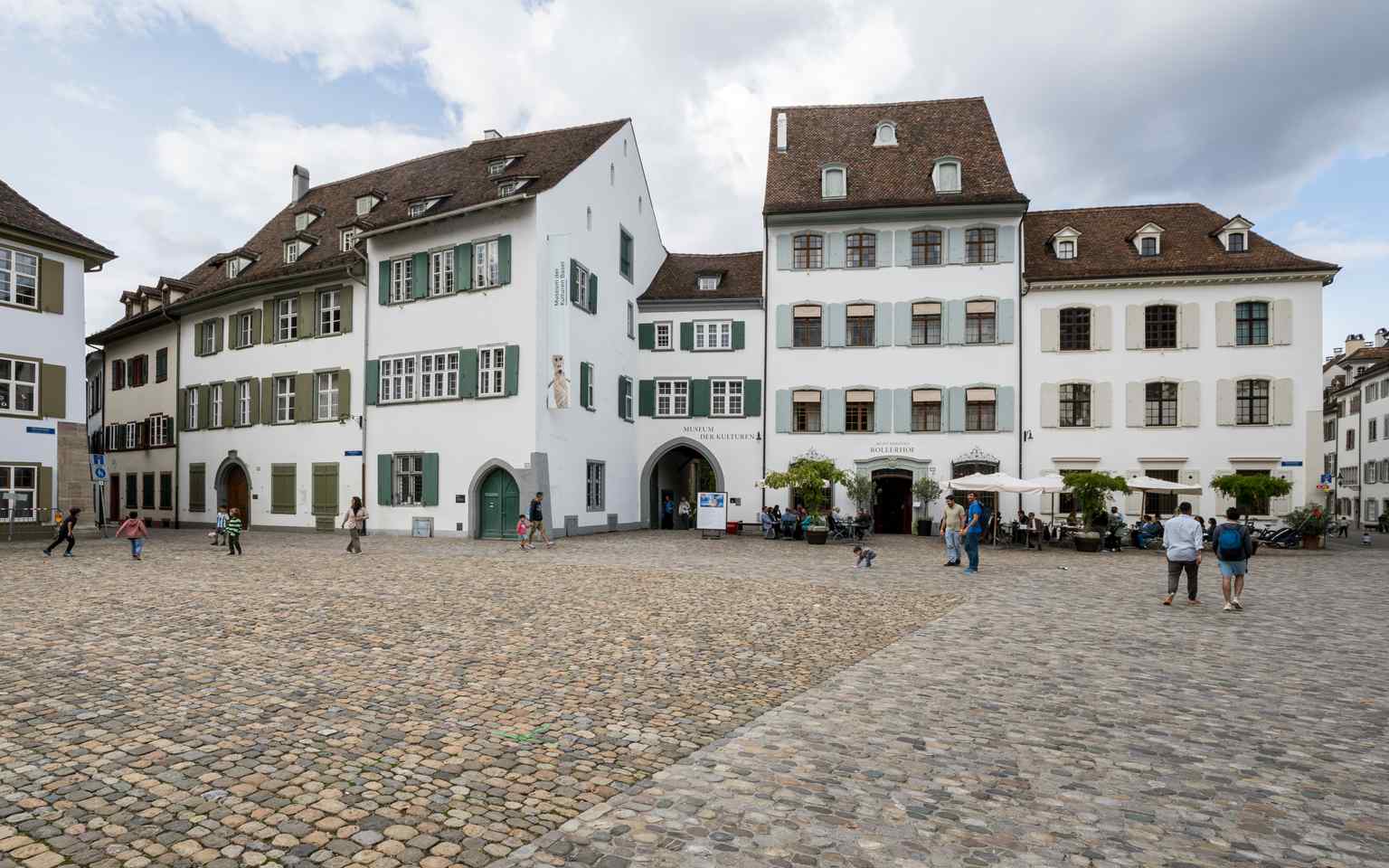
Just think about the sheer amount of history that has played out across these stones. Speaking of which, look down at the ground. This unique paving has its own fascinating story. These stones are called Rheincken, or Gwäggi in the local dialect. They are flat river rocks hauled straight out of the nearby Rhine, split down the middle, and buried with the rough broken edge facing up. This original pavement was already here in the early fourteen hundreds.
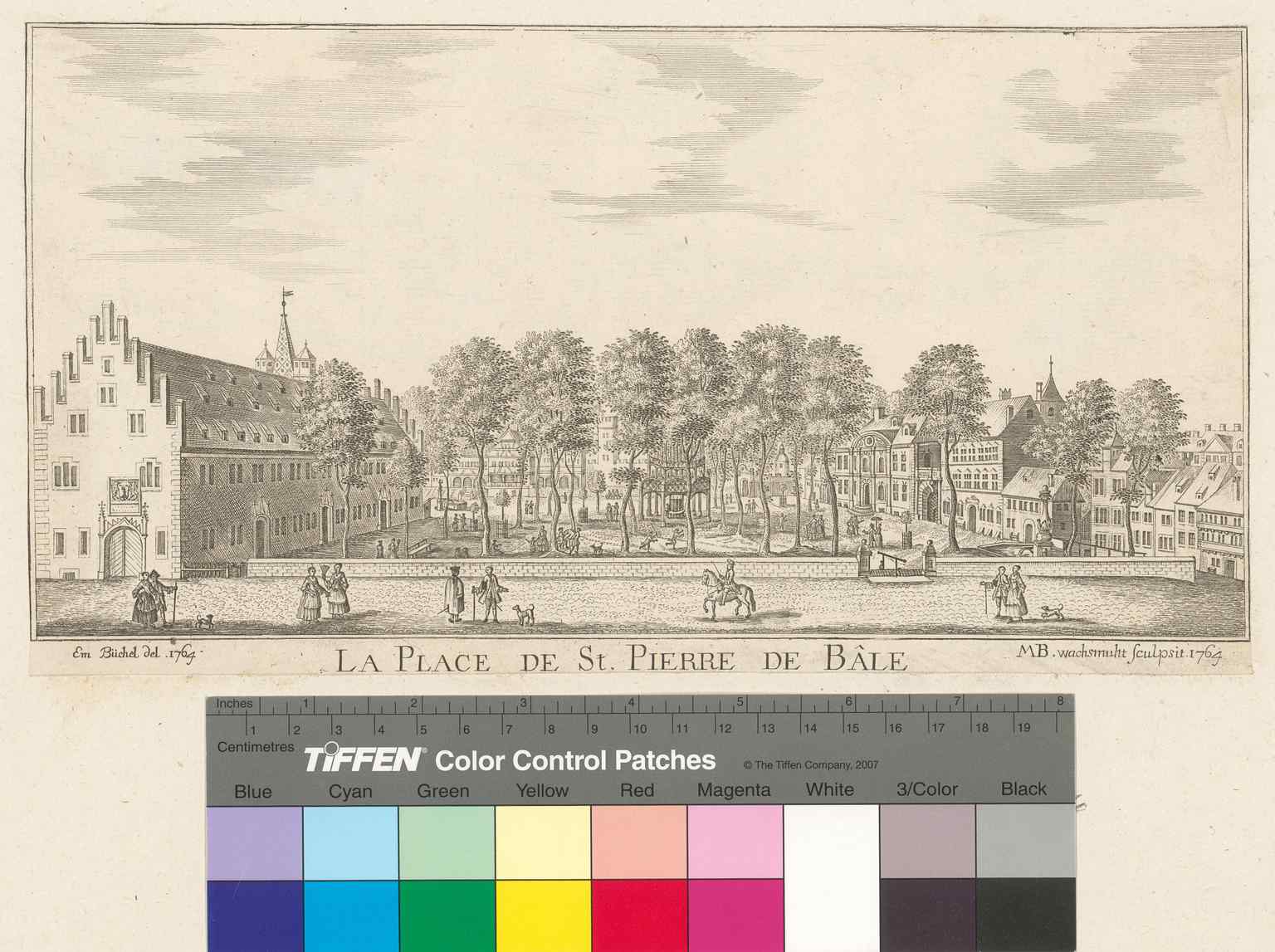
Now, remember Haus zur Mücke, which we walked past just a couple of minutes ago? That building was actually the center of massive medieval drama right here on this square. While the grand Council of Basel was busy meeting in the Minster to reform the church, those rebel factions we just mentioned at Haus zur Mücke were busy trying to install their newly elected rival pope, Felix the Fifth. It did not work out well for him. He failed to gain enough support across Europe, and the German Emperor eventually forced the council to dissolve entirely. But that is just one chapter. In 1376, a jousting tournament was held right where you are standing during the Böse Fasnacht, or Evil Carnival. The medieval festivities turned into a massive riot that ended in several tragic deaths. Then, fast forward to January 20th, 1798, and this same square transformed into a giant party. The Helvetic Revolution had just swept through, and Basel citizens celebrated their newfound political freedom by dancing around a towering Liberty Tree alongside French soldiers.
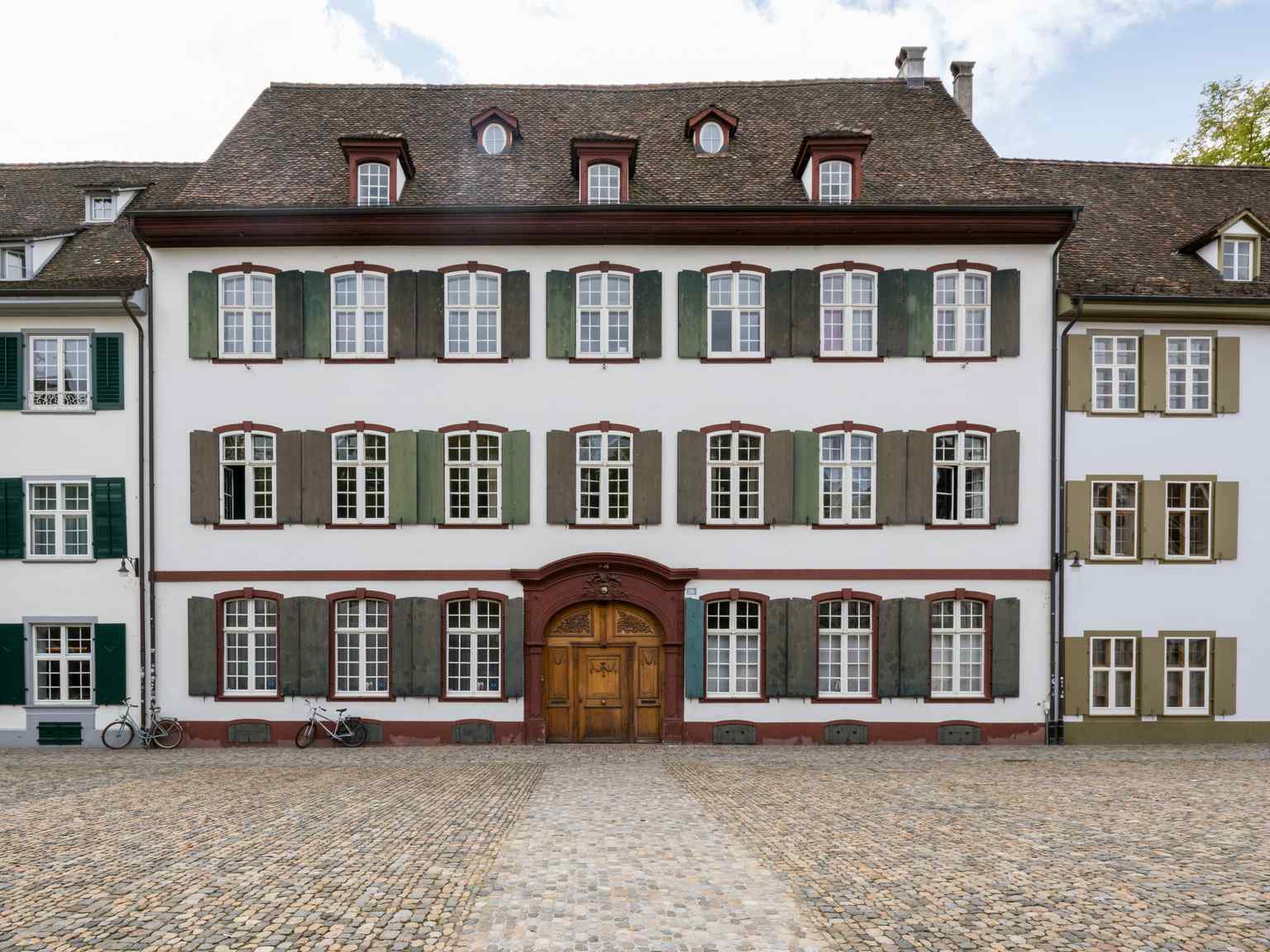
By the late nineteenth century, things had calmed down, but the square had a very modern problem... noise. In 1871, the city actually paved over this entire historic plaza with a thick strip of asphalt. Why? Because the relentless clatter of wooden carriage wheels and horse hooves was completely ruining the daily lessons at the high school right across the square. Thankfully, the asphalt is gone today. Between 2006 and 2013, the city restored the beautiful Rhine stones. But they did something incredibly clever. To make the historic surface safe and accessible for wheelchairs and bicycles, engineers individually machine sanded and flamed the tops of the rough stones to create a brilliantly smooth, flat pathway.
As you explore, you might spot the Pisoni Fountain tucked under the trees in the smaller northern section. It was designed by an architect named Paolo Antonio Pisoni in 1784, but if you look closely at the base, you will see a tiny, low basin. The city added that in 1937 specifically as a drinking trough for local dogs. This public square remains open twenty four hours a day, every day of the week. Feel free to linger in the square, and head to the next location when you are ready.


.jpg)
.jpg)

.jpg)
.jpg)