
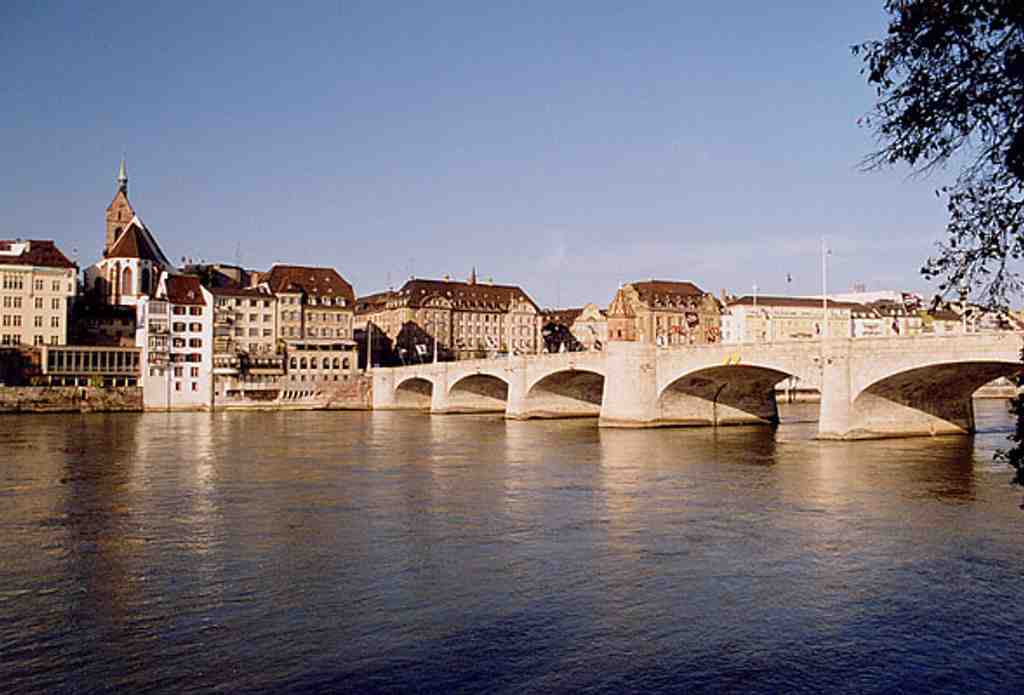
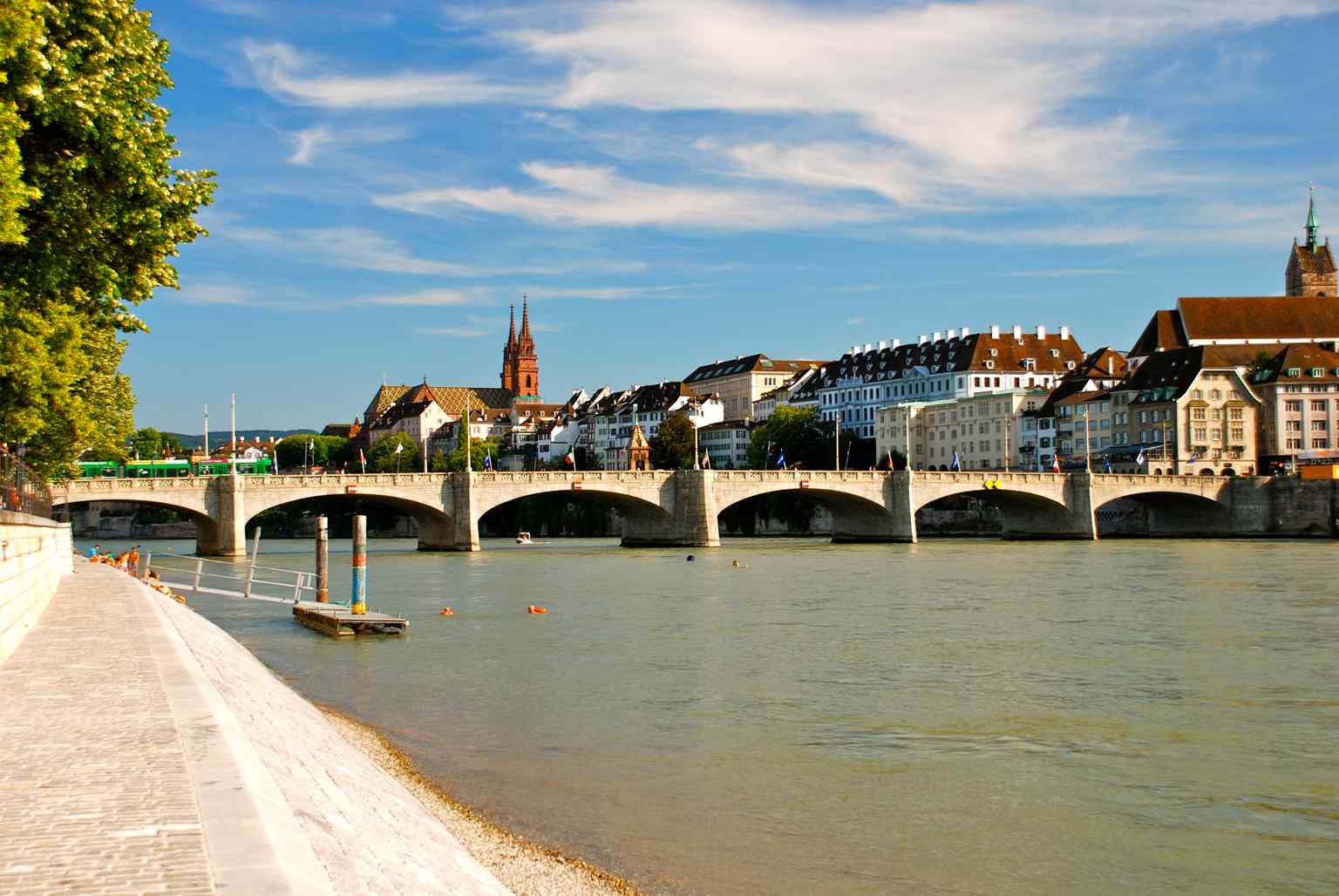
On your right, you will spot the Middle Bridge, an elegant structure of sweeping stone arches punctuated by a distinctive small, red-roofed chapel sitting directly on one of the central pillars. Having just left the Basel City Command, it is quite a shift to stand before the oldest Rhine crossing in the entire city.
This spot has connected the two halves of Basel since the thirteenth century. The original bridge, built around 1225, was a marvel of medieval engineering. The builders faced a massive problem. The riverbed on the near side was too deep, and the current was far too fierce for stone foundations. Their solution was ingenious. They built five solid stone pillars on the far side, but used eight massive oak stilts on this side. To let the water pass through without destroying the structure, the wooden planks of the roadway were just laid loosely on top, with absolutely no railings to keep travelers from falling in.
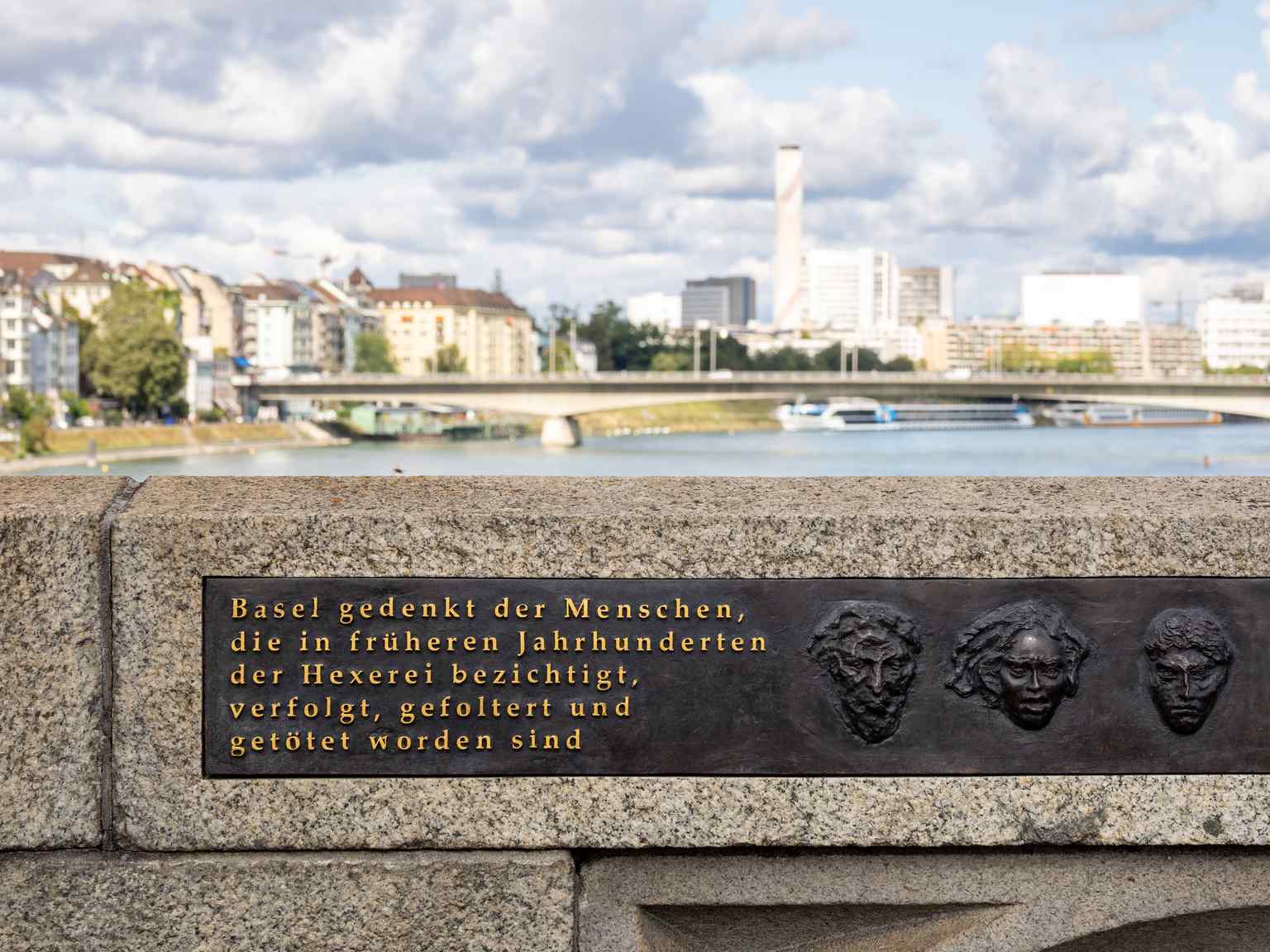
Take a look at that little chapel sitting on the middle pillar. It is called the Kaeppelijoch, which translates to a small bridge chapel. The original was built in 1392 for a highly practical reason. The builders needed extra weight to press the stone pillar down into the riverbed so the ferocious floods would not wash it away. But the Kaeppelijoch holds a dark history. For centuries, it served as an execution site. People condemned for theft, adultery, or infanticide were bound hand and foot and thrown into the rushing water below. However, there was a bizarre loophole in the law. If a condemned person managed to survive the violent current and was fished out alive at the next city watchtower downstream, their death sentence was canceled, and they were merely banished from the city. A few too many people managed to survive this brutal plunge, so the authorities eventually changed the punishment to beheading in 1634.
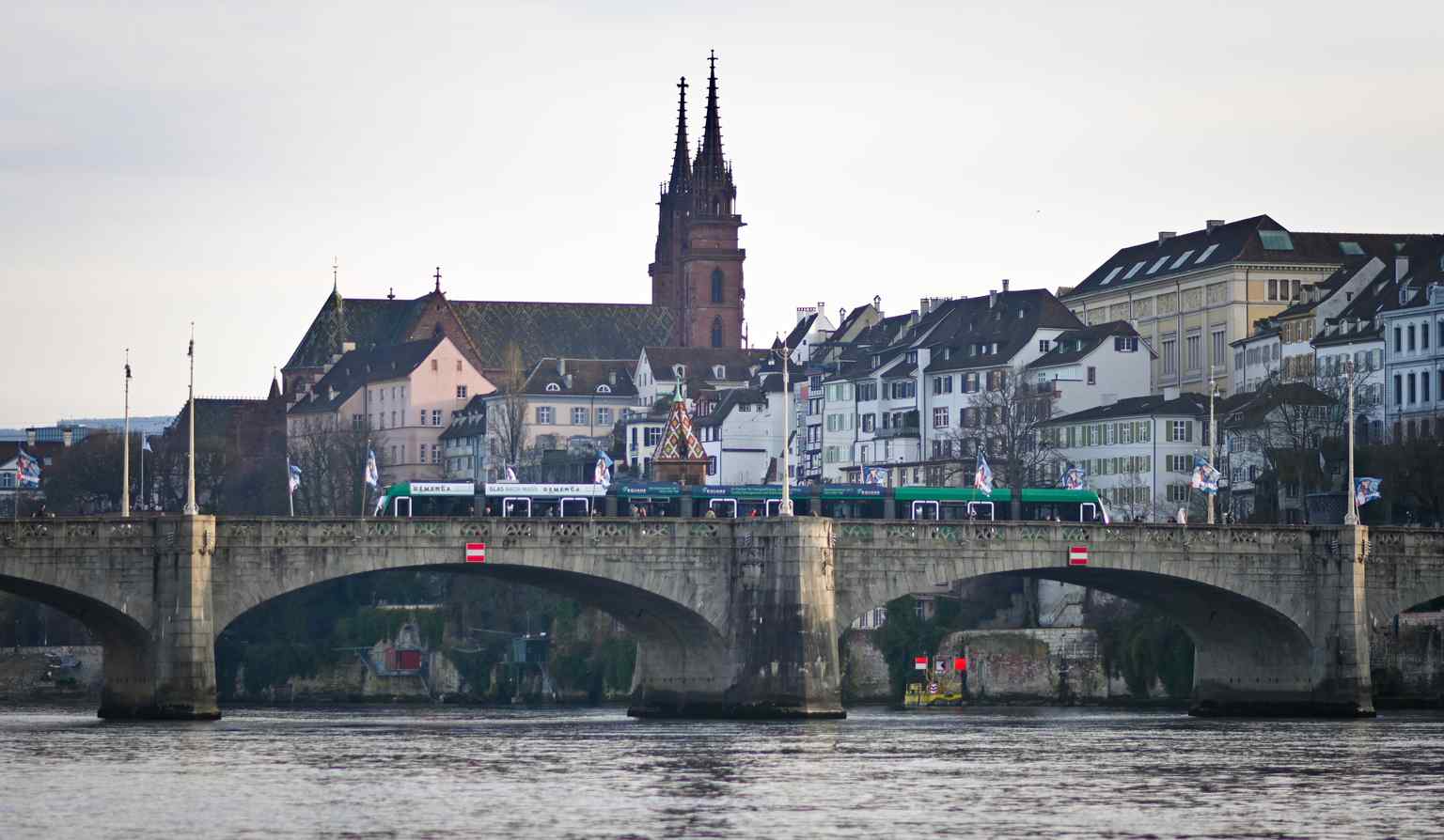
By the late nineteenth century, river traffic had increased, the water flowed faster, and the medieval foundations simply could not hold up anymore. The old bridge was torn down and replaced between 1903 and 1905 with the all-stone structure you see today. They used granite brought down from the Gotthard massif, a towering mountain range in the Swiss Alps. Instead of building a modern iron truss bridge made of a web of metal beams, the architects deliberately chose a classic stone arch design to perfectly match the historic beauty of the old town. The project cost 2.67 million francs, which would be roughly thirty million francs today.
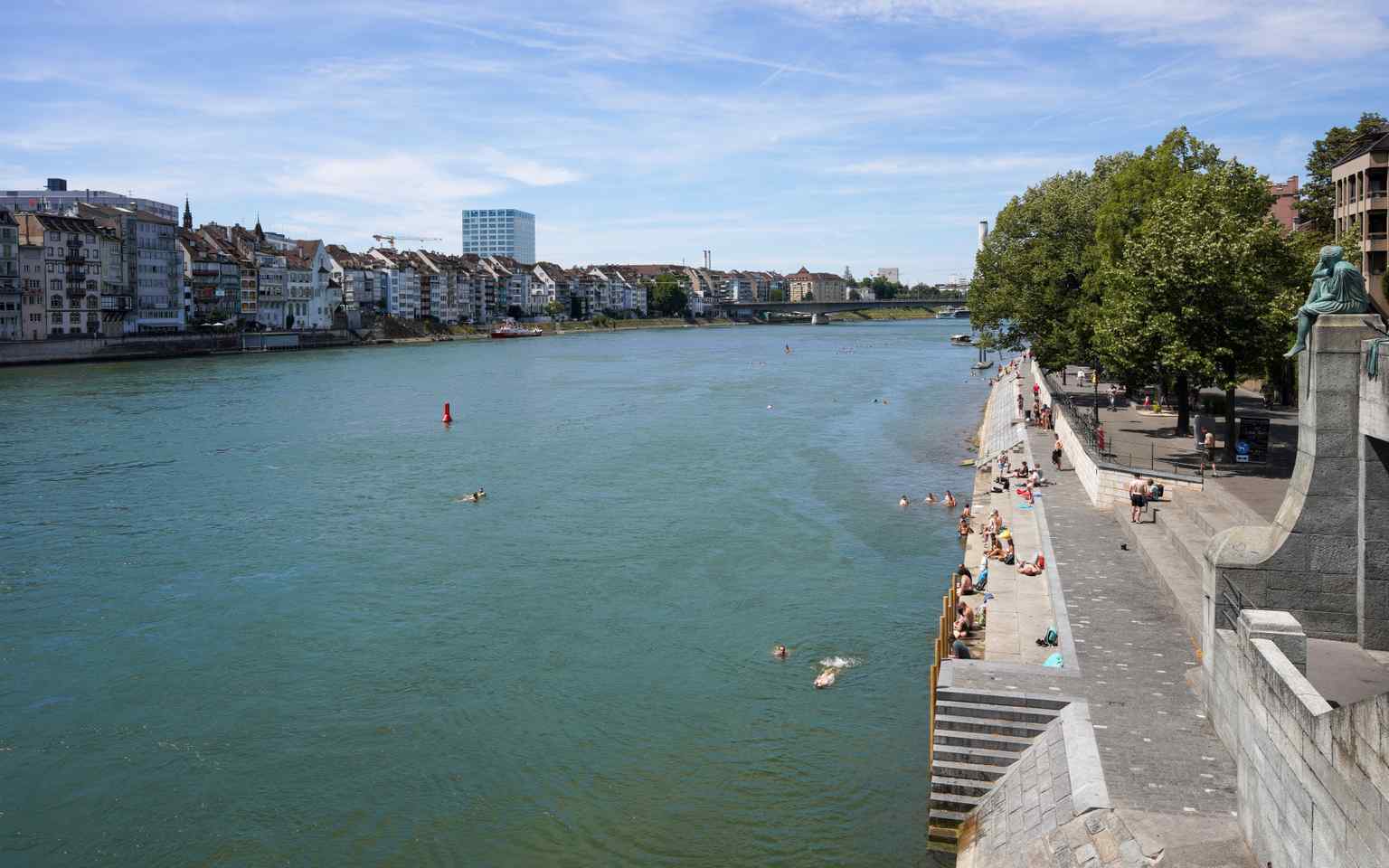
Even now, this bridge is notoriously difficult for large cargo ships to navigate. The arches are incredibly tight, and the bridge sits right on a bend in the river with tricky currents. Ship captains actually need a highly specialized Basel navigation license just to pass under it safely.
This magnificent crossing is completely open to pedestrians twenty-four hours a day, every day of the week. Watch the river rush beneath the arches, then stroll over to Hotel Les Trois Rois.


.jpg)

