
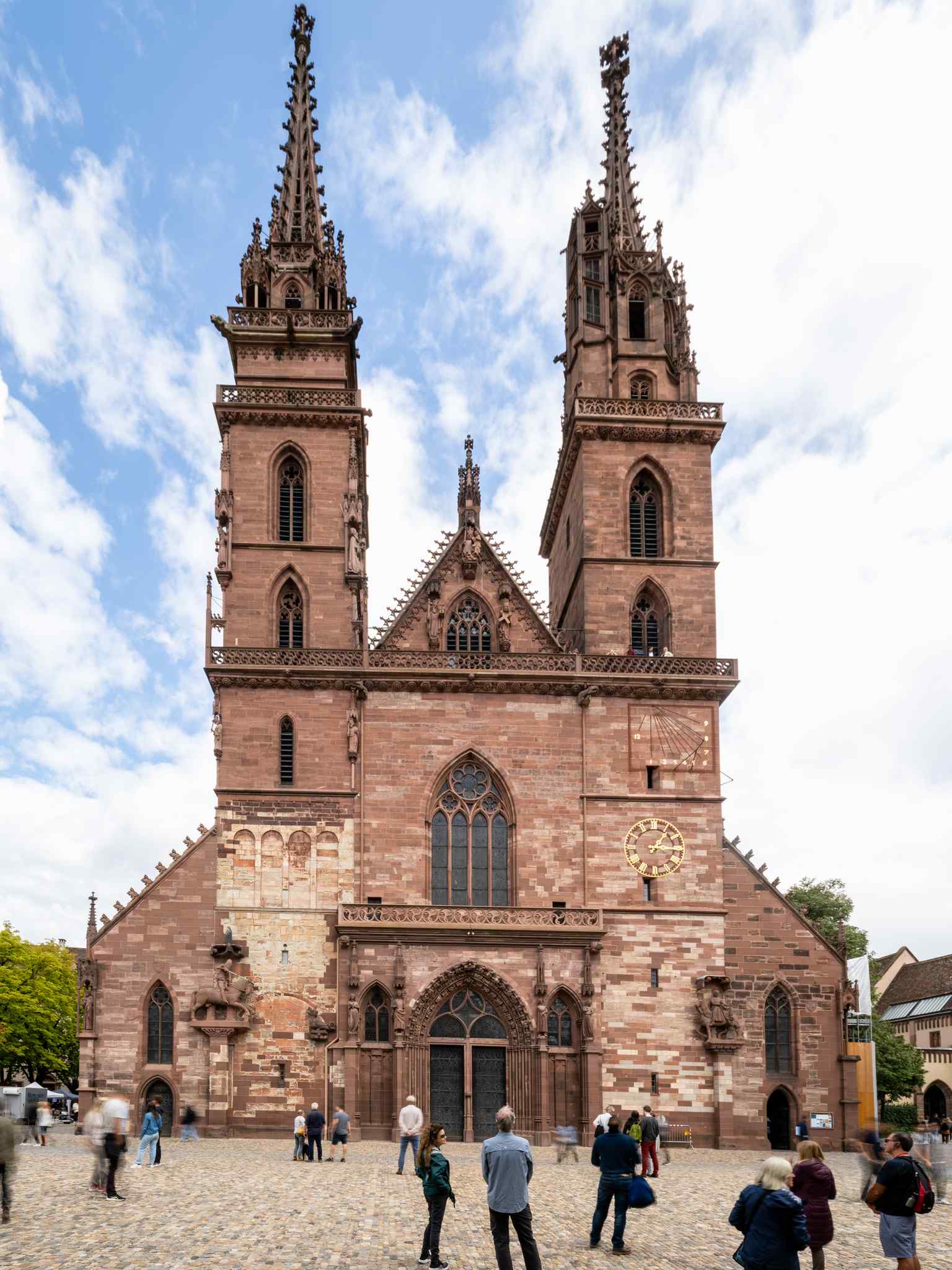
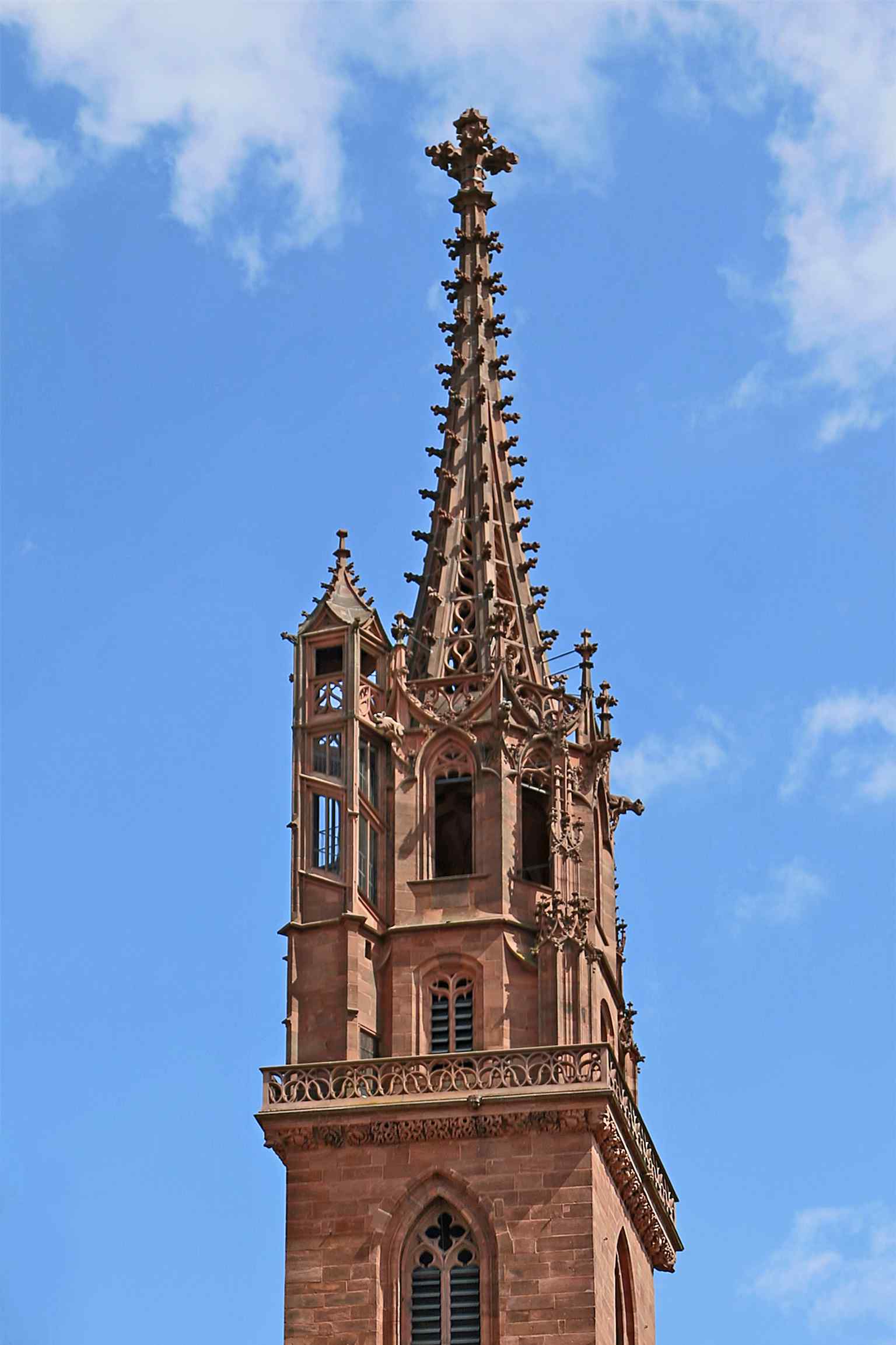
Look to your left for the monumental structure built of striking red sandstone, defined by its two soaring asymmetrical towers and a bright golden clock face mounted on the right side. Just a short walk from Bank La Roche and Company, you are now standing before Basel Minster, the ultimate architectural survivor of this city. This place is incredible. If you look closely at the main facade, you are looking at hundreds of years of artistic triumph and literal disaster. See those two slim towers? The one on the left is the Georgsturm, and the one on the right is the Martinsturm. They look similar at a glance, but they were actually finished almost eighty years apart. The cathedral originally had five massive towers, but that same catastrophic earthquake from 1356 we mentioned earlier violently shook the city, bringing the choir and most of the towers crashing to the ground. The reconstruction took over a century, relying on master architects who also designed the famous cathedrals in Ulm and Strasbourg.
Take a look at the main porch right in front of you. On the right side of the doors, there is a fascinating set of statues depicting a misguided virgin and a seducer, sometimes called the Prince of this World. From the front, he offers a handsome smile, but carved onto his back are crawling toads and snakes, symbolizing hidden evil. Right in the middle of the main doors is an empty column. That spot originally held a grand statue of the Virgin Mary, but it was violently removed. That empty space tells the story of February 9, 1529. During the wave of iconoclasm we talked about earlier, religious tension in Basel reached a boiling point. A mob of forty armed men marched from the market square and began smashing altarpieces. The priests desperately locked the heavy gates to protect the church. But the mob returned with two hundred rowdy men who smashed right through the barriers. Once inside, they destroyed crucifixes, statues, and paintings, viewing them as false idols. The cathedral went from being a Roman Catholic center to a Reformed Protestant church, which it remains today.
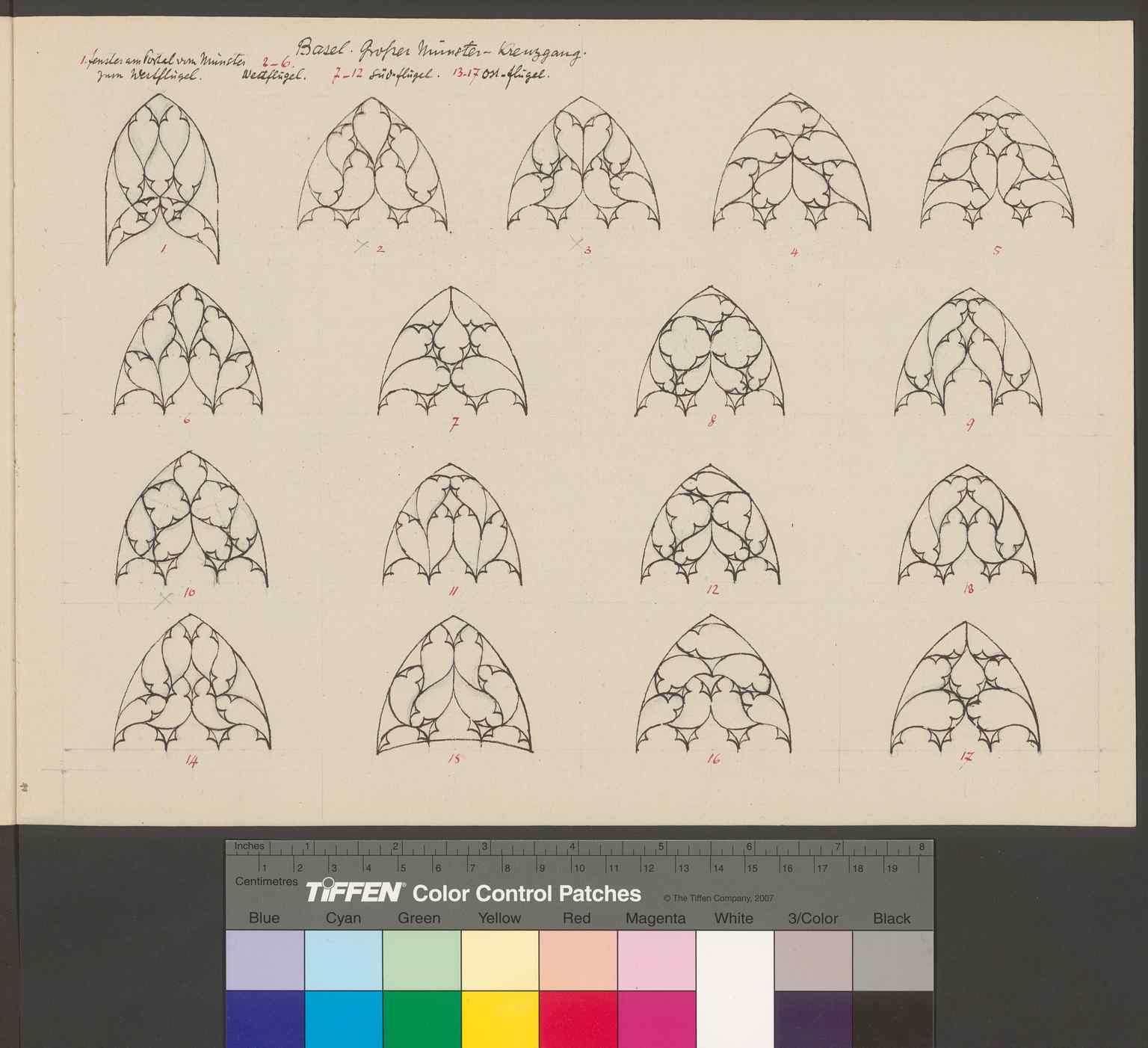
The app has a neat side by side showing what the quiet courtyard of the great cloister looked like back in 1860. The city outside has completely modernized, but the serene gothic arches in that photo look virtually identical to what you would see if you walked through today.
If you want to step inside to see the magnificent vaulted ceilings or the historic tomb of Queen Anne of Habsburg, the Minster is generally open from eleven in the morning to four in the afternoon daily. This breathtaking sandstone giant has witnessed centuries of human drama and natural disaster, standing resilient through it all. Admire the intricate carvings for as long as you like before we continue.


.jpg)
.jpg)

