
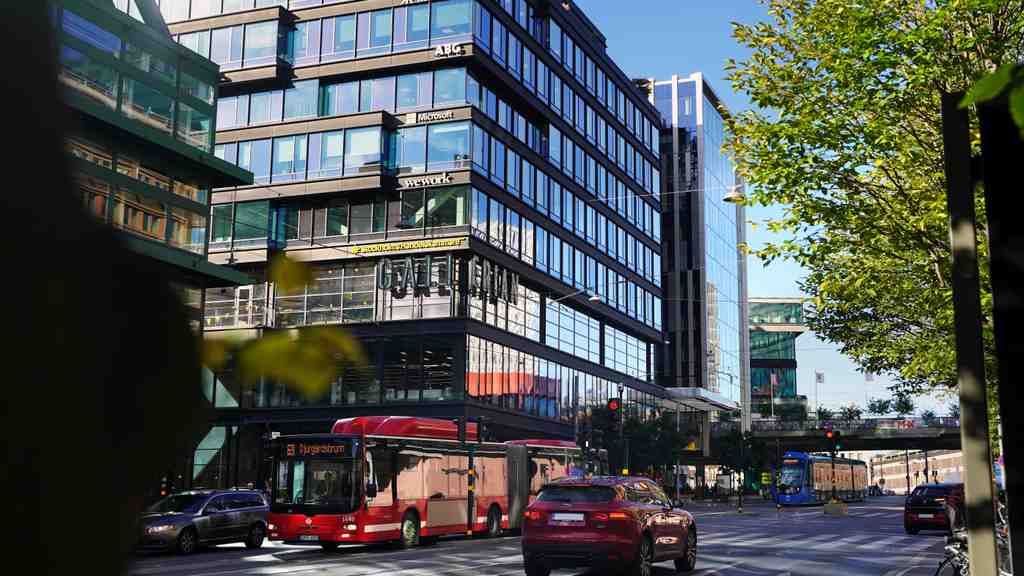
Look up at the modern, block-like structure with its dark horizontal bands framing expansive glass windows, where you can easily spot the yellow text of Stockholms Handelskammare mounted along the facade.
You are looking at the headquarters of the Stockholm Chamber of Commerce, an independent organization that has been quietly pulling the strings of the city's development since nineteen zero two. They recently moved into this modern complex, known as Urban Escape, in twenty twenty-two, but their history is packed with incredible twists.
Let me give you my absolute favorite example. Picture the height of the Cold War. The United States and the Soviet Union are locked in a tense standoff. Trade is still happening, but conflicts inevitably arise. The problem? Both nations had just discovered massive espionage setups and listening devices hidden inside their respective embassy buildings.
Neither superpower was about to let the other host their high-stakes trade disputes. They needed a totally neutral, completely trusted referee. Enter the Stockholm Chamber of Commerce. In nineteen seventy-seven, the two superpowers signed an agreement making this very institution the official neutral ground for their commercial conflicts. To this day, their Arbitration Institute, a specialized body that resolves legal disputes outside of traditional courts, handles intense geopolitical clashes.
But they do not just deal in global espionage and international law. They have literally shaped the streets you are walking on. In the nineteen fifties, downtown Stockholm was completely overrun with cars. Total parking chaos. So, in nineteen fifty-seven, the Chamber came up with a highly unusual fix. They proposed a dedicated corps of female traffic wardens. The idea was a massive success, and these women affectionately became known in Swedish pop culture as lapplisor, or ticket Lisas.
And they also saved some of the city's greatest treasures. Remember the Battle of the Elms we discussed back at Kungsträdgården? When those protests over the new subway entrance erupted into full-blown riots, the Chamber of Commerce stepped right into the chaos and brokered a brilliant compromise to move the entrance and save the historic trees.
They had a real streak of going against the grain. While modernists in the nineteen sixties were eagerly tearing down historic neighborhoods to build concrete blocks, the Chamber's fiery director Gösta Bohman was one of the few prominent voices aggressively fighting to save Stockholm's architectural soul. They also pushed boundaries internally. In nineteen fifty-six, business leader Britta Baeckman shattered a major glass ceiling, becoming the first woman elected to their assembly, forcing a deeply traditional boys club into the modern era.
This organization is a fantastic reminder that the real history of a city is not just made by kings and politicians, but by the everyday people fiercely advocating for its future. The Chamber is open Monday through Friday from nine in the morning until five in the evening, though it remains closed on the weekends.
Whenever you are ready, just follow your map forward.




