
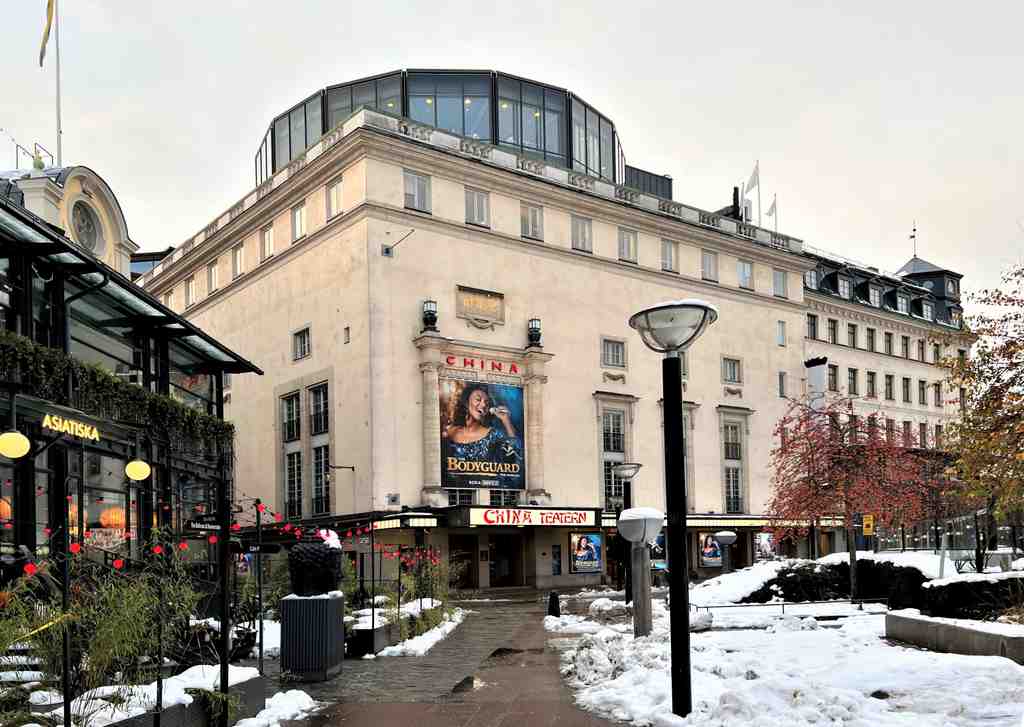
The building on your right is a pale stone structure characterized by its sharp rectangular shape, the flat decorative columns called pilasters framing the main entrance, and a prominent multi-sided glass pavilion resting right on top of its flat roof.
Welcome to Chinateatern, or the China Theater. At first glance, its facade looks like pure Swedish grace. But look closer at the details. The architect, Albin Stark, had just returned from working in China when he was hired to design this venue in 1927. He fused traditional 1920s classicism, an architectural style focused on strict symmetry and clean lines, with distinct Chinese design elements. Right above the entrance, sitting on those columns, there is a rectangular stone tablet. The Chinese characters carved into it translate to something incredibly poetic. It reads, The House of Perfect Vision.
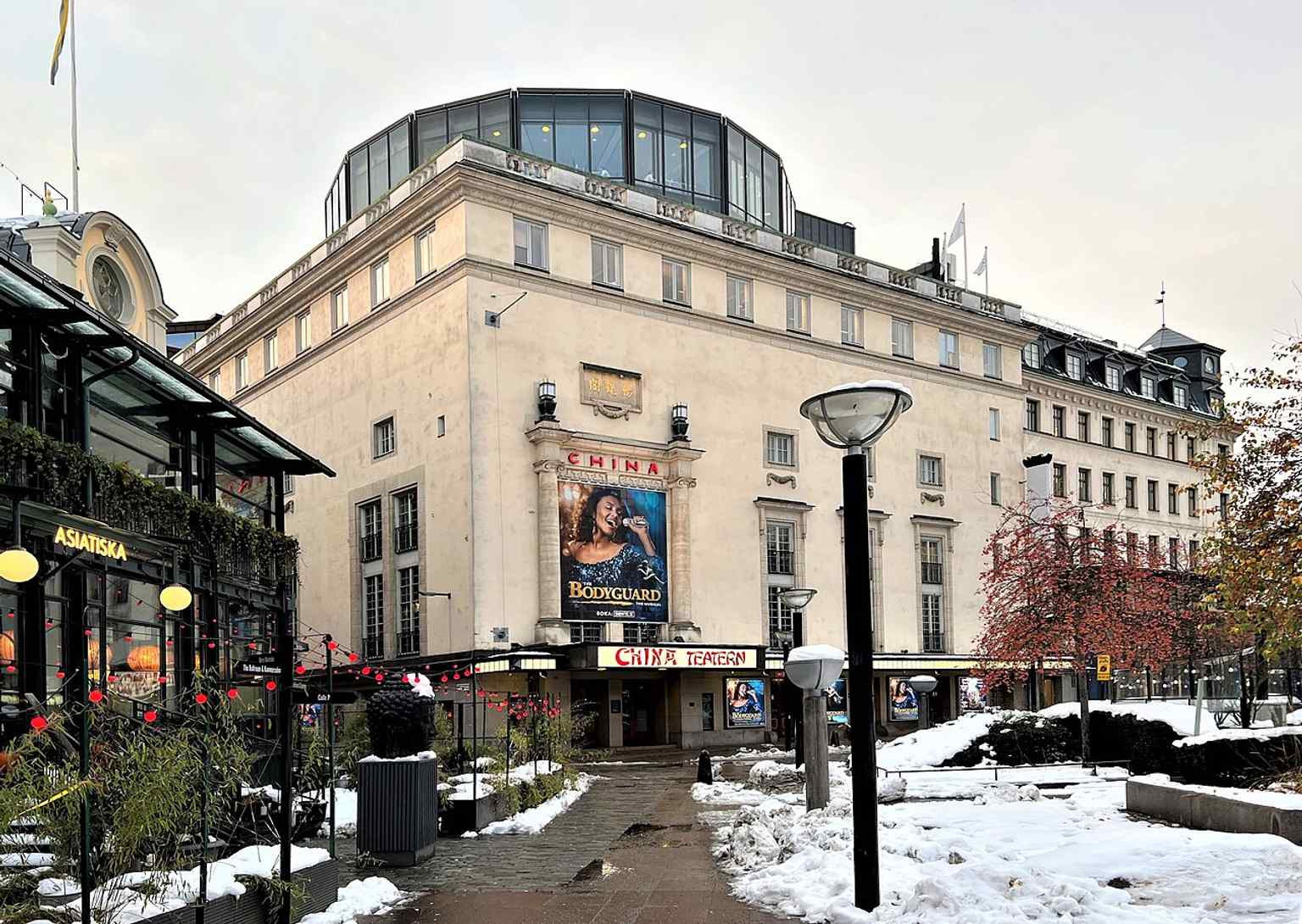
If you check your screen, you can see a wider shot of this exterior showing its position right next to the park, giving you a sense of its grand scale.
It was built by Carl Zetterberg and Charles Magnusson to be a massive cinema and theater combination, and they pulled out all the stops for the interior. The artists Einar Forseth and Ewald Dahlskog designed an absolute masterpiece for the ceiling dome. They embedded exactly one thousand, four hundred and eighty five stars into the ceiling. But they did not just scatter them randomly. Not a chance. They mapped out an exact, mathematically precise replica of the night sky as it appeared during the spring equinox of 1870, the exact day of the year when daylight and darkness are perfectly equal in length.
But architectural history is full of strange decisions. For decades, that breathtaking, scientifically accurate starry sky was completely painted over and hidden from the world. It was not restored to its full sparkling glory until 1987, when the theater was being renovated for the Swedish premiere of the musical Cats.
When the doors first opened on October 19, 1928, the massive auditorium held nearly fifteen hundred people. The very first thing they watched was legendary Swedish actress Greta Garbo starring in the silent film Anna Karenina. Over the years, the building evolved. It hosted summer revues with famous entertainers in the 1930s, and eventually stopped showing movies altogether in 1980 to become a powerhouse venue for theater, comedy, and giant Broadway musicals.
And the building hides some fantastic secrets. That glass pavilion you can see up on the roof was originally built as a cafe and roof garden called the Berzelii Terrace. Even wilder, there is a hidden underground passageway connecting this theater directly to the famous Berns hotel and restaurant complex next door, allowing performers to slip between the venues completely unseen by the public.
This venue is a brilliant monument to the golden age of entertainment, hiding an entire universe inside its walls. Take all the time you need here, and whenever you are ready to keep exploring, we can walk over to our next destination.





