
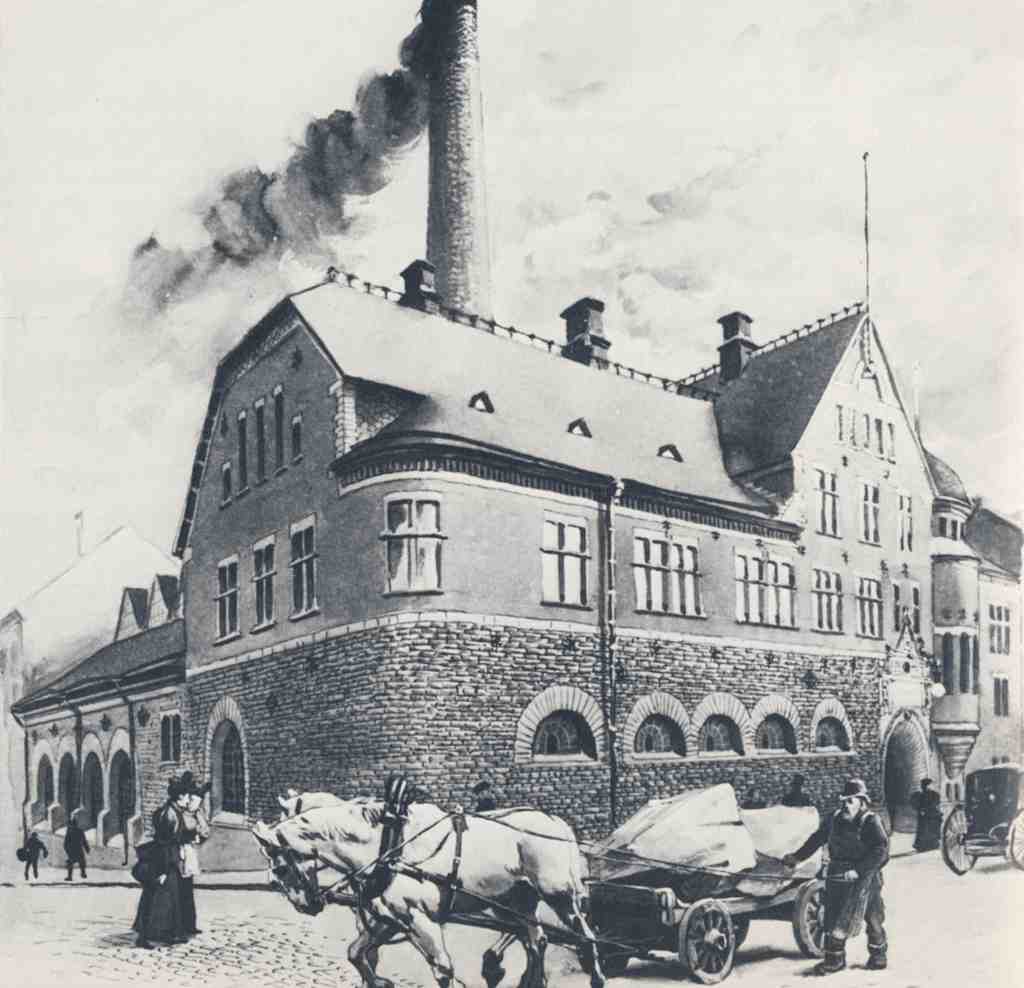
Look left to see the imposing structure featuring a rugged stone lower facade, a steeply pitched roof, and a massive towering smokestack rising into the air. Imagine the heavy smell of coal, the hiss of pressurized steam, and the low rumble of machinery right here in the heart of the city. What you are looking at is Brunkebergsverket, Stockholm's very first major power plant, which hummed to life on September first, 1892.
Before this colossal temple of energy was built, the city was entirely lit by gas lamps and kerosene. The very first taste of indoor electric light in Stockholm actually happened back in 1878 at a nearby cafe. They hung up four arc lamps powered by an early generator, but the light was incredibly harsh and the lamps gave off a terrible, smoky smell. It was such a strange spectacle that people actually paid one krona just to stand and stare at the glowing bulbs!
But Brunkebergsverket was the real deal. Designed by architect Ferdinand Boberg, it was meant to bring electricity to the masses, or at least, the wealthy masses. Inside this building sat gigantic accumulator batteries and massive steam-powered dynamos. A dynamo is simply an early type of electrical generator that converts mechanical rotation into direct electrical current.
And that direct current is exactly why this massive, soot-spewing factory had to be dropped right into the middle of downtown Stockholm. Direct current, unlike the alternating current networks we use today, could not travel very far without losing its power. So, the power plant had to be practically right next door to the homes and shops it was lighting up.
When they finally flipped the switch in 1892, over one thousand lightbulbs flickered to life across the neighborhood. The very first customer was a clothing store right down the street. But this modern miracle did not come cheap. Electricity cost eighty öre per kilowatt-hour, which is about six US dollars today for just a single unit of power. At those sky-high prices, only luxury boutiques and the absolute wealthiest citizens could afford to ditch their gas lamps.
Despite the beautiful architecture, including a grand archway carved with the names of famous inventors like Edison and Volta, this plant's days were numbered. Technology moved fast. Once alternating current made it possible to send electricity from distant hydroelectric dams over long distances, having a smoky coal plant in the city center no longer made sense, and it stopped generating power after just nineteen years.
Eventually, the grand stone walls and towering smokestack were torn down in the nineteen sixties to make room for the expansion of the department store that stands here today. If you want to explore the modern complex now, the surrounding venue spaces are open daily from six in the morning until ten at night.
This location marks the exact moment Stockholm stepped out of the gaslight era and into the modern, electrified world. Whenever you're ready, follow the route to our next stop.




