
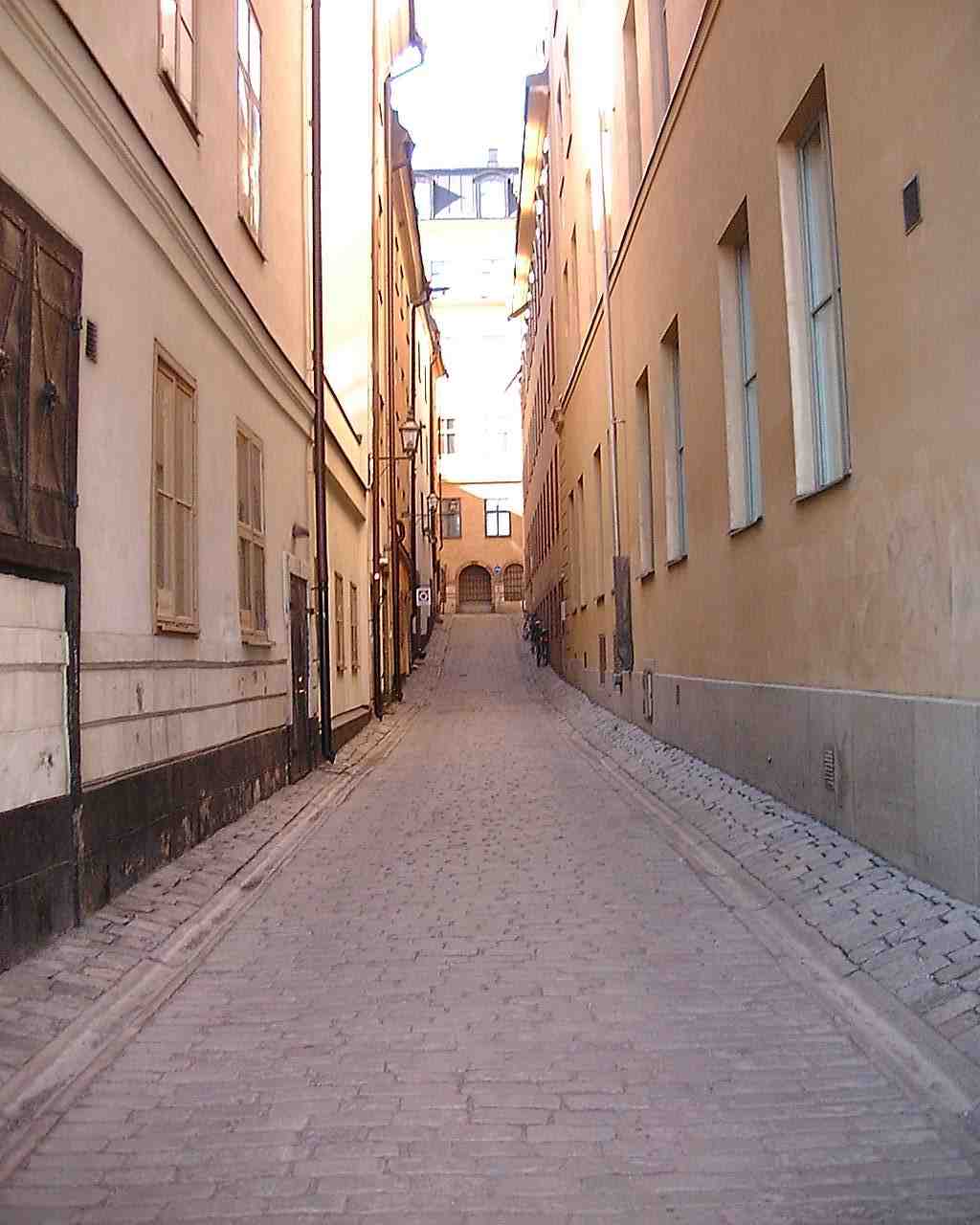
Telegrafgränd is a narrow cobblestone alley tucked between tall, cream-colored buildings-just look straight ahead for a gently rising passageway leading toward the brighter facade at the far end.
Now, as you stand here in the heart of Gamla stan, take a slow look up the alley-Telegrafgränd has the feeling of a quiet secret, one of Stockholm’s forgotten veins threading through centuries of bustling life. If you slip your hands along the cold stones of the walls, you might imagine the stories carried here, starting back in the Middle Ages. Picture mud and straw on the ground, the air thick with the sharp tang of salt from a warehouse up the lane. This narrow passage wasn't always called Telegrafgränd; it once went by Lindhwidz grend, named for a local skipper, Lindivd, who got caught hauling 100 loads of city muck where he shouldn’t have-imagine the grumbling of townsfolk as piles of moldy rubbish were heaved and trundled past.
By the 1600s, enterprising folks from Västervik set up a salt company here, stacking barrels and crates in the shadowy corners. Imagine the raucous laughter of sailors, the clang of iron rings as salts were offloaded and hidden away, all the while the name Saltkompanigränden clung to the alley. Over time, confusion began to swirl-there were just too many “salt” lanes in Stockholm! Residents pleaded with the city to change the name, and eventually, in 1875, a new chapter began: this passage became Telegrafgränd, named after the national telegraph office built just next door. All at once, the alley buzzed with a different kind of energy, a leap from salty trade to electric wires and rapid-fire messages.
If you stand by Number 2, you’re looking at a broad and sturdy building designed in the late 1800s simply for the business of communication. Before modern renovations, this very spot hosted a piece of the medieval city wall’s northern defensive tower-imagine guards peering out over snow-dusted streets, listening for the clatter of approaching strangers or the distant echo of a warning horn. Further along, you pass Number 4-6, where elaborate wainscots from grand 1600s rooms were discovered hidden behind plain plaster walls decades later-small souvenirs from another age, carefully preserved and whisked away by the city museum.
Across the alley, sturdy medieval stone basements hide beneath more modern facades. At Number 1, thick Y-shaped wall anchors remind you that this place has survived fire, decay, and endless waves of transformation; the upper floor dates from 1652, while the lower stones are probably much older. Imagine workers in 1902 hammering and sawing late into the evening, reshaping the buildings into the forms you see today-the smell of fresh mortar drifting in the crisp night air. Number 5, with its fork-shaped anchors and decorated doors from the 1700s, clings to the silence of the past, its medieval stones holding secrets no one remembers.
Each era leaves its traces: the echoes of the city wall, the flutter of papers at the National Archives, the hum of telegraph wires, and the footsteps of salt merchants and city officials-layer by layer, a living palimpsest. Telegrafgränd isn’t a grand avenue, but if you listen closely, you might almost hear the ghosts of all those names, trades, and languages, whispering down the alley just for you.




