
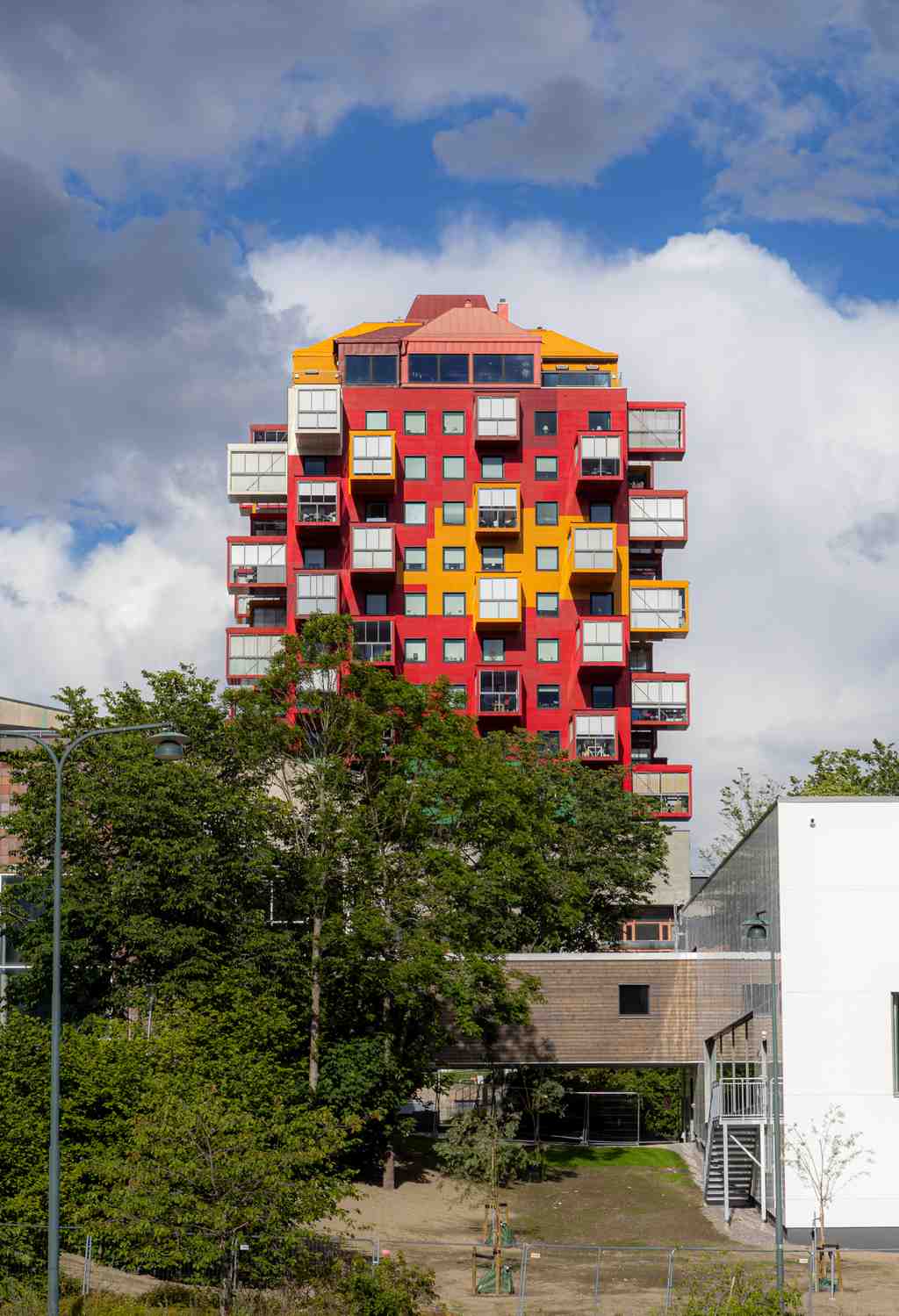
On your right stands a square tower of glazed ceramic and painted metal, with boxed glass balconies jutting out and a patchwork of red, yellow, and green that makes it easy to spot.
Ting one refuses to behave like an ordinary apartment building. Gert Wingårdh designed it, and residents moved in in twenty thirteen, but its story begins with the older courthouse below and around it. In twenty ten, Nicklas Nyberg and Torsten Kai-Larsen bought that raw concrete building from nineteen sixty-six, a tough, heavy example of new brutalism, an architectural style that favors exposed concrete and bold mass. They wanted homes here, but the old structure could not carry the weight.
So Wingårdh solved the problem with sheer nerve. Ting one stands on a separate concrete core, only eight by eight meters wide, planted in the courthouse courtyard. Above the old roofline, the building thrusts outward to a broad twenty-two by twenty-two meters. That kind of overhang is called a cantilever, meaning the upper floors project far beyond the support below. All the strength sits in that central tower, packed with an unusually dense web of steel reinforcement.
If you glance at your screen, the façade makes the idea clear. Wingårdh drew its colors from Bengt Lindström’s painting Women’s Dance, turning it into a kind of pixelated skin in glazed ceramic. Then he added seventy-eight glass balconies for fifty-one apartments.
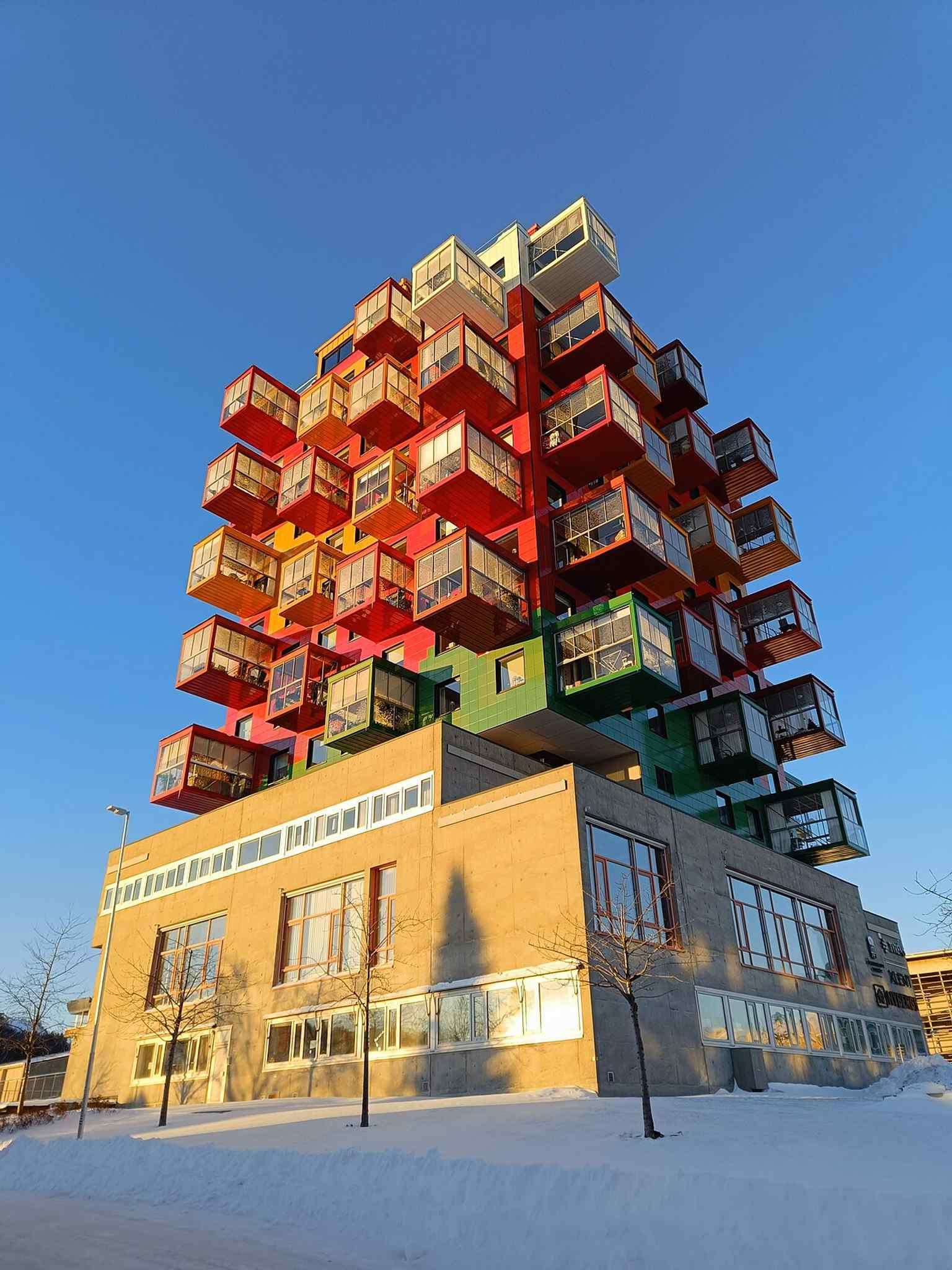
People argued fiercely over it... award-winning in twenty fourteen, and also mocked as Sweden’s ugliest new building, the so-called Lego House.
Ting one shows how one building can become both engineering feat and public provocation.
When you’re ready, we can continue toward the Oscar Gallery.





