
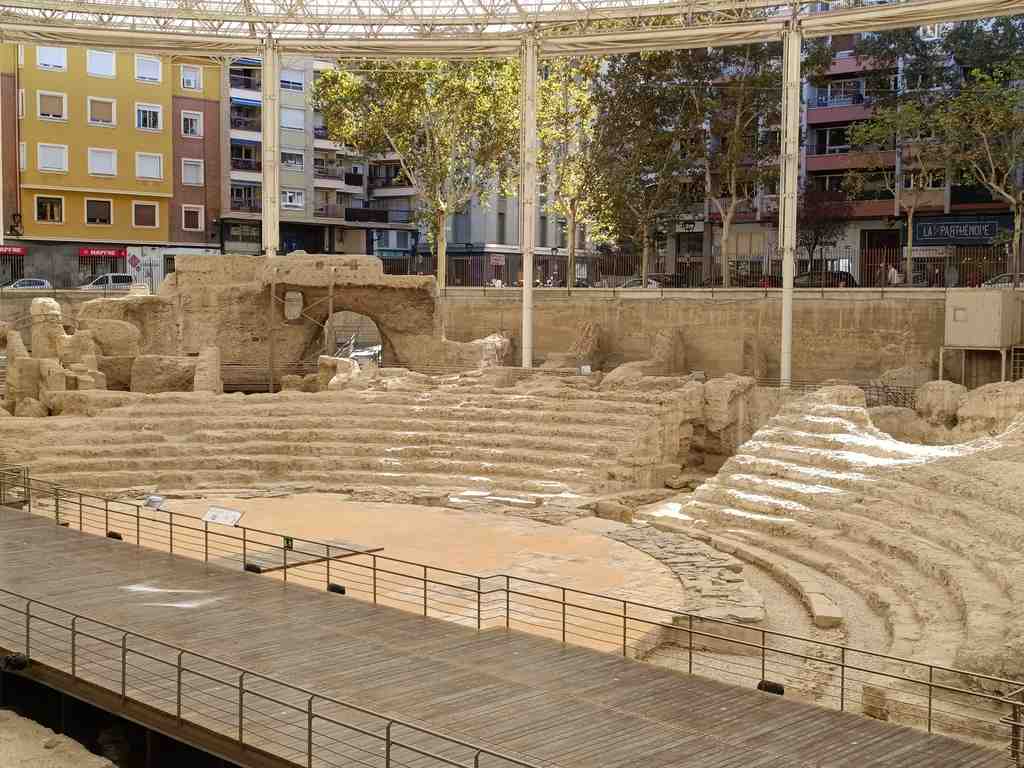
Alright, look ahead! If you spot a huge, open semicircle of ancient stone blocks dipping into the ground and surrounded by a modern glass-and-steel structure, you’re in the right place. The Roman Theater of Zaragoza is hard to miss-just look for the sweeping ruins with raised walkways hovering above them and a translucent roof letting in that soft Zaragoza light.
Now, take a deep breath and imagine the bustle here almost 2,000 years ago. The air would be alive with excitement; over 6,000 Roman townspeople, nearly a third of the city, chatting, laughing, and rustling into their seats, ready to be wowed by a show. You’d hear their voices echoing under a three-story stone facade gleaming in the Iberian sun, with the marble seats just cool enough to make you jump a little when you sit.
This wasn’t just any little playhouse. Built during the reigns of Tiberius and Claudius in the first century, the theater spread out over a whopping 7,000 square meters! To put it simply, it was the place to be - think of it like the Roman version of a blockbuster movie night, only with togas and maybe a gladiator or two thrown in for good measure. Roman Zaragoza wanted to impress, following the style of the grand Theater of Marcellus in Rome. But unlike many Roman theaters that nestled into hillsides, this one stood on flat ground-like a stage stubbornly refusing to take any shortcuts.
Watch your step - imagine Roman VIPs cutting through a special entrance, marching down a marble path straight from the main door to the best seats in the house. That bit of luxury wasn’t common in Spain at the time; Zaragoza liked to keep its important folks feeling fancy. Maybe that’s why they never dropped popcorn on the floor.
But time has its own sense of humor. After centuries of packed performances, the theater fell into decline in the third century. People started taking the stone blocks to patch up the city walls and other buildings. Soon the grand marble seats and orchestra floor disappeared under layers of new homes and shops. The theater was asleep, hidden, until eager archaeologists finally uncovered its bones in the 1970s.
Today, you’re walking on modern walkways that snake above the ancient ruins, with the past just below your feet. Step softly-it took nearly two millennia for these stones to see the sun again! If you close your eyes, can you hear the distant cheers, the stomp of sandals, and the drama rolling across the stage? Even the greatest performers could hardly compete with a rowdy Roman audience-but don’t worry, no one’s checking tickets now, so everyone gets the best seat in the house.
When you’re ready for more stories, let me know, and we’ll head to the next stop!
Curious about the historia, características técnicas or the transformación y redescubrimiento? Don't hesitate to reach out in the chat section for additional details.




