
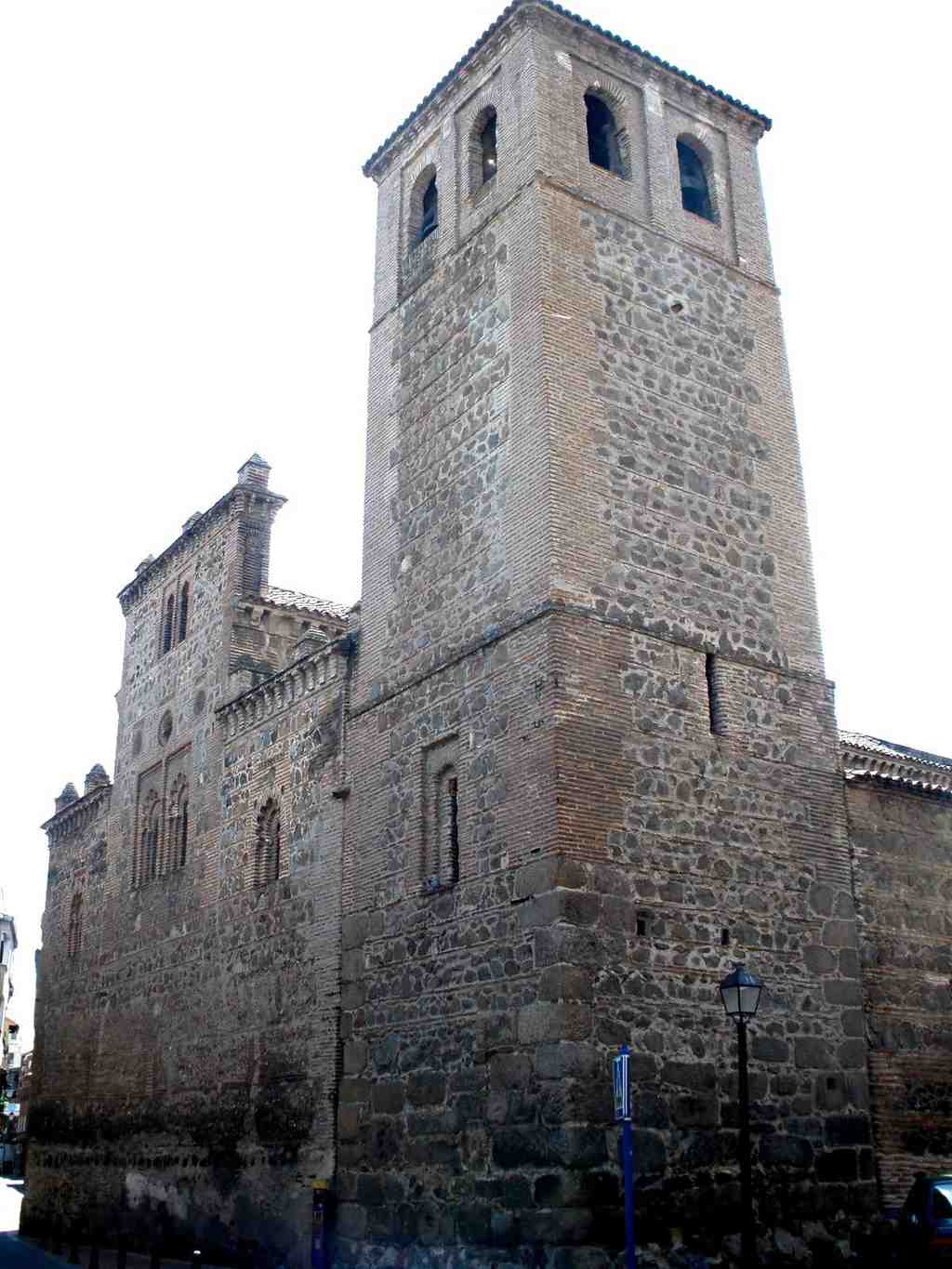
To spot the Church of Santiago el Nuevo, just look for a large, fortress-like building with thick stone walls and a tall bell tower. The church stands out with its mix of sturdy grey stones and reddish-brown bricks, forming neat geometric patterns all over the facade. If you see a building that looks like it wouldn’t really mind if a medieval knight banged on its door, you’ve found it. The western facade is especially eye-catching with its rounded rose window and beautiful arches-so keep your eyes up as you walk by.
Now that you’re standing in front, imagine you’re in the bustling outskirts of Talavera in the 1300s. This church was built after the 14th century, and if you listen closely… -you can almost hear the generations of townsfolk and pilgrims who’ve passed through these doors.
This place isn’t just old, it’s legendary. Crafted mostly from brick, but with touches of Roman and Visigothic marble and stone scavenged from even older buildings, the church is like a patchwork quilt of Talavera’s own history. Don’t be fooled by its tough exterior-the details around the windows and doors are pure Mudejar magic. The arches are a mix: some pointed and some with multiple leaf-like lobes. It’s like the architect couldn't quite decide on a favorite!
Step back and have a look at the rose window on the western facade, made with brick tracery. It’s almost a smile, winking at passersby since the days when knights and merchants filled these narrow streets. Two side doors-one north, one south-look like brick rainbows gently pointing skyward.
Now, here’s a secret: there’s a Renaissance-Mudejar gallery on the south side, just waiting for you to daydream about market days and musicians bringing the old courtyard to life. And within these walls is a grand 18th-century organ-a powerhouse of sound, though, no free concerts today, I’m afraid!
Famous not only for its beauty but for those who walked here, this was the parish of Juan de Ferreras-a man so scholarly he probably scared off the mice with long speeches about Spanish history. And in 1931, the whole church was protected as a National Artistic Treasure. Today, it’s recognized as a Bien de Interés Cultural-that’s Spanish for: “Hands off, this one’s ours!”
So, take a moment, breathe it in. Imagine all the secrets hidden in this stonework. Now, ready for our next stop? You’re off to a great start-let’s see what other treasures Talavera has in store!




