
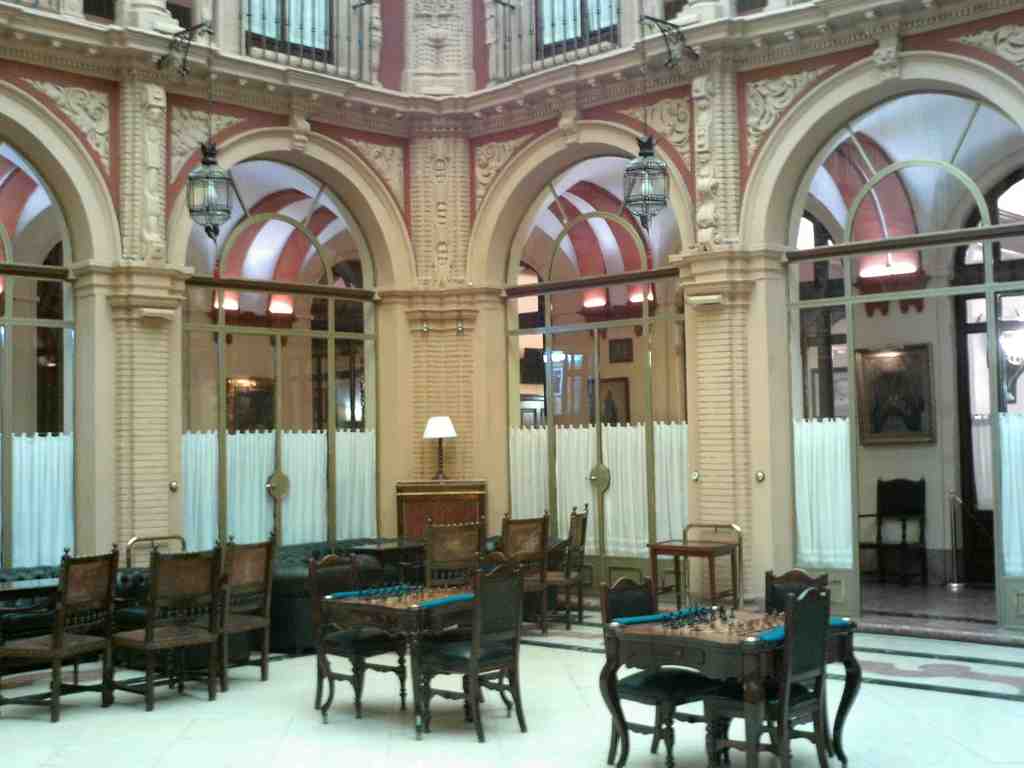
You’re almost there! Just look ahead for a grand building with tall, pale stone columns and delicate stucco details, all surrounding handsome arches. If you spot a beautiful old courtyard with a square ground plan, big lanterns hanging over your head, and rows of arched windows, you’ve made it-you’re at the Convent of Saint Acacius. Peer through the windows, and you might even see elegant old chess tables waiting for their next match. That’s your cue!
Now, let me sweep you back in time. Imagine it’s the 16th century, and outside the walls of Sevilla, this place buzzed with monks in long robes-Augustinians, to be exact. There’s a whiff of anxiety in the air: they want to build a grand college, but their coin purse is lighter than a feather. Just when hope is fading, along comes Leonor de Virués, a widow with a heart as generous as her garden, donating houses and orchards so these monks can finally get building.
You’d see students hustling over dusty paths, books clutched tight-maybe dodging an overzealous chicken or two. By 1601, the church here was finished and became a beacon for those seeking wisdom, faith, and maybe a slice of peace away from the city’s clatter. Over time, the city grew and this convent moved to its present spot, right here in the heart of Sevilla.
Oh, but it wasn’t all quiet prayers and gentle chanting. This building’s life is like a Spanish soap opera: monks in, monks out, artists, noblemen, invading armies (hello, Napoleon), and even a public credit office at one point. At night, neighbors would gather for rosary processions, wandering these cloisters by lantern light, filling the warm air with whispers and song.
Look up at the sturdy columns around you and picture a line of monks with secrets under those heavy robes-perhaps sneaking extra bread, or maybe just a forbidden chess game on those old tables. And don’t forget, this courtyard was designed by the famous Leonardo de Figueroa-in the late 1600s-so every detail is a little piece of art.
In the end, this convent retired from holy work and transformed into the Real Círculo de Labradores in the 1950s-a place of gathering, laughter, and lively debate.
So next time someone tells you Sevilla is all oranges and flamenco, tell them there’s history and drama waiting behind every arched door. Alright, onward to our next adventure!




