
On your left is the spiritual heart of one of Spain's most wonderfully absurd traditions. The Burial of the Sardine. Yes, a literal fish.
Back in eighteen fifty-one, a group of university students, including a poet named José Selgas, decided to mock the elaborate masquerades of Madrid. After a hearty carnival dinner, they grabbed a real wooden coffin, tossed a tiny sardine inside, and paraded it through the dark streets to the absolute bewilderment of the locals. Fast forward, and this bizarre little joke is now a massive, internationally recognized pagan festival. It celebrates the victory of Don Carnal, representing the indulgence of carnival, over Doña Cuaresma, representing the strict fasting of the Catholic Lent.
I have always appreciated a clever workaround, and this festival survived the strict religious censorship of the Franco dictatorship through pure bureaucratic camouflage. When the church tried to ban this highly pagan celebration on Ash Wednesday, the organizers simply dropped the original name and rebranded it under the generic title of Spring Festivities. The government looked the other way, and the flames kept burning.
Take a look at your screen to see what those flames look like today. This towering structure is the catafalque designed for the hundred and seventy-fifth anniversary in twenty twenty-six. A catafalque is essentially a decorated framework supporting the effigy. Every year, a massive structure like this is erected right here to be ceremoniously burned at the festival's climax. The locals act as amateur augurs, or ancient Roman fortune tellers, watching the fire. If the structure burns fast with a clear flame, it means a prosperous year for the local orchards. If it belches thick black smoke, well, bad news for everyone.
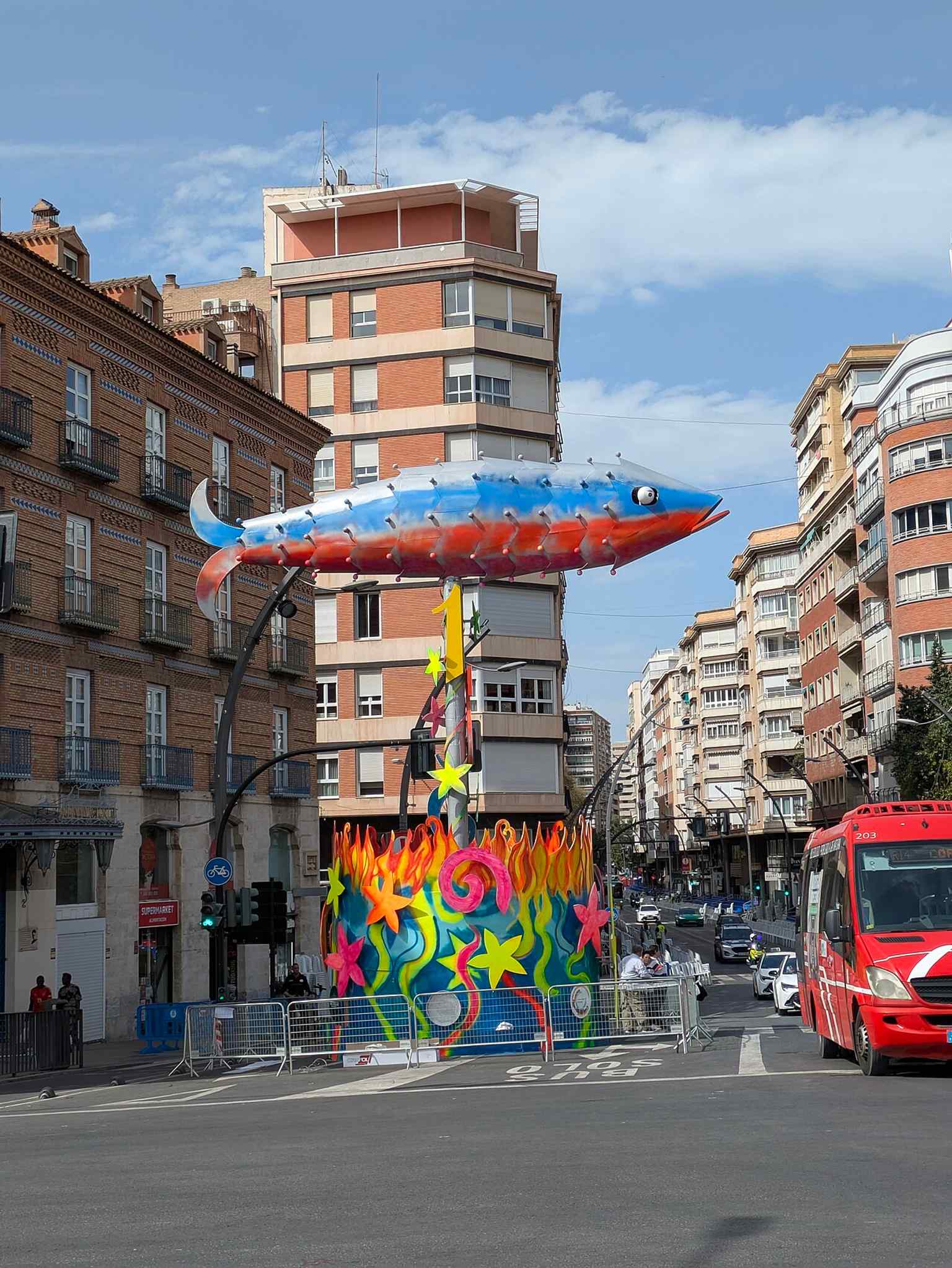
But playing with fire has real consequences. In nineteen oh five, an acetylene lighting system exploded on one of the parade floats. A young woman named María García, who was tied to the structure for safety during the bumpy ride, was trapped. She was heroically pulled from the flames by a spectator known only as El Inglés, but she suffered terrible burns. The incident sparked a fierce moral debate in the press about the safety and decency of the festival.
Then there are the purely technical failures. In twenty twenty-five, local artist Pepe Yagües built the sardine catafalque just a little too well. He miscalculated and used materials that simply refused to burn. After watching thousands of people stare at an un-ignitable fish, frustrated firefighters actually had to bring in a heavy crane to rip the structure apart just to force combustion. An engineering marvel, perhaps, but terrible for a bonfire.
Despite the occasional mishap, the parade remains a spectacle of noise and fire, featuring mechanical fire-breathing dragons and hachoneros, who are traditional torchbearers wearing striped robes and tall cone hats.
This public area is open twenty-four hours a day, from Monday to Sunday, so you can always stand right here and imagine the roaring heat of the sardine's fiery farewell. Whenever you are ready to leave the folklore behind, let us walk on.





