
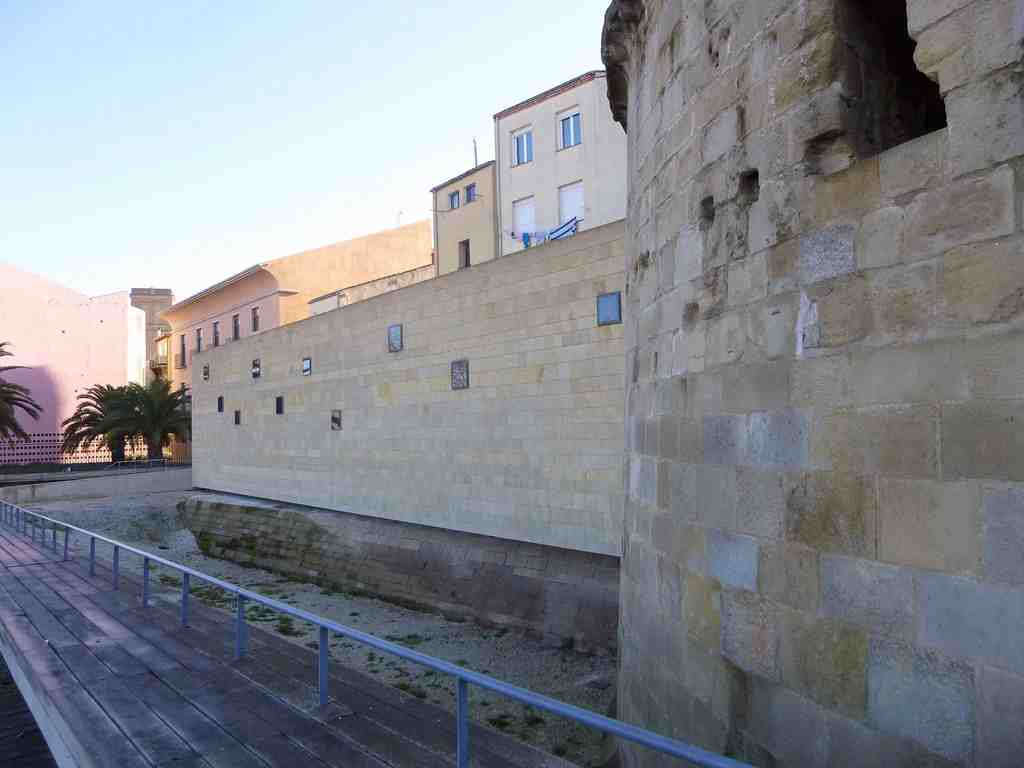
To spot the Recellen Cube (El Cubo del Revellín), look for a large, round stone tower built right into the old city wall at the edge of the walkway, with its weathered blocks standing out beside the smoother, newer wall and nearby buildings.
Now, take a deep breath and bring your imagination back to the early 1500s. The air is tense, and you can almost feel the city of Logroño holding its breath-because you’re standing right next to one of its most heroic defenders: El Cubo del Revellín. This isn’t just any old stone tower! It was built between 1522 and 1524, right after the people of Logroño survived a terrifying siege by an army of French and Navarrese forces led by the fearsome general André de Foix. The siege was so dramatic, you’d expect someone to jump out with a cannonball at any moment.
But instead of crumbling under the pressure, the citizens outlasted the attackers, and the city was called "the key to Castile." Afterward, everyone realized the ancient medieval walls just wouldn’t cut it anymore against the age of cannons. Enter Master Lope de Isturizaga, a stone mason who came all the way from San Sebastián to create cutting-edge defenses-a new kind of fort called a "fortification of transition." It was the superhero of walls: half-medieval, half-modern, and ready for battle. The Recellen Cube was the first phase of a city-wide facelift that was, honestly, a bit like starting a gym membership and only going to two classes. They got the Cube done…but the rest of the plan sort of fizzled out when the money ran dry.
How did they get the money in the first place? A city tax called a “sisa.” It was so unpopular, even the local clergy declared a strike-refusing to hold church services or even funerals-just to avoid paying! You have to admit, that's a pretty “grave” protest. Eventually, Emperor Charles V stepped in and gave Logroño a juro, an annual payment to fuel the wall-building spree. Imagine the parade of stonemasons, laborers, and even donkeys, all busy bringing loads of stones-hundreds in 1522, thousands by 1524. If you listen closely, you can almost hear them as they built, brick by brick.
But it wasn’t all about money and missing funerals. The Cube was designed with the latest military technology of its time. It’s not just a chunky tower; it holds a triple platform, walkways, and two gun galleries, so defenders could fire at attackers from both above and below. It even had a secret well, where water was stored to cool the cannons during battle-and maybe for a sneaky drink or two. Rumor has it, there might have even been a hidden “listening gallery,” where defenders could eavesdrop for noises of tunneling attackers trying to sneak in. Spies with very dirty boots, you could say.
Through the centuries, the Recellen Cube saw the city change all around it. The strategic military value of Logroño faded as Spain unified and battlefronts moved further away. In quieter years, the walls sheltered all sorts of local life. In 1884, a pelota court was added to its eastern side, and in the 1930s, the place was humming with artists like Alejandro Rubio Dalmati, who left his mark with a stone relief. Just when you thought the Cube would retire, the frontón building was turned into the lively Cine Frontón, echoing with laughter and movie soundtracks for decades.
By the late 20th and early 21st centuries, the city decided it was time to pull the Cube and the nearby Puerta del Camino back into the spotlight. Restoration efforts peeled away newer buildings, giving us the remarkable stonework and sweeping ramparts you see today. Archaeologists found layers of history here: parts of even older walls, the famous Cube from the 1500s, and later reinforcements built during Napoleon's time. Every stone you see has survived sieges, strikes, sports, and cinema-if these walls could talk, imagine the stories they’d gossip about.
Now, as you stand here and look at the thick, ancient walls, picture defenders peering from the galleries and readying for action, townsfolk bustling with quarrels (and a few skipped sermons), and the old city holding firm against the tides of history. The Recellen Cube is Logroño’s ultimate survivor: solid, stubborn, and always ready for the next chapter.
To delve deeper into the context, construction process or the financing, simply drop your query in the chat section and I'll provide more information.


