
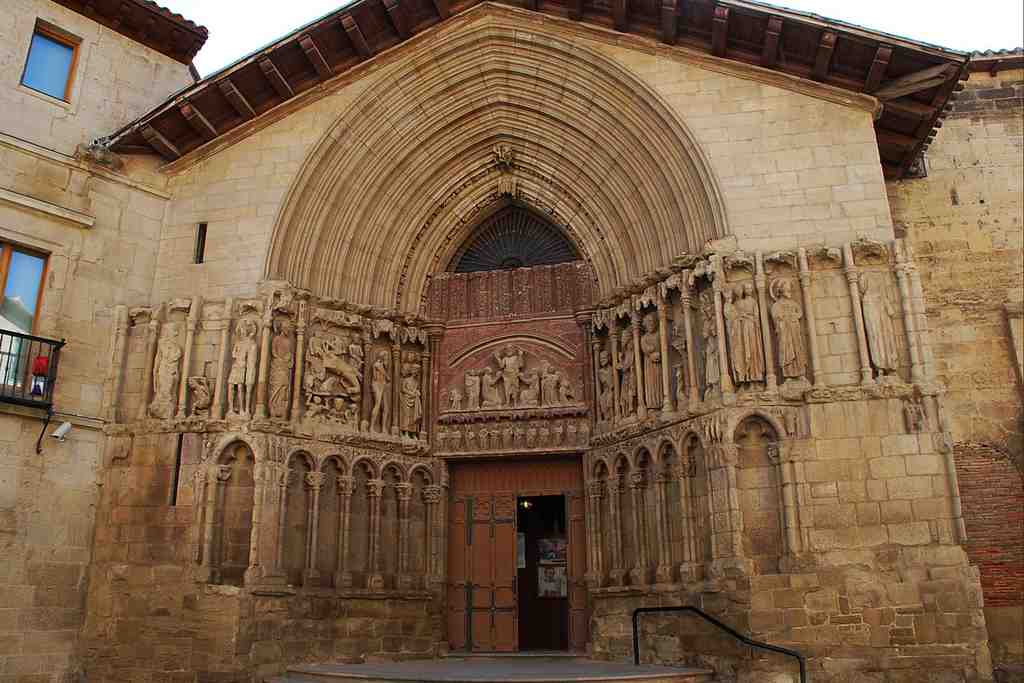
To spot the Church of San Bartolomé, just look for a stone building with an impressive, wide arched entrance filled with rows of carved figures and detailed medieval scenes surrounding an old wooden door.
As you stand in front of this mighty old church, let your feet tingle with history because you are right where countless travelers on the Way of St. James have stopped, marveled, and maybe even whispered a little prayer for strong legs. Built way, way back in the 12th century, the Church of San Bartolomé is the oldest in Logroño-basically Logroño’s grandparent in stone! Its thick Romanesque head and the base of the tower came first, sturdy and uncomplicated, built to withstand time and weather-and probably the odd enthusiastic pigeon. Not long after, the city's masons got a bit creative and stepped into the 13th century with stunning Gothic style. It was then they designed this magnificent arched doorway. But wait, don’t just walk by-those nearly 20 tiny sculpted scenes crowding the entrance aren’t just random decorations! They’re ancient comic strips, carved in stone, and they tell stories packed with action, drama, miracles, and even a little bit of ancient horror.
Start on the far right: here’s Saint Bartholomew himself, heroically saving the king’s daughter from madness-who needs a superhero cape when you’re wielding 13th-century sainthood? Then, move along to see him evangelizing at court, a group of maidens deep in discussion, and then-dramatic pause-watch as Saint Bartolomé clashes with angry priests and expels the demon from the pagan idols. That’s when things get wild. The priests? Furious. The idol Berith perched on a column, the saint driving out the devil-all right there, frozen in centuries-old stone. In the next scenes, poor Bartholomew is marched, not without a heroic expression, to King Astyages. And, if this were a film, this is where things might get a tad R-rated for medieval tastes: Bartholomew is eventually tied down by his limbs and-gulp-skinned alive as punishment, the table held by three female figures representing lust, vanity, and laziness. Yes, history was rarely gentle or boring! And, incredibly, the last scenes show Bartholomew preaching, his own skin nonchalantly draped over his shoulder. Sometimes history just leaves you speechless, right?
A look higher up and you’ll spot the tympanum-once neatly above the doorway before renovations in the 1500s shifted it down to add light for the choir. This sunny intervention was the work of Pedro de Acha, who also tucked in a Renaissance arch for a bit of contemporary flair.
Step inside-if you ever get the chance-and you’ll see three naves divided by sturdy octagonal pillars and covered with dramatic groin vaults. The Romanesque crossing and apse still stand out, though the original, glittering altarpiece is long gone. Once it was painted white and gold, dazzling enough to make the saints squint. Legend has it it resembled the grand altarpiece of Calahorra’s Holy Martyrs.
Now, the church’s story isn’t all holy calm. During the fifteen-day French siege of Logroño in 1521, enemy artillery battered the tower. Remember, this church wasn’t just a place to pray but part of the city’s defensive wall, its tower a watchful guardian beside the Herbentia gate. It was later rebuilt in brick, showing off stylish Mudejar details from Aragón.
Over centuries, the church’s role twisted and turned like a medieval soap opera. During the First Carlist War, a telegraph station perched atop the tower, sending winky-face messages-or okay, semaphore code-across Spain’s first optical network. It’s been a warehouse, a hospital, a school, and at one point, nearly became a theater. Imagine trading all this ancient stone for popcorn and Shakespeare! Glad they changed their minds.
Today, this church, right beside the elegant Palace of the Marquises of Monesterio, stands protected, holding centuries of Logroño’s secrets and stories. If only these stones could talk-or maybe, after all this, you feel like they already have!


