
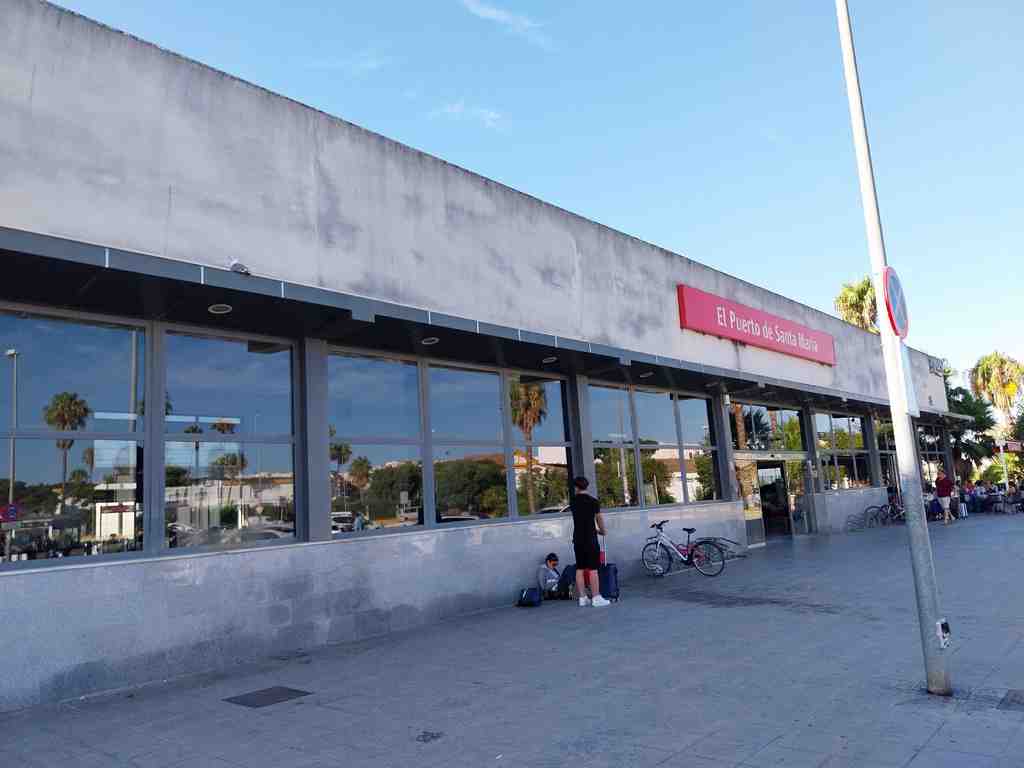
To spot the Santa Maria Port Station, just look ahead for a sleek, modern railway platform with long, open platforms and bright shelters stretched alongside multiple sets of tracks-it’s hard to miss with its broad metal roofs and overhead electric cables.
Now that you’re standing here, let’s roll back the clock and dive into the spirited story of this station-one that has more twists and turns than a high-speed express! Close your eyes for a second and imagine it’s the late 1800s: the air is thick with the scent of fresh timber, coal dust, and, just maybe, a trace of sherry wine drifting in from the bodegas nearby. You might hear the huff and clank of early steam trains going by, their whistles echoing off the river Guadalete, which flows close to where you’re standing right now. Back then, the very first station here was attached to what today is a tunnel heading out towards the Salinas de San José. But this was no ordinary train stop-this was the birthplace of some of Andalusia’s oldest railway history, right on the line that would become the famous “wine train.”
This train line, dreamed up by the ambitious Company of the Railways of Seville to Jerez and Puerto Real to Cádiz, had a rather tasty mission: to link the sherry capital of Jerez de la Frontera to the port at Muelle de Trocadero-so Europe’s wine glasses could be filled with golden Andalusian wine! A banker, José Díez Fernández de la Somera, was behind the original route; imagine the excitement when the new, permanent station opened its doors here in 1876-it was a railway revolution. Not many places can claim such a prestigious spot in the story of Spanish trains.
But the plot thickens: just one year later, in 1877, the line joined the mighty Andaluces Railway Company. The tracks buzzed with travelers, barrels of wine, and people heading towards dreams or duty. Then came harder times. By the 1930s, the Andaluces, swamped by financial troubles, lost control during the Second Republic, and everything was handed to the National Company of the Western Railways. But even that was short-lived-by 1941, the entire Spanish railway network was swept up and nationalized under RENFE, giving this station an even grander place in history.
Fast forward-new lines came and went: branches to Trocadero and Sanlúcar vanished, and the echoing sound of the railway to Rota-Chipiona-Sanlúcar fell silent in 1985. The station you see now is surprisingly new, sparkling into service in 2008, part of a wave of upgrades that arrived with the high-speed line between Seville and Cádiz. But the heartbeat is familiar-trains still come and go, carrying everything from local commuters and long-distance visitors to starry-eyed tourists like us.
Today, you can hop aboard for Madrid, Cádiz, even Barcelona if you like a really scenic trip. And from here, you’re tied in with everything: regional, long-haul, and-you guessed it-Spain’s famous Cercanías commuter trains chugging in and out with clockwork regularity. Weekends you might hear fewer trains, so you can soak in the silence-or maybe just imagine, for a moment, the ghostly rattle of the “wine train” on its way down the line.
So, take a deep breath, listen to the hum of the modern engines, and remember: this station isn’t just a place to catch a train-it’s a portal through time, where every arrival and departure adds a chapter to the long, adventurous story of El Puerto de Santa María. All aboard for the next adventure!


