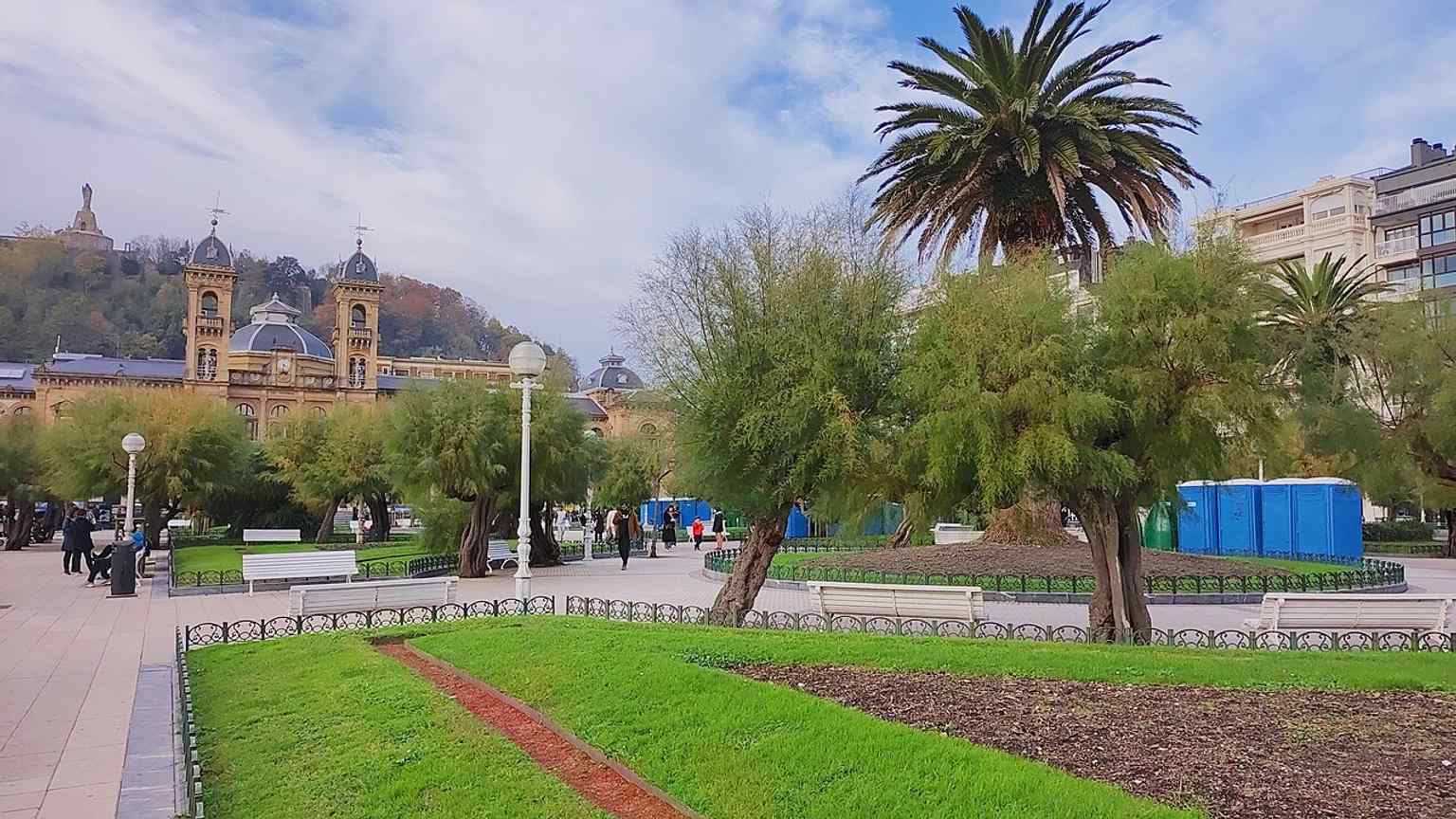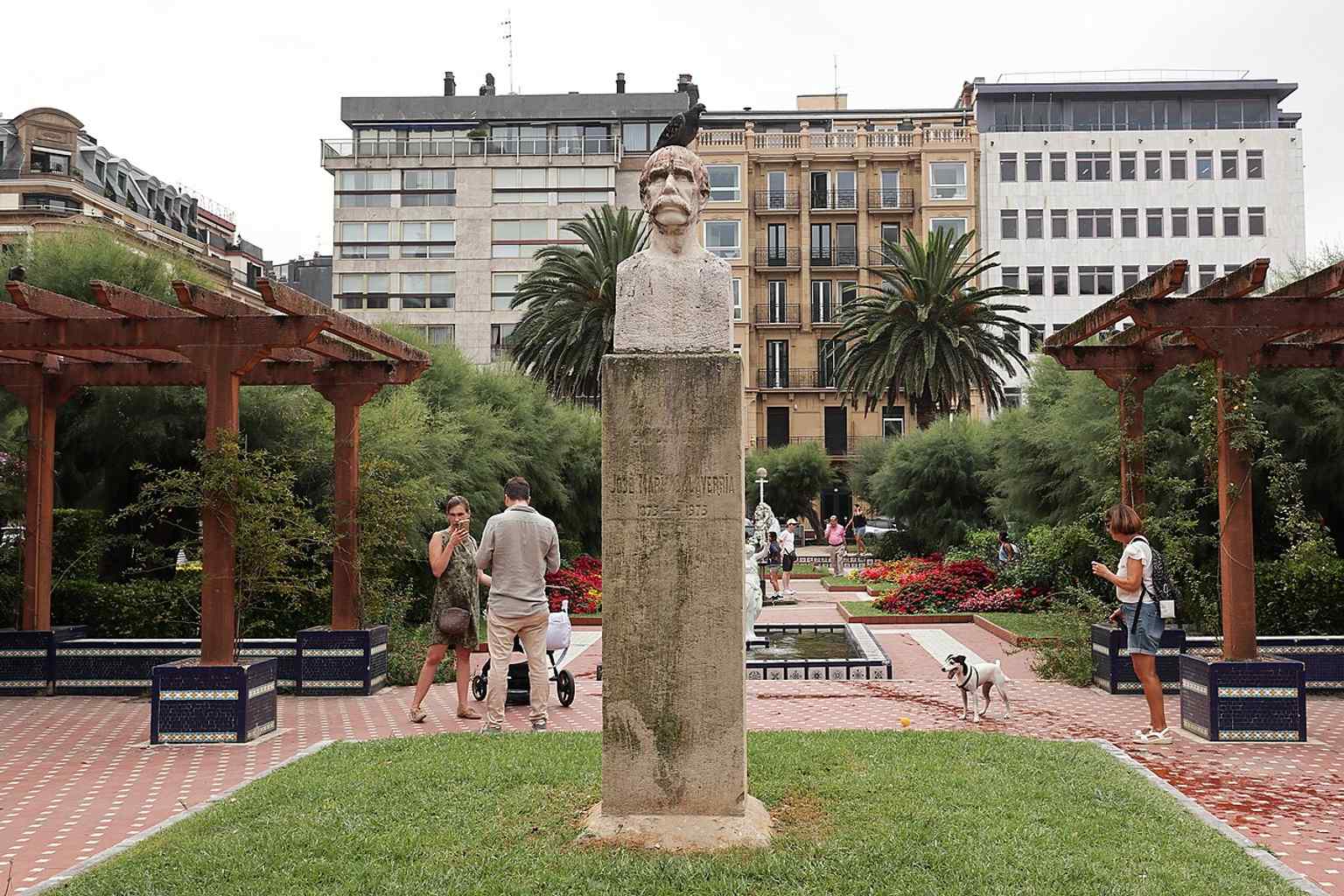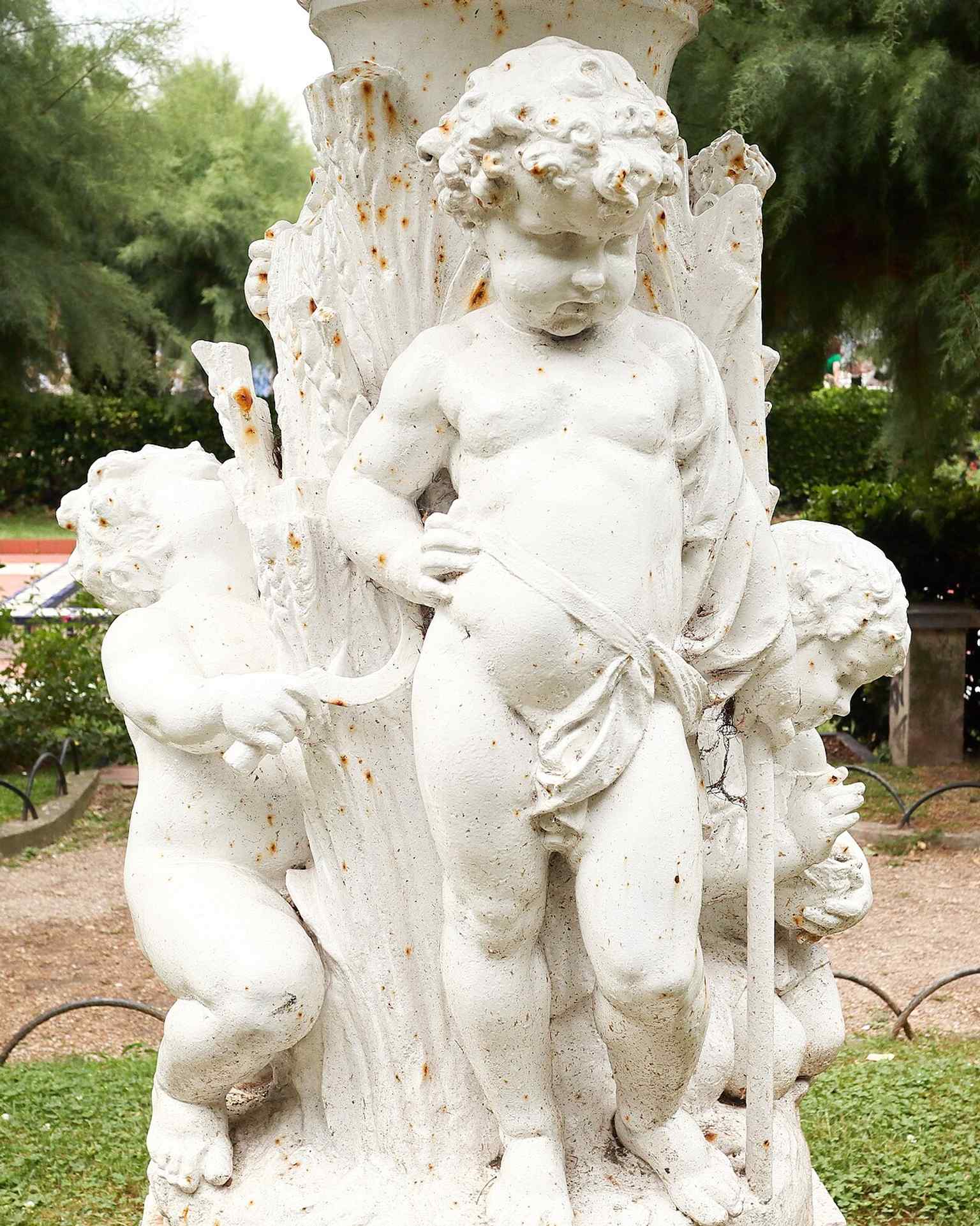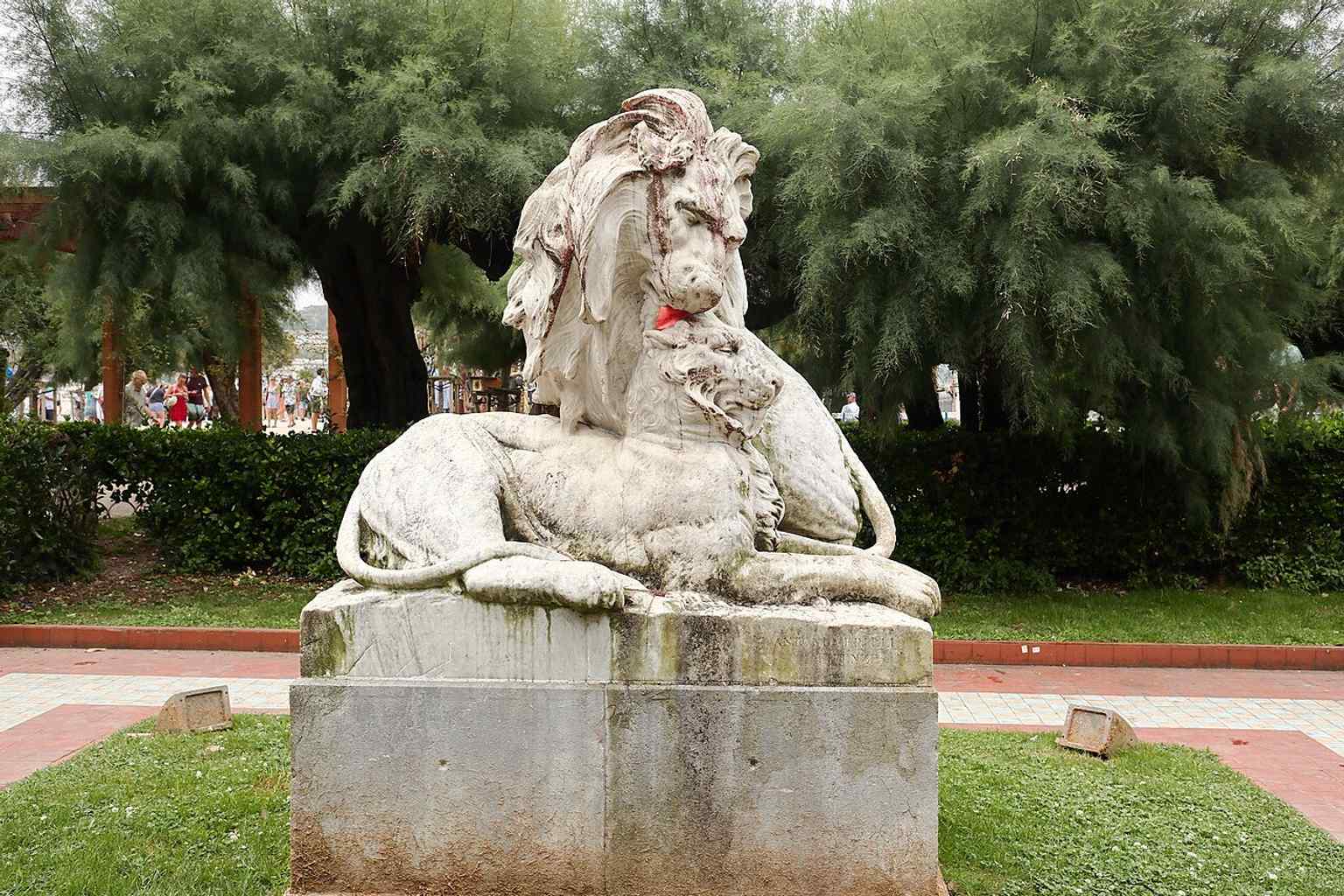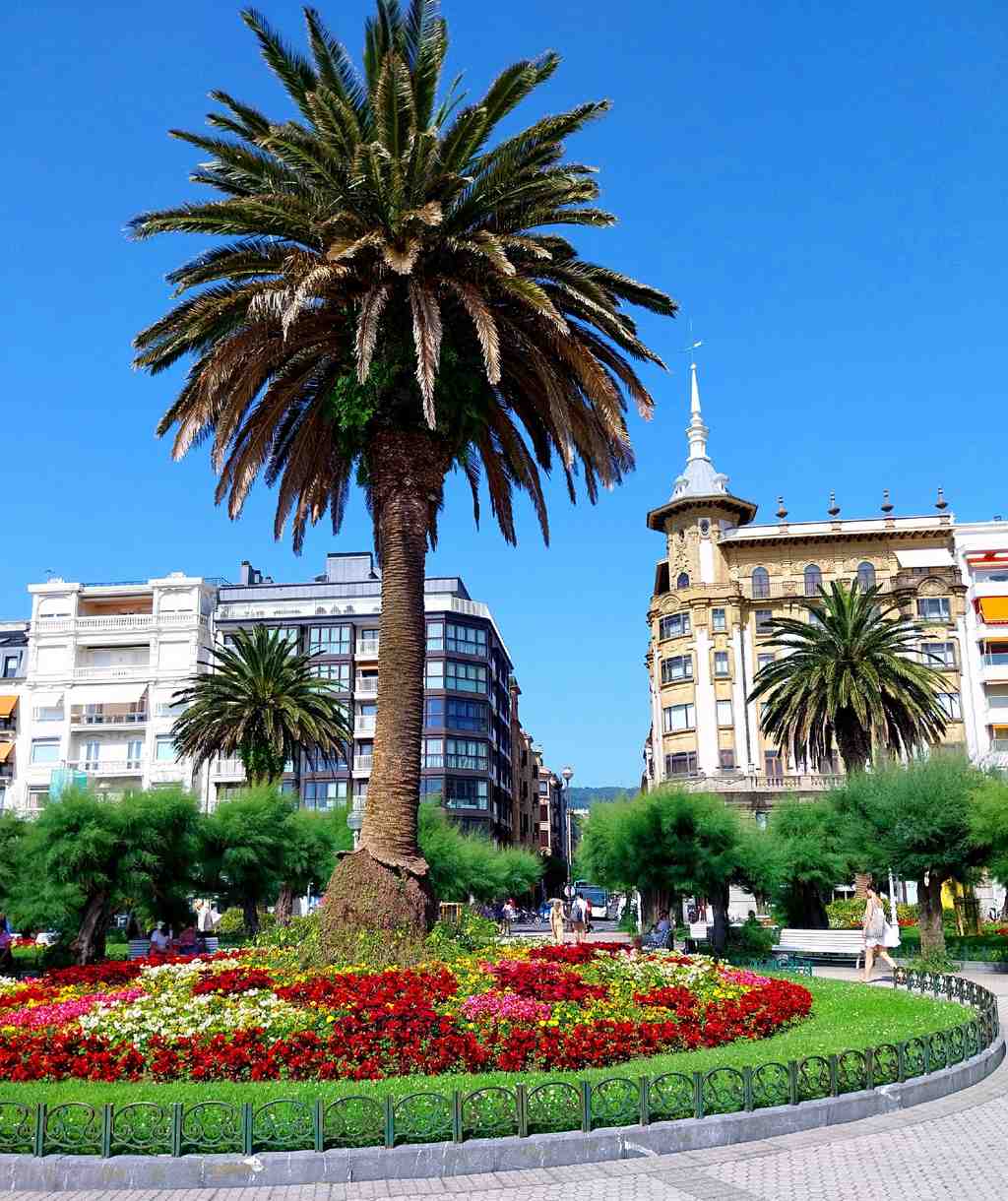
Ahead of you lies a formal green garden of clipped hedges and gravel paths, shaded by rounded tamarind canopies and marked by fountains and sculpted stone details.
Alderdi Eder means “beautiful place” in Euskera, the Basque language, and San Sebastián chose that name with unusual honesty. This is not simply a park. It is one of the city’s great front rows: to the bay, to public life, and, for a long while, to spectacle itself.
In eighteen eighty, the city took an old military drill ground beside La Concha and turned it into pleasure space. First came amusements: a circus, a velodrome for cycle racing, even a puppet theatre. Then ambition grew grander. More than three hundred shareholders, mostly local people, backed a casino on municipal land, and the young architects Luis Aladrén and Adolfo Morales de los Ríos won the design competition with a proposal called Aurrera, meaning “forward.” When the casino rose behind these gardens, the whole setting changed with it.
If you glance at the image in the app, you can see the park as it still works best: a green balcony between the promenade and the city’s grand public face.
The French gardener Pierre Ducasse gave that balcony its poise. He planted nearly a hundred trees here, along with formal flowerbeds, hedges, a pond, fountains and statues. He was designing more than decoration. He was arranging an audience chamber in the open air. During the casino years, the access terrace hosted two orchestra concerts each day, and the music drifted across every corner of the garden. Downstairs in the building, people drank coffee, read newspapers, dined, and talked. Upstairs, in the more secret rooms, they played roulette and baccarat, the card game beloved by high society, even though gambling was illegal.
Locals, with that dry Donostiarra wit, gave the casino a nickname most visitors never hear: Santa María de la Roulette. Its twin towers made it look faintly church-like, while roulette wheels spun inside. That little joke tells you everything about this place. Respectability in full view, temptation just above it.
When Primo de Rivera closed the casino in nineteen twenty-four, the twist was exquisite. The palace of private pleasure became the City Hall, and Alderdi Eder turned from fashionable forecourt into civic stage. Even so, it kept gathering the city to itself: for concerts, for festival rituals, for grief as well. In two thousand and seven, Aitor Mendizábal’s Oroimena-Memoria memorial gave the garden a new gravity, a place where remembrance joined leisure. If you look at the detail on your screen, you can feel that quieter layer.
That is the secret of Alderdi Eder: San Sebastián learned to perform itself here, then learned how to remember here too. As you head towards the Central Municipal Library, remember that Alderdi Eder never closes; the park remains open twenty-four hours.