
50+ languages

 Cluj-Napoca · Romania
 Cluj-Napoca Audio Tours
Discover Cluj-Napoca with self-guided audio walking tours
headphones
1 tours
pin_drop
20 landmarks
translate
Top landmarks
The Cluj-Napoca everyone knows.
The landmarks in every guidebook — and the tours that tell you what guidebooks don't.
A few words on Cluj-Napoca
Transylvania's crossroads city where three cultures share one skyline
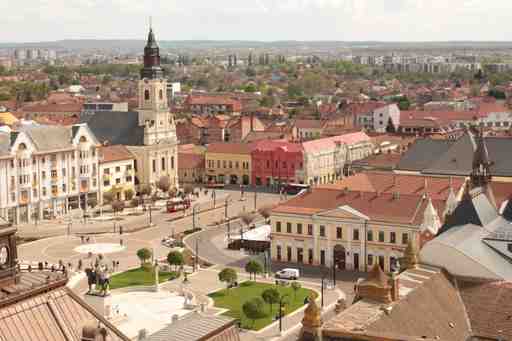
Cluj-Napoca carries at least three names and three souls. To German settlers who built it in the 13th century it was Klausenburg; to Hungarians who made it a Transylvanian capital it was Kolozsvar; to Romanians it is Cluj. Nicolae Ceaușescu added 'Napoca' to the name in 1974 as an assertion of ancient Dacian-Roman roots, but the medieval core tells the older story: the 15th-century Saint Michael's Church on Unirii Square, one of the finest Gothic structures in Romania, stands where the city's competing histories converge.
The Babes-Bolyai University, formed in 1959 from the merger of Romanian and Hungarian universities, is now the largest in Romania.
Teaching still happens in both languages, alongside German, and the 80,000-student population gives Cluj-Napoca an energy that spills out onto the cafe terraces around Piata Unirii on warm evenings. The city has become one of the most important technology and startup hubs in Central Europe without losing the sense that it is first a place for living well.
Cluj-Napoca
Cluj-Napoca FAQ
Before you walk.
Every Cluj-Napoca tour, in your language.
All 50+ languages, included with every booking.
🇬🇧 English🇫🇷 Français🇪🇸 Español🇩🇪 Deutsch🇮🇹 Italiano🇯🇵 日本語🇨🇳 中文🇰🇷 한국어+ 41 more
star AudaTours Unlimited
Visiting more than one city? Subscribe.
Unlock every Cluj-Napoca tour — plus thousands more worldwide. Cancel any time.
$4.99/week · Cancel anytime



Loved by travellersThousands of tours started.
Thousands of tours started.
Plenty of opinions.
4.8 across the App Store and Google Play. Here's a few we keep coming back to.
starstarstarstarstar
This tour was such a great way to see the city. The stories were interesting without feeling too scripted, and I loved being able to explore at my own pace.

Jess
Tbilisi Tourstarstarstarstarstar
This was a solid way to get to know Brighton without feeling like a tourist. The narration had depth and context, but didn't overdo it.

Christoph
Brighton Tourstarstarstarstarstar
Started this tour with a croissant in one hand and zero expectations. The app just vibes with you, no pressure, just you, your headphones, and some cool stories.

John
Marseille Tourdownload Get the app Pop your headphones in.


Pop your headphones in.
Step outside.
Free to download. Tours in every city. Start in 60 seconds — no account, no card.

headphones
~ 4 min until your first tour starts
public
1,000+ cities worldwide
all_inclusive
AudaTours
Unlimited
Every tour. Every city. One subscription.
3096 tours2272 cities138 countries50+ languages
$39 /year
all_inclusive Explore Unlimited