
San Juan Audio Tour: Art, Echoes & Enchantment in Santurce
A mural splashed with the colors of revolution overlooks streets that once echoed with secret protests and whispered betrayals. Santurce is more than Caribbean sun—its very walls pulse with buried scandals and unexpected art. This self-guided audio tour winds you through hidden corners and iconic landmarks, revealing the stories and secrets even locals overlook. Listen close to discover the dramas stitched into the fabric of Plaza de Diego, the Museum of Contemporary Art of Puerto Rico, and the grand Luis A. Ferré Performing Arts Center. Who tried to steal Puerto Rico’s most controversial art piece right under a packed gallery’s nose? What midnight conspiracy changed the course of a cultural uprising? Why did a world-famous singer flee the stage mid-performance and vanish into the night? Follow twisting sidewalks and labyrinthine alleys. Uncover political skirmishes, artistic rebellion, and personalities that shaped Santurce forever. Hit play and open the door to Santurce’s boldest untold stories.
Tour preview
About this tour
- scheduleDuration 30–50 minsGo at your own pace
- straighten3.7 km walking routeFollow the guided path
- location_onLocationSan Juan, Puerto Rico
- wifi_offWorks offlineDownload once, use anywhere
- all_inclusiveLifetime accessReplay anytime, forever
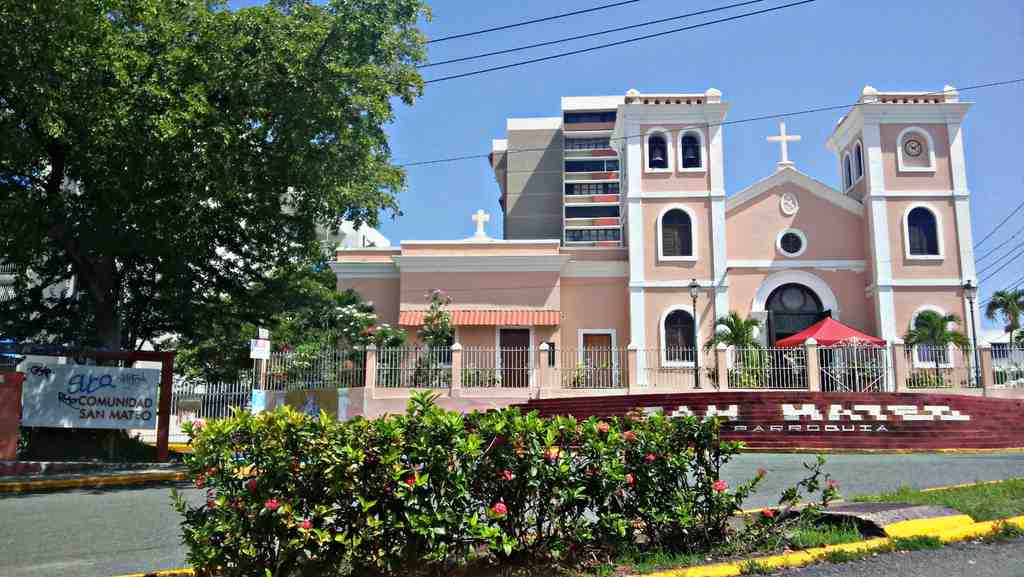
- location_onStarts at Church of San Mateo de Cangrejos of Santurce
Stops on this tour
To spot the Church of San Mateo de Cangrejos, just look for a soft pink building with two sturdy towers and a cross on top, surrounded by a low garden wall and a splash of palm…Read moreShow less
To spot the Church of San Mateo de Cangrejos, just look for a soft pink building with two sturdy towers and a cross on top, surrounded by a low garden wall and a splash of palm trees right in front. Welcome to the highest point in Santurce, where the Church of San Mateo de Cangrejos has watched over the city since 1832-talk about a prime piece of real estate! Imagine the year is 1832: horse-drawn carts clatter up the curved steps, and the little chapel stands alone, serving the far-away parish of Villa de Cangrejos while the salty breeze from the sea whispers through the palm fronds. But things really got interesting in 1896, when state architect Pedro Cobreros-sort of the Michelangelo of Puerto Rico’s church scene-gave this humble chapel a dramatic makeover. Suddenly, it had not one, but two towers, three stories in between, and a glorious marble floor laid diagonally like a proud checkerboard! Now, here’s a quirky detail: unlike most Puerto Rican churches, San Mateo doesn’t sit in a town center and doesn’t face west. Nope-it breaks tradition by looking south! Step up the rounded stairs and imagine the grand westwork, a style usually reserved for cathedrals. Inside, the basilica shape unfurls, two side naves separated by six graceful arches, while soft sunlight peeks in through rectangular windows. The church has evolved-concrete beams instead of wood, a missing choir floor, and modern-day air conditioning to save you from melting, but it’s kept its old soul. Peer over the garden fence, and you’ll spot a matching parish house, like a little sibling forever hoping for a taller hat! Through centuries of change and noisy city sprawl, this church remains an island of calm, echoing the prayers and footsteps of generations.
Open dedicated page →
Show 7 more stopsShow fewer stopsexpand_moreexpand_less
 5
5Centro de Bellas Artes Luis A. Ferré
Buy tour to unlock all 14 tracksStanding in front of you is a modern cream-colored building with big windows and sweeping curves, topped by the name Luis A. Ferré Performing Arts Center, and just to the right,…Read moreShow less
Standing in front of you is a modern cream-colored building with big windows and sweeping curves, topped by the name Luis A. Ferré Performing Arts Center, and just to the right, you’ll spot a striking abstract mural right on its façade-if you see a series of curved lines and textured panels, you’re in the right place! Here you are at the beating heart of Puerto Rico’s performing arts-where the air itself seems to hum with excitement and the expectation of unforgettable nights. Try to picture it: local families and world travelers alike walking up these grand steps through the Juan Morel Campos Plaza, maybe glancing at the sculpted bronze muses who seem ready to leap into song at any moment. This isn’t just a building-it’s a cultural movement ten years in the making, rising from plans and dreams in the hearts of artists and architects back in the 1970s. The Luis A. Ferré Performing Arts Center opened its doors in April 1981, after a decade spent dreaming up what the most dazzling arts venue in San Juan could be. As you’re standing here, let your imagination fill with the sound of opera, the thrill of a Broadway curtain rising, and the thunderous applause for a local ballet. Some of the world’s biggest names hit the stage here-like Plácido Domingo, who’s belted out arias that rolled across these balconies, and even the unstoppable Menudo. There are four main concert and theater halls, each with its own personality-starting with the grand Antonio Paoli Festival Hall, its massive stage stretching nearly the length of a city bus, and acoustics so perfect even a whisper feels like it could start an ovation. Venture inside (or just peek through the doors), and you’d find the René Marqués Theater Hall, named for one of Puerto Rico’s beloved playwrights, not to mention the Carlos Marichal Performance Hall, designed for more intimate and imaginative shows. And here’s a little theater trivia: The center’s symphonic pride is the Sala Sinfónica Pablo Casals-a $34 million sound marvel, named after the legendary cellist who made even Bach sound like he was born on a beach. But the Arts Center isn’t all about what happens once the curtain goes up. The outside is alive with art in every direction-from the aluminum sculpture “Melodic Reflection,” tall and shimmering, to the mural by Augusto Marín right above you, where concrete and crystal form an epic tribute to the muses of music, dance, and literature. And if you’re a fan of people-watching or snacking in style, there’s a plaza with open air adventure, two eateries (including a restaurant dreamed up by Puerto Rican pop royalty Luis Fonsi-yes, the ‘Despacito’ hitmaker himself), and sculptures where even the pigeons get front-row seats. You’ll also hear endless stories of legendary nights, nowhere more magical than in January 2019, when Lin-Manuel Miranda himself leapt onto this stage to star in his smash hit “Hamilton”-a homecoming so spark-filled it almost set the place ablaze with applause. People say the energy was so off the charts, Alexander Hamilton might’ve started salsa dancing. If you somehow wander inside, take a second to gaze up at the mural “La Plena” by Rafael Tufiño-it’s a riot of color and rhythm telling the tale of twelve legendary Puerto Rican songs, restored and placed here like a promise that the center will always be a house of music. Or swing by the René Marqués Hall’s stained-glass explosion, where 5,700 crystals explode with the glow of tropical forests and oceans, making even a rainy afternoon feel like a carnival. So whether you’re here for a quick photo, a world-class show, or just to soak in the electric feeling of possibility, remember: the Luis A. Ferré Performing Arts Center is where Puerto Rico’s spirit comes out to shine, all dressed up-and never, ever off-key.
Open dedicated page → 6
6Instituto Loaiza Cordero para Niños Ciegos Historic District
Buy tour to unlock all 14 tracksTo spot the Instituto Loaiza Cordero para Niños Ciegos Historic District, look ahead for a white building with a colorful and distinct tiled tower poking above the trees, next to…Read moreShow less
To spot the Instituto Loaiza Cordero para Niños Ciegos Historic District, look ahead for a white building with a colorful and distinct tiled tower poking above the trees, next to a playground with bright orange equipment. Welcome to a place where innovation and heart changed lives! Imagine yourself back in Santurce’s not-so-distant past, where this calm block buzzed with the laughter and footsteps of curious kids and the gentle guidance of dedicated teachers-many of whom were seeing the world in a different way altogether. This institute, now a proud historic district, was specially crafted for blind children back when Puerto Rico desperately needed such a safe, caring space. It was the dream of Loaiza Cordero del Rosario, a woman who lost much of her sight but never lost her vision. After becoming partially blind as a schoolteacher-talk about a plot twist-she refused to give up on education. She traveled all the way to Massachusetts, learned from one of the best schools for the blind, and came back bursting with ideas on how to open doors (and maybe a few minds) here at home. Partnering with architect Joseph O’Reilly and engineers like Manuel L. Miró and Demetrio del Valle, Cordero made sure every corner of the site shouted “welcome” in both Braille and spoken words. Architecturally, the space was ahead of its time: smooth paths for safe walking, playful areas where blindness wasn’t a barrier, and even a dedicated fountain where water trickled softly, guiding children by sound. You’re literally standing in a piece of history that combined pioneering ideas from places far and wide. In 2018, this whole block was recognized for its powerful legacy-a place built out of struggle, determination, and a pinch of poetic justice. If walls could talk-or read Braille-they’d tell you tales of independence, courage, and the brave little hands that shaped the future of Puerto Rico.
Open dedicated page →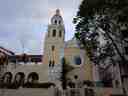 7
7Episcopal Cathedral of St. John the Baptist
Buy tour to unlock all 14 tracksLook for a tall, sunny yellow church with a striking bell tower and white trim just across from the Avenida Juan Ponce de León street sign-the Episcopal Cathedral of St. John the…Read moreShow less
Look for a tall, sunny yellow church with a striking bell tower and white trim just across from the Avenida Juan Ponce de León street sign-the Episcopal Cathedral of St. John the Baptist is right in front of you! Now, picture yourself here over a hundred years ago when the sound of horse hooves echoed across the plazas of Old San Juan. The very first service for this congregation happened back in 1899-not in this sturdy building, but in a simple hall on the plaza. Imagine the excitement as Reverend James Van Buren arrived in 1901, gathering a small but passionate group and, by Christmas Eve, transforming their mission into a full parish, with Van Buren himself as the first rector. But Old San Juan was changing quickly-shops and hustle filled the streets, and the quiet families drifted into new neighborhoods. In 1928, Bishop Charles Colmore had an idea: “Let’s move St. John’s!” He dreamed of a new spot in Santurce, a fresh start alongside a training school for women. Ground was broken here in 1929, and, by the next February, a new chapter began as the cathedral you see today was completed. So as you stand here, just think-you’re on ground built by dreamers, with walls that have heard generations of hope, prayers, and maybe a choir note or two that would make the pigeons jealous!
Open dedicated page →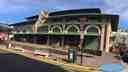 9
9La Placita de Santurce
Buy tour to unlock all 14 tracksTo spot La Placita de Santurce, look for a grand building with maroon and cream trim, large arched green windows, and a bold sign that reads “Plaza del Mercado” right above the…Read moreShow less
To spot La Placita de Santurce, look for a grand building with maroon and cream trim, large arched green windows, and a bold sign that reads “Plaza del Mercado” right above the main entrance. Picture this: it’s 1910, and you’re outside the freshest, brightest market in all of Santurce-fruit sellers yell out prices, butchers sharpen their knives on the upstairs level, and the whole street is alive with island flavor. This isn’t just any building; it was once two stories tall, buzzing with the smells and sounds of food, locals, and even the occasional doctor making house calls upstairs-talk about multitasking! As years passed, fortunes changed and parts of the market faded along with the neighborhood, but the story didn’t end there. In the ‘90s and 2000s, new life spilled back in-restaurants, bars, live music-we’re talking about a transformation that turned this spot into San Juan’s ultimate hotspot for food and fun! The second floor may be gone (they needed more space to dance, right?), but during the day it’s still a farmer’s market packed with produce and personality. Come sunset, though, this plaza swaps pineapples for piña coladas-and the party might just keep you up until breakfast.
Open dedicated page →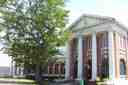 10
10Museo de Arte Contemporáneo de Puerto Rico
Buy tour to unlock all 14 tracksTo spot the Museum of Contemporary Art of Puerto Rico, look ahead for a stately red-brick building with tall white columns and a grand triangular pediment, framed by a big leafy…Read moreShow less
To spot the Museum of Contemporary Art of Puerto Rico, look ahead for a stately red-brick building with tall white columns and a grand triangular pediment, framed by a big leafy tree to your left-this impressive Georgian-style structure is your destination! Let me take you on a journey back in time as you stand here, facing the Museum of Contemporary Art of Puerto Rico, known locally as MACPR. Imagine it’s 1918 and the street you’re on is a hum of carriages and children’s laughter-right in front of you rises the grand Rafael M. Labra building. Back then, it was a public school built as part of a burst of energy to give Puerto Rico’s city kids magnificent places to learn. With its tall columns, elegant brick façade, and the formality of Georgian architecture, the building must have looked like it had rolled in straight from England-though you’d find more sun here than fog! For decades, this was a place of learning, echoing with the sounds of chalk on blackboard and the shouts of students. By the late twentieth century, though, the old school was struggling. Its walls, worn and tired, seemed almost to sigh with the weight of years, waiting for a new purpose. Enter a group of fearless artists-maybe they weren’t wearing capes, but they had big ideas. In 1984, this band of creative rebels dreamt up a museum not just for the elite, but for everyone on the island. They gave the museum a quirky mission: all its art would belong to the people of Puerto Rico! No gatekeepers, just a wild celebration of creativity. But hang on to your paintbrush-starting a museum with no building is a bit like baking a cake in the rain! The MACPR had to call in a string of favors and borrowed homes, popping up in shopping malls and friendly offices before finally getting a safe(ish) roof above its head at the Magdalena Sofía Barat building thanks to the University of the Sacred Heart. There, the museum camped out for 15 years, growing its collection, throwing lively events, and occasionally wishing its walls were just a little less temporary. All the while, the true dream was brewing: a permanent home-somewhere that art could echo off the walls for generations. In a move worthy of a movie montage, the museum’s leaders knocked on doors, filled out endless paperwork, and lobbied hard. Then, in 2002, with the help of Puerto Rico’s governor and a very official-looking pen, the museum was handed the keys to the historic Rafael M. Labra building. Cue the confetti! Restoring the old school was a puzzle worthy of Sherlock Holmes, led by Puerto Rican architect Otto Reyes Casanova. Every inch had to be checked, and every detail matched to how it looked when the building was young. By the time the museum opened in its new home, the Rafael M. Labra had traded textbooks for bold, contemporary creations. Step inside and you’ll find a treasure trove of Latin American and Caribbean art, with works by famed Puerto Rican artists like Myrna Báez and Arnaldo Roche Rabell, Caribbean creators such as Joscelyn Gardner, and boundary-pushing Latin American talents like Leonora Carrington. The collection brims with energy, a wild mix of the local and the global, the old and the daringly new. Every piece is chosen by committees that include artists, critics, and dreamers-so you know the bar is high. Don’t miss their documentation center, named for the legendary musician Robi Draco Rosa, which overflows with catalogs, recordings, and stories waiting to be uncovered. And beyond these walls, the museum’s heart beats in Santurce itself, thanks to projects that swirl together art, history, economics, and activism-the neighborhood becomes part of the art, and the art part of the neighborhood. So here you are, at a place where history and imagination meet. Take a breath, feel the pulse of Santurce, and-if you listen closely-you might almost hear the ghosts of students past, mixing with today’s artists and dreamers. Now that’s a masterpiece, don’t you think? Eager to learn more about the historic building, permanent collection or the documentation center? Simply drop your inquiries in the chat section and I'll provide the details you need.
Open dedicated page →
Frequently asked questions
How do I start the tour?
After purchase, download the AudaTours app and enter your redemption code. The tour will be ready to start immediately - just tap play and follow the GPS-guided route.
Do I need internet during the tour?
No! Download the tour before you start and enjoy it fully offline. Only the chat feature requires internet. We recommend downloading on WiFi to save mobile data.
Is this a guided group tour?
No - this is a self-guided audio tour. You explore independently at your own pace, with audio narration playing through your phone. No tour guide, no group, no schedule.
How long does the tour take?
Most tours take 60–90 minutes to complete, but you control the pace entirely. Pause, skip stops, or take breaks whenever you want.
What if I can't finish the tour today?
No problem! Tours have lifetime access. Pause and resume whenever you like - tomorrow, next week, or next year. Your progress is saved.
What languages are available?
All tours are available in 50+ languages. Select your preferred language when redeeming your code. Note: language cannot be changed after tour generation.
Where do I access the tour after purchase?
Download the free AudaTours app from the App Store or Google Play. Enter your redemption code (sent via email) and the tour will appear in your library, ready to download and start.
If you don't enjoy the tour, we'll refund your purchase. Contact us at [email protected]
Checkout securely with 


