
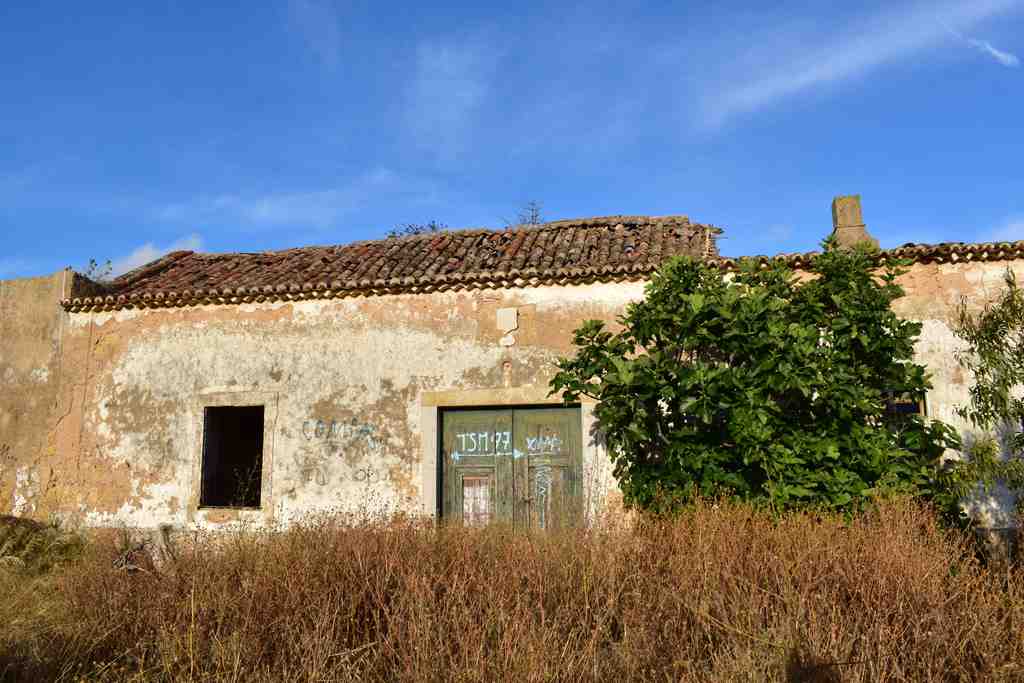
Look for a low, weathered building with a crumbling tiled roof, faded pale walls, and wild bushes reaching up to its empty windows-standing alone by the roadside like it's playing hide and seek with history.
You’ve made it to the final stop! And what a mysterious character this old place is. Standing here, with the salty sea breeze tickling your face, you’re gazing at what’s left of the Convent of Trindade-though you might also call it the Convent of the Trino Friars, or more formally, the Convent of the Most Holy Trinity. Today it looks rather humble, but once upon a time, this was a showstopper along the coast; in fact, sailors used it as a landmark to find their way home. They’d spot its chunky profile against the sky, standing right here at the southern edge of Lagos, close to the dramatic cliffs.
Picture it back in its glory days in the early 1600s, when it was alive with the rustle of friars’ robes and the echo of prayers. Italian merchants first began building here in the mid-1500s-probably attracted by the area’s nickname, the Rossio de São Brás. Sicilian nobles, Milanese, and Genoese expats all gathered to create a chapel dedicated to Our Lady of Porto Salvo. And they weren’t shy about the rules; their brotherhood had 37 articles, weekly masses, and only “men of good character” could join. The catch? You couldn’t fish for new members in just any pond-they wanted their community tight-knit. That didn't last. The local fishing industry tanked, so the strict Sicilians had to open their doors to Spanish Valencians and Catalans too, probably grumbling in three different accents.
Now, step forward almost half a millennium: the Order of the Most Holy Trinity swooped in, looking to build a convent. Their job? Saving Christians captured by North African pirates, which wasn’t just a quirky mission statement-pirates really did raid the Algarve, snatching villagers for the slave markets across the sea. The local bishop lobbied hard, and in 1606, the friars moved in, breathing life into the new convent, which, believe it or not, was the launchpad for secret missions of rescue and redemption all along these shores. You can almost hear their whispers:
Inside, the original church was a stunner-a rectangular room with a vaulted ceiling, three opulent altars including one G-O-L-D gilded masterpiece venerating the Virgin of Remedies. On quiet mornings, sunlight would spill across smooth whitewashed walls and the beautiful Renaissance columns-columns that, secretly, supported nothing but the dreams of the builders! They wanted to keep up with the style of Lagos’s other great churches, like Santa Maria and São Sebastião.
But fate, as always, had other plans. The Great Earthquake of 1755 thundered through Lagos, wracking the convent to its bones. Roofs collapsed, stone pillars cracked, and only fragments of those perfect arches remained. For a while, there was hope: the city wrote letters, they tried fundraising for its rebuilding, and the friars made do, perhaps still hoping for a miraculous comeback.
By the 1800s, Portugal’s government shut down religious orders, and the convent stumbled through new lives-storage shed, a military hospital echoing with sailors’ coughs and doctors' hurried footsteps. By the twentieth century, hopes of transforming the ruins into a glamorous hotel fizzled. Modern apartment blocks crawled in, eating into its space and grandeur, and the convent slumbered, fading under wild grass and graffiti.
Yet, if you listen closely while you wander the overgrown grounds, you might catch the faint ringing of old bells or a ghostly splash-legend says there was a well in the cloister where friars drew water, now probably full only of shadows and weeds.
Recently, the city has been whispering about revival-maybe a luxury hotel, maybe public gardens, always debating how to honor the spirit of this historic survivor without smothering its wild heart. Would the old friars approve, or would they chuckle, knowing their convent is still stirring up debate and mystery after all these years?
So, as you take one last look, remember: this battered building once stood proud, guiding both ships and lost souls. If its walls could talk, they’d have tales of pirates, prayers, earthquakes, and resilience-and possibly, a gentle sigh at the stubborn weeds slowly conquering the old stones.


