
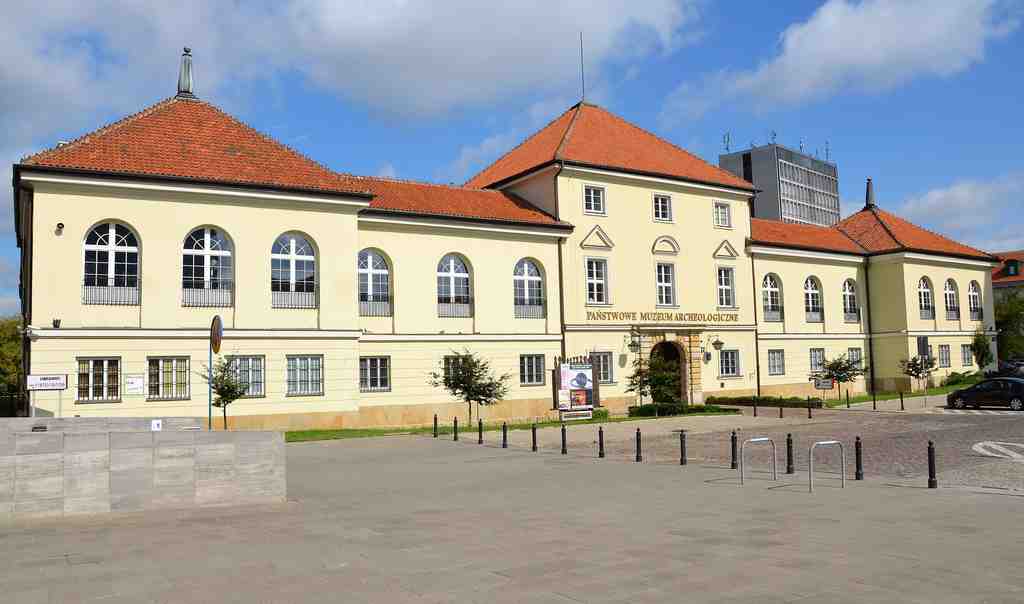
Right in front of you stands a broad, yellow-beige building with a red-tiled roof, classic arched windows, and the inscription "PAŃSTWOWE MUZEUM ARCHEOLOGICZNE" above the main entrance, making it easy to spot as it stretches out along Długa Street.
Now, close your eyes for a second-imagine heavy footsteps echoing on these cobbles, cannons rumbling, and the cold, sharp smell of gunpowder in the air. The Royal Arsenal, or Arsenał Królewski, isn’t just an old building; this place has seen more action than a blockbuster movie marathon. Picture it: the mid-16th century. King Stefan Batory needs somewhere for his war veterans to rest their weary bones, so he orders the first version of this building. But soon, the city’s needs are bigger, and, by 1643, under the steely gaze of General Paweł Grodzicki, the Arsenal is turned into Warsaw’s main fortress for weapons and ammo-walls thick and sturdy, ready for anything.
Over the centuries, the Arsenal is like a chameleon, always changing. In the 18th century, it’s spruced up and rebuilt twice, each time by some of Poland’s top architects. Fast forward to 1794: the air vibrates with the sounds of musket fire and shouting during the Warsaw Insurrection. Brave Polish soldiers and civilians clash with Russian occupiers in desperate, dusty close combat right where you’re standing. The Arsenal’s thick walls must have trembled with the force of that battle!
By the 1800s, after being damaged and repaired, the building is almost turned into a massive prison, holding criminals for the Russian tsar-though luckily for anyone who doesn’t enjoy gloomy stone walls, they build a whole new citadel elsewhere. The Arsenal then spends some quieter years as a police station and later, thanks to President Stefan Starzyński, transforms into a city archive in the stylish 1930s-complete with its historic courtyard restored to its 17th-century glory.
But war returns: In 1943, the street out front explodes into action during “Operation Arsenal,” when young resistance fighters pull off a daring rescue right under the nose of the Nazi occupiers. Then, the Arsenal becomes a fortress again during the Warsaw Uprising of 1944 before being blasted nearly to rubble. Yet, like a true Warsaw survivor, it’s rebuilt after the war to match its 17th-century design, rising once more from the city’s scars.
Today, those same thick walls hold the National Museum of Archaeology, filled not with gunpowder but treasures from ancient times. Not bad for a building that’s seen more drama than a soap opera-who needs Netflix with history like this?


