
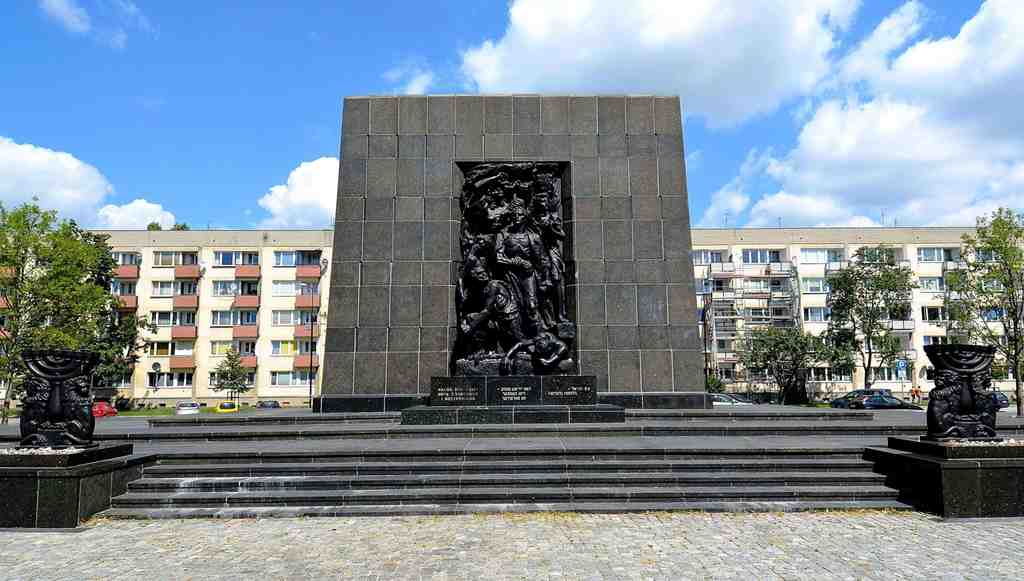
To spot the Monument to the Ghetto Heroes, look for a large, dark stone structure with a striking bronze relief of men, women, and children at its center, standing boldly above a series of wide steps-it's right in the open square ahead.
Alright, now that you’re facing this powerful monument, let’s travel back in time-don’t worry, no need for a DeLorean! Imagine Warsaw in 1943, a city gripped by occupation and fear. The spot beneath your feet saw the very first shots of the Warsaw Ghetto Uprising, a battle of desperate courage where Jewish partisans, some barely older than teenagers, faced overwhelming odds to defend their dignity and freedom. As the struggle erupted, you might imagine the sudden sharp crack of a distant gunshot, the cries of hope, and the chaos that shook this square.
But the story of this monument is as layered as a particularly stubborn onion. After the war, survivors and the Central Committee of Polish Jews quickly decided that this chapter couldn’t be forgotten. In 1946, they started with a simple circular plaque: a palm leaf, the Hebrew letter “B,” and words etched in three languages for all to remember those who fell for their people-and for all humanity. Just across from where you stand, the once-invisible wounds of the ghetto’s end lingered in the rubble and silence.
Then, in 1948, this massive monument was revealed. Designed by Leon Suzin and sculpted by Nathan Rapoport, it stands a mighty 11 meters tall, its great stones echoing both the ghetto’s prison-like walls and, symbolically, the Western Wall in Jerusalem. And here’s a twist worthy of a movie: much of this black labradorite stone was actually meant for Nazi monuments, ordered by Hitler’s own architect, Albert Speer! That’s poetic justice carved in stone, if you ask me.
On the western face, you’ll see a group of rebels, determined and fierce, led by the central figure-Mordechai Anielewicz, the fearless leader of the uprising. He stands among men, women, and even children, clutching homemade weapons. On the other side, the sculpture evokes the relentless suffering, showing people driven mercilessly by their oppressors.
Even decades later, this place burns with memory. In 1970, the German chancellor Willy Brandt knelt here-an unexpected flash of humility and history. Today, the POLIN Museum across the street holds the stories that started with bravery and now belong to us all.
Take a moment: the silence, the stone, the faces in bronze-this is the sound of memory refusing to be silenced.




