
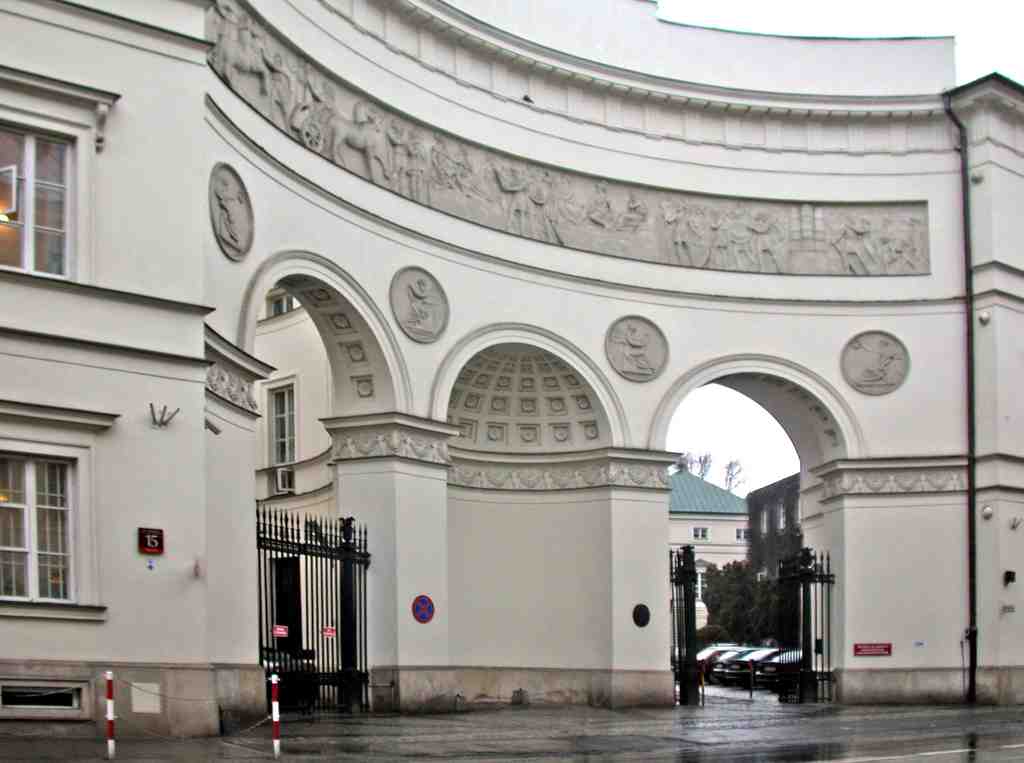
Look for a grand, creamy-white arched gateway with sculpted reliefs and circular medallions set into the stone above three wide archways-position yourself near the intersection and you can’t miss its distinctive, elegant curve.
Welcome to Miodowa Street, or as I like to call it, “Sweet Street”-and back in the 16th century, that nickname was more than just a catchy title! Picture the air thick with the scent of gingerbread and sticky honey oozing from shop windows, while merchants in puffy trousers hustle their confections to passersby. Miodowa was famous for its gingerbread, so it’s safe to say this was Warsaw’s tastiest stretch, and probably the original street for “window shopping.” Now, stand here and imagine the commotion of horse-drawn carriages, vendors shouting out prices, and the gentle clip-clop echoing off the grand buildings. On one side, you’d spot the palace of Crown Marshal Branicki gleaming in 18th-century splendor; on the other, the Palace of the Bishops of Kraków, with its own layer of intrigue and architectural drama. A little further down, a banker’s mansion, sadly lost to history during the Warsaw Uprising, that was designed to impress every guest. And watch for the Capuchin church’s roof peeking out-inside, the heart of King John III Sobieski rests, making this not just a street, but a royal resting ground. Oh, and if you squint, perhaps you’ll see the ghostly outline of painter Bernardo Bellotto setting up his easel to capture the lively chaos-lucky for us, his art froze this very moment forever. They say if you listen closely, you might hear the piping of a gingerbread vendor, still haunting the cobblestones, beckoning customers back for one last sweet treat.




