
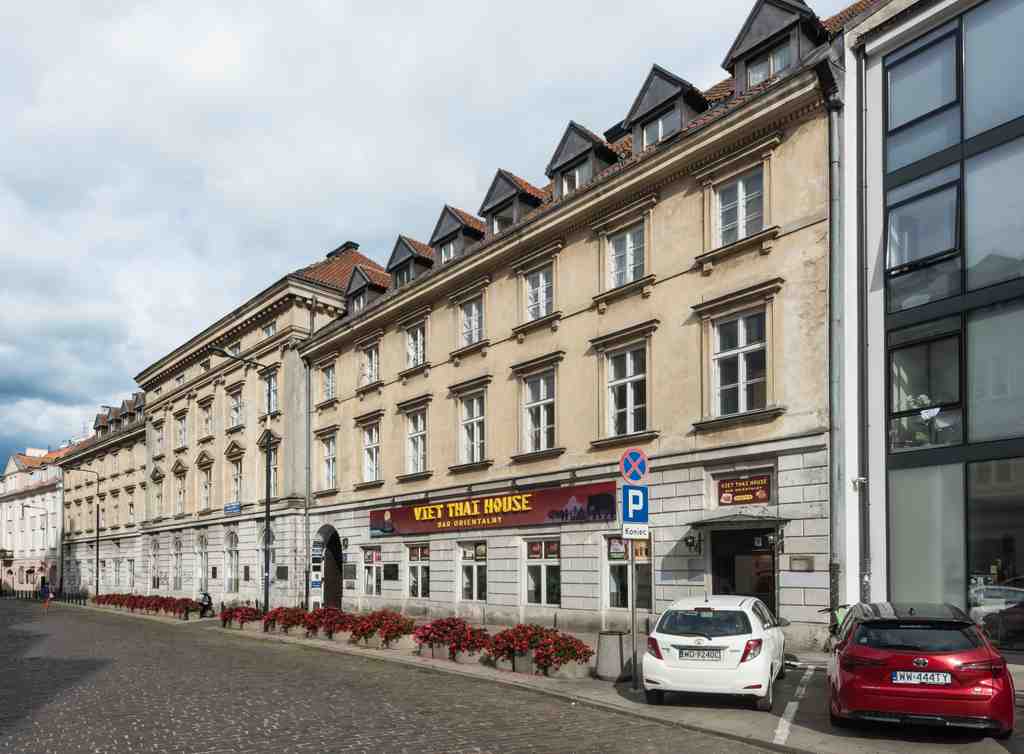
To spot Hotel Polski, just look for the long, pale yellow, three-story building with rows of white-framed windows set along Długa Street, right in front of you-the sign for a Thai restaurant today hints you’re in the right place!
Now, let me take you back in time-to a place that once echoed with the chatter of travelers and the hope of people longing for freedom. Picture this street in 1808, horse carriages rattling along the cobblestones, as Hotel Polski first swings open its doors. It quickly becomes one of Warsaw’s most elegant addresses; the kind of spot where you might overhear a deal being made, a romance blooming, or someone complaining about their soup being too salty-some complaints transcend centuries!
But fast forward to 1943, and the story turns chilling. The war is raging, and after the terrible liquidation of the Warsaw Ghetto, this building falls into the hands of the Germans. Here’s where a dark chapter unfolds. Hotel Polski became bait in a cruel trap-word spread through secret, whispered channels that Jews in hiding could come here, buy foreign passports, and escape Nazi-occupied Europe for the safety of South America or Palestine. The streets outside must have been filled with a mix of hope and fear, as families clutching battered suitcases snuck through the night.
But behind these walls, there was hardly any safety. Most of the documents peddled here were fake or confiscated by the Gestapo and their collaborators, Jewish agents who had lost themselves to fear or greed. The rumors that spun through broken Warsaw were mostly lies: nearly 2,500 Jews surfaced from their hiding places, drawn by hope. Some came with newly forged Paraguayan, Honduran, or Peruvian documents, paid for with fortunes that, in peacetime, might’ve bought a mansion. Sadly, many never saw freedom again.
You can almost feel the tension-the Polish Underground desperately tried to warn the Jews to stay away, but hope, sometimes, is louder than caution. Groups were quietly marched off from here, told they were going to Vittel, a resort town in France. That must have sounded bizarre-a spa! But after a brief stop, almost all ended up at concentration camps like Bergen-Belsen and ultimately Auschwitz. It was only the handful with Palestinian documents-about 300 people-who survived, exchanged later for imprisoned Germans.
This spot saw courage, heartbreak, betrayal, and even a little artistic flair-some victims were famous writers and resistance leaders. During the Warsaw Uprising in 1944, this battered building served yet another role: it became a Polish insurgent stronghold nicknamed the “Holy Mother Redoubt,” named for a painting inside. Imagine the crackle of gunfire and the shouts of fighters echoing off these now-quiet walls.
After the war, the hotel was rebuilt and changed its face yet again-by 1965, it was declared a cultural heritage site, and in 2013, a plaque went up to ensure we never forget. So, as you stand here, remember: these quiet windows have seen secrets, traps, hope, and heroism-all in the span of just one street address. That’s Hotel Polski for you-a building that’s seen more plot twists than a detective novel!




